Laboratory of Retrovirology, The Rockefeller University, New York, NY, USA.
Royal Infirmary of Edinburgh, NHS Lothian, Edinburgh, UK.
Lancet Microbe. 2022 Jul;3(7):e493-e502. doi: 10.1016/S2666-5247(22)00090-8. Epub 2022 May 27.
Serological assays are being used to monitor antibody responses in individuals who had SARS-CoV-2 infection and those who received a COVID-19 vaccine. We aimed to determine whether such assays can predict neutralising antibody titres as antibody levels wane and viral variants emerge.
We measured antibody levels in serum samples from a cohort of 112 participants with SARS-CoV-2 infection using ten high-throughput serological tests and functional neutralisation assays. Serum samples were taken at baseline and at up to four subsequent visits. We assessed the effects of time and spike protein sequence variation on the performance and predictive value of the various assays. We did correlation analyses for individual timepoints using non-parametric Spearman correlation, and differences between timepoints were determined by use of a two-tailed Wilcoxon matched-pairs signed rank test.
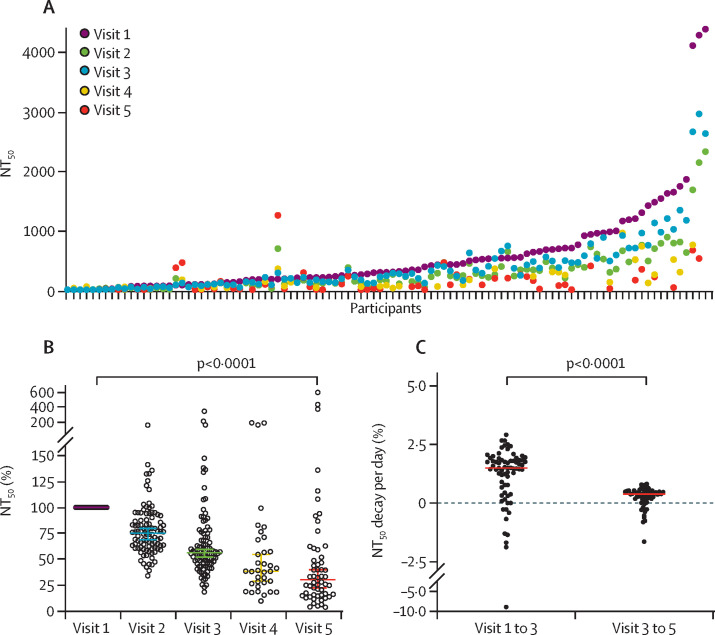
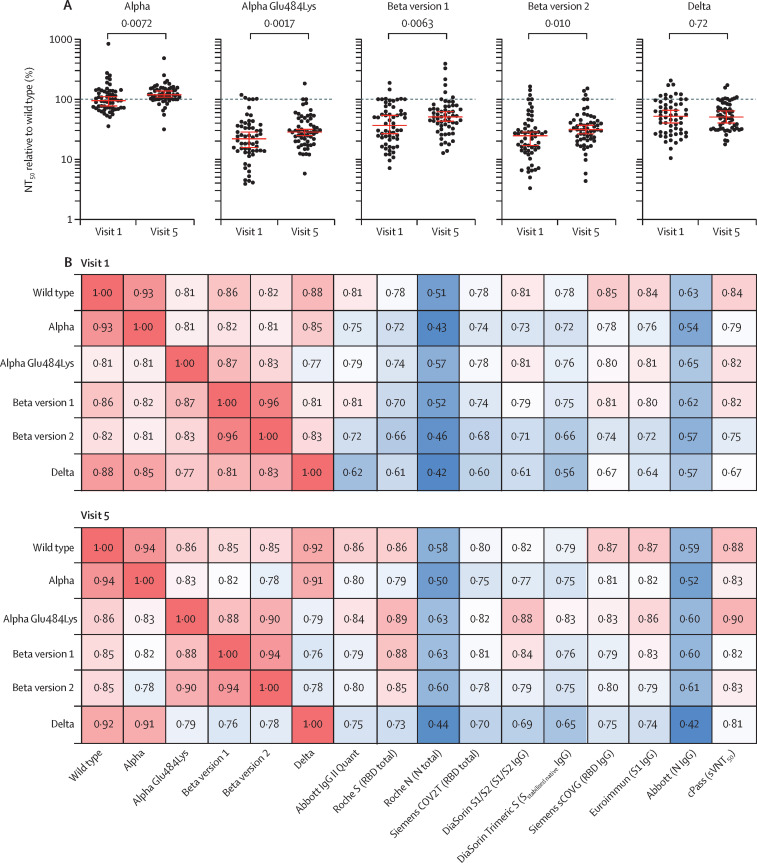
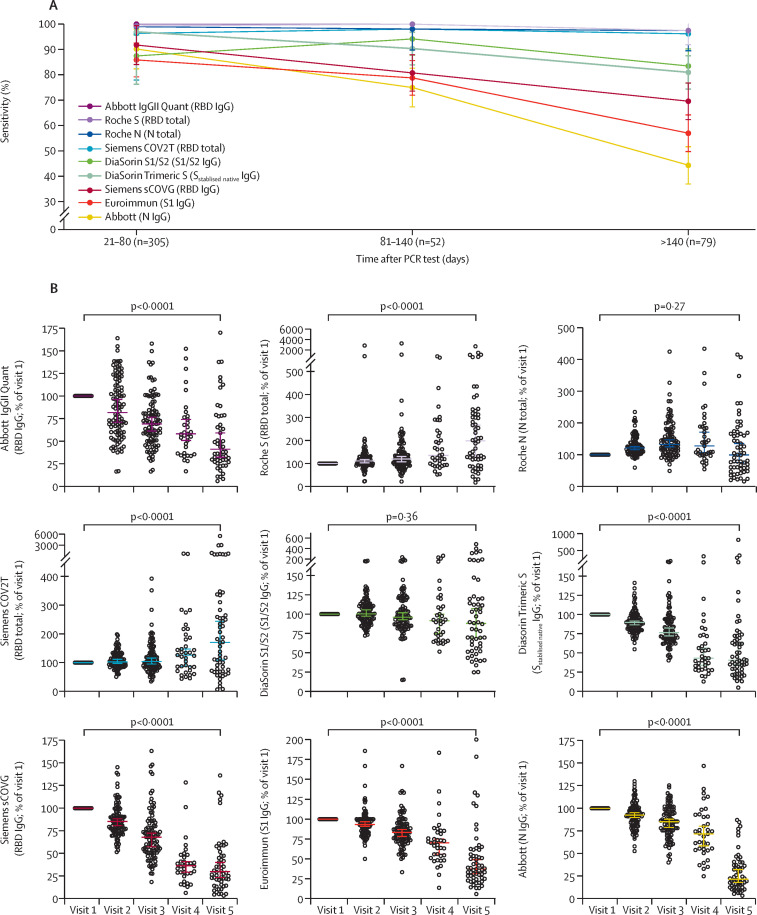
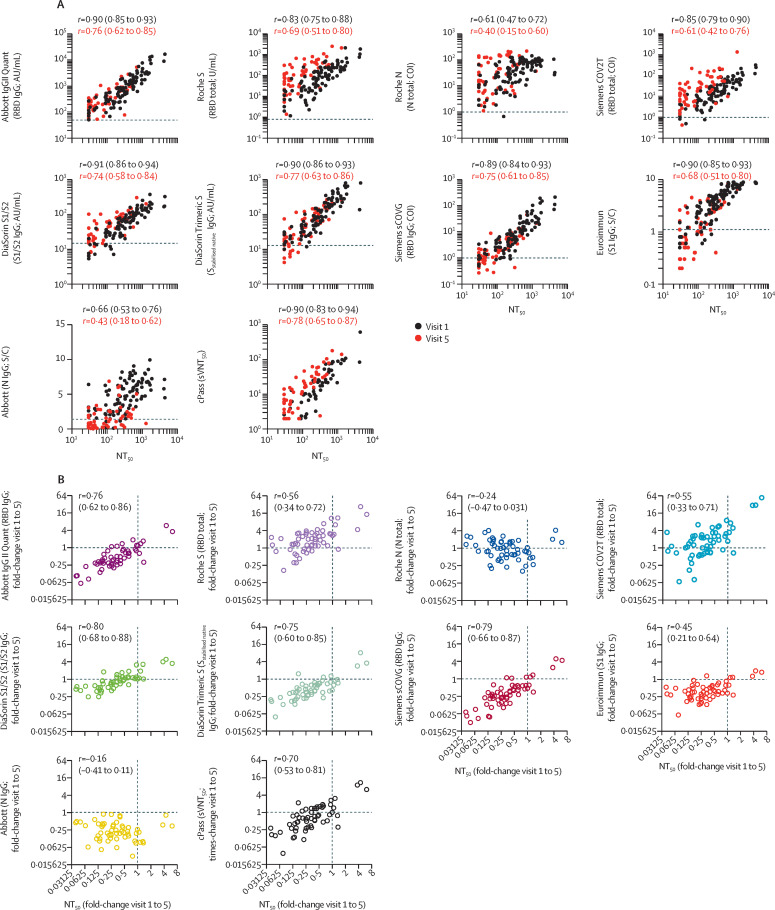
Neutralising antibody titres decreased over the first few months post-infection but stabilised thereafter, at about 30% of the level observed shortly after infection. Serological assays commonly used to measure antibodies against SARS-CoV-2 displayed a range of sensitivities that declined to varying extents over time. Quantitative measurements generated by serological assays based on the spike protein were better at predicting neutralising antibody titres than those based on nucleocapsid, but performance was variable, and manufacturer positivity thresholds were not able to predict the presence or absence of detectable neutralising activity. Although we observed some deterioration in correlation between serological measurements and functional neutralisation activity, some assays maintained an ability to predict neutralising titres, even against variants of concern.
The ability of high-throughput serological assays to predict neutralising antibody titres is likely to be crucial for evaluation of immunity at the population scale. These data can facilitate the selection of the most suitable assays as surrogates of functional neutralising activity and suggest that such measurements might be useful in clinical practice.
US National Institutes of Health and National Health Service Research Scotland BioResource.
血清学检测方法被用于监测曾感染 SARS-CoV-2 病毒的个体和接种 COVID-19 疫苗的个体的抗体反应。我们旨在确定这些检测方法是否可以预测中和抗体滴度,因为抗体水平会随着病毒变异株的出现而下降。
我们使用 10 种高通量血清学检测方法和功能中和测定法,测量了 112 名 SARS-CoV-2 感染患者的血清样本中的抗体水平。血清样本在基线和随后的四个随访时间点采集。我们评估了时间和刺突蛋白序列变异对各种检测方法的性能和预测价值的影响。我们使用非参数 Spearman 相关分析对各个时间点进行相关性分析,并使用双侧 Wilcoxon 配对符号秩检验确定时间点之间的差异。
中和抗体滴度在感染后最初几个月内下降,但此后稳定下来,约为感染后不久观察到的水平的 30%。常用于测量针对 SARS-CoV-2 的抗体的血清学检测方法显示出一定的敏感性,随着时间的推移逐渐下降。基于刺突蛋白的血清学检测方法产生的定量测量结果比基于核衣壳蛋白的检测方法更能预测中和抗体滴度,但性能存在差异,并且制造商的阳性阈值不能预测是否存在可检测的中和活性。尽管我们观察到血清学测量与功能中和活性之间的相关性有些恶化,但某些检测方法仍然能够预测中和滴度,甚至可以预测对关注变异株的中和能力。
高通量血清学检测方法预测中和抗体滴度的能力可能对人群规模的免疫评估至关重要。这些数据有助于选择最适合的检测方法作为功能中和活性的替代物,并表明这些测量方法在临床实践中可能有用。
美国国立卫生研究院和苏格兰国民保健服务研究生物资源。