Institute for Public Health Genomics, Department of Genetics and Cell Biology, School for Oncology and Developmental Biology (GROW), Faculty of Health, Medicine and Life Sciences, University of Maastricht, Maastricht, The Netherlands.
University of York Management School, University of York, York, UK.
BMC Pregnancy Childbirth. 2022 May 30;22(1):449. doi: 10.1186/s12884-022-04778-w.
Shortage or low-quality antenatal care is a complex and "wicked" problem relying heavily on contextual, socio-cultural, environmental and intersectional aspects. We report the outcome of an expert consultation discussing solutions to improve antenatal care quality, access and delivery in low- and middle-income countries, and providing recommendations for implementation.
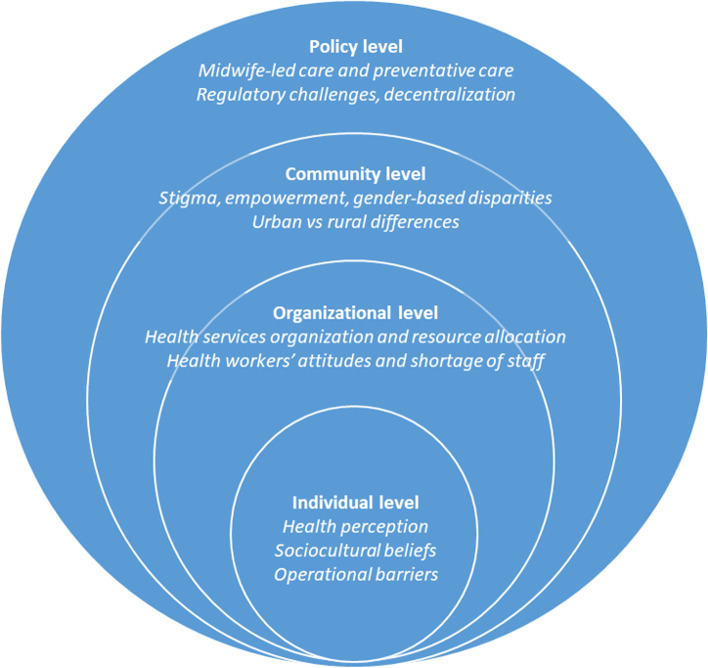
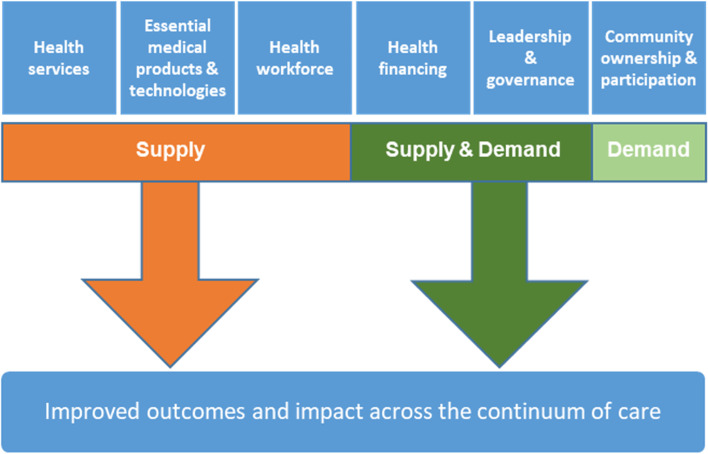
The social ecological model was used as an analytical lens to map and interpret discussion points and proposed solutions. In addition, a conceptual framework for maternal and neonatal health innovation based on the building blocks of the World Health Organization health system and the Tanahashi Health Systems Performance Model provided a logical overview of discussed solutions.
Many barriers and norms continue to hinder antenatal care access. From values, beliefs, traditions, customs and norms, to poor resource allocation, there is a need of reshaping health systems in order to provide high quality, respectful maternal and childcare. The burden of poor maternal health, morbidity and mortality is concentrated among populations who are vulnerable due to gender and other types of discrimination, have financial constraints and are affected by humanitarian crises.
In order to address maternal health issues, good quality and evidence-based services should be guaranteed. Investments in strengthening health systems, including data and surveillance systems and skilled health workforce, should be considered an essential step towards improving maternal health services.
产前护理的短缺或质量低下是一个严重依赖于背景、社会文化、环境和交叉方面的复杂且“棘手”的问题。我们报告了一次专家磋商的结果,该磋商讨论了改善中低收入国家产前护理质量、可及性和提供的解决方案,并为实施提供了建议。
社会生态模型被用作分析镜头,以绘制和解释讨论点和提出的解决方案。此外,基于世界卫生组织卫生系统和 Tanahashi 卫生系统绩效模型的构建模块的孕产妇和新生儿健康创新概念框架为讨论的解决方案提供了逻辑概述。
许多障碍和规范继续阻碍产前护理的可及性。从价值观、信仰、传统、习俗和规范,到资源分配不佳,都需要重塑卫生系统,以提供高质量、尊重的孕产妇和儿童保健。孕产妇健康状况不佳、发病率和死亡率的负担集中在那些由于性别和其他类型的歧视、经济拮据以及受人道主义危机影响而脆弱的人群中。
为了解决孕产妇健康问题,应确保提供高质量和基于证据的服务。投资于加强卫生系统,包括数据和监测系统以及熟练的卫生劳动力,应被视为改善孕产妇保健服务的重要步骤。