Badhe Hemraj, Kalaskar Ritesh, Balasubramanian Shruti, Kamki Henpu, Kalaskar Ashita
Department of Pediatric and Preventive Dentistry, Government Dental College and Hospital, Nagpur, Maharashtra, India.
Department of Oral Medicine and Radiology, Government Dental College and Hospital, Nagpur, Maharashtra, India.
Int J Clin Pediatr Dent. 2022;15(Suppl 2):S252-S260. doi: 10.5005/jp-journals-10005-2168.
This systematic review aimed to answer the following focused question: Is ozone therapy more effective in reducing microbial count as compared to conventional methods in deep dentinal carious lesion?
The purpose of this systematic review was to perform a review on the effectiveness of ozone therapy in reduction of microbial count in deep dentinal carious lesion. Study eligibility criteria, participants, and interventions: The inclusion criteria comprised studies that compared effect on microbial count in deep dentinal carious lesion after treatments with ozone and other disinfectants in primary or permanent teeth in randomized clinical trials.
This review was conducted according to Preferred Reporting Items for Systematic Reviews and Meta-Analysis (PRIMSA) guidelines. The searched databases included Medline (via PubMed), Cochrane, and Google scholar. Articles published until 29 February 2020 without year restriction but only in English language were included.
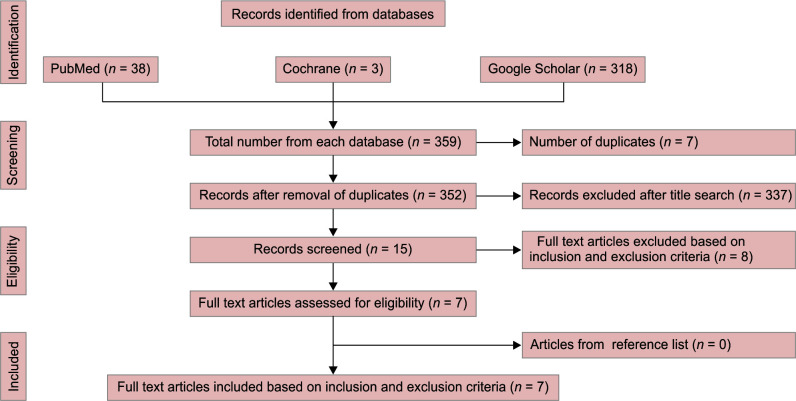
The search resulted in 359 published studies. After removal of duplicate studies and full-text analysis, seven studies were selected. Overall, the results demonstrated the promising effects of ozone therapy in reduction of microbial count as compared to other disinfectant.
Within the limitations of this review, it can be asserted that the ozone therapy is effective in reduction of microbial count in deep dentinal carious lesion.
Ozone therapy can be a useful tool to reduce the microorganisms in deep dentinal carious lesion.
Badhe H, Kalaskar R, Balasubramanian S, Antimicrobial Effect of Ozone Therapy in Deep Dentinal Carious Lesion: A Systematic Review. Int J Clin Pediatr Dent 2022;15(S-2):S252-S260.
本系统评价旨在回答以下重点问题:在深龋牙本质病变中,与传统方法相比,臭氧疗法在减少微生物数量方面是否更有效?
本系统评价的目的是对臭氧疗法在减少深龋牙本质病变中微生物数量的有效性进行综述。研究纳入标准、参与者和干预措施:纳入标准包括在随机临床试验中比较臭氧和其他消毒剂治疗恒牙或乳牙深龋牙本质病变后对微生物数量影响的研究。
本综述按照系统评价和Meta分析的首选报告项目(PRIMSA)指南进行。检索的数据库包括Medline(通过PubMed)、Cochrane和谷歌学术。纳入截至2020年2月29日发表的文章,无年份限制,但仅为英文。
检索得到359项已发表研究。在去除重复研究和进行全文分析后,选择了7项研究。总体而言,结果表明与其他消毒剂相比,臭氧疗法在减少微生物数量方面具有显著效果。
在本综述的局限性范围内,可以断言臭氧疗法在减少深龋牙本质病变中的微生物数量方面是有效的。
臭氧疗法可以成为减少深龋牙本质病变中微生物的有用工具。
Badhe H, Kalaskar R, Balasubramanian S, 臭氧疗法对深龋牙本质病变的抗菌作用:一项系统评价。《国际临床儿科牙科学杂志》2022;15(S-2):S252-S260。