Tucker Autumn E, Alicea Pauneto Coral Del Mar, Barnett Alexandra M, Coleman Leon G
College of Arts and Sciences, University of North Carolina at Chapel Hill, Chapel Hill, NC, United States.
Department of Pharmacology, University of North Carolina at Chapel Hill School of Medicine, Chapel Hill, NC, United States.
Front Behav Neurosci. 2022 May 11;16:886634. doi: 10.3389/fnbeh.2022.886634. eCollection 2022.
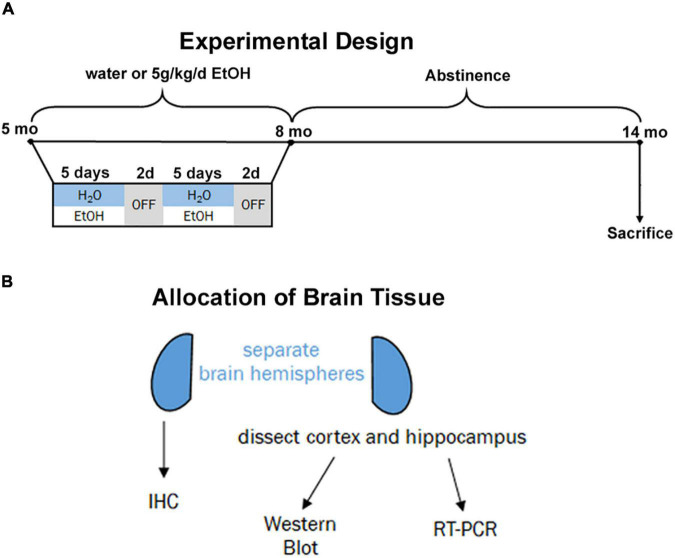
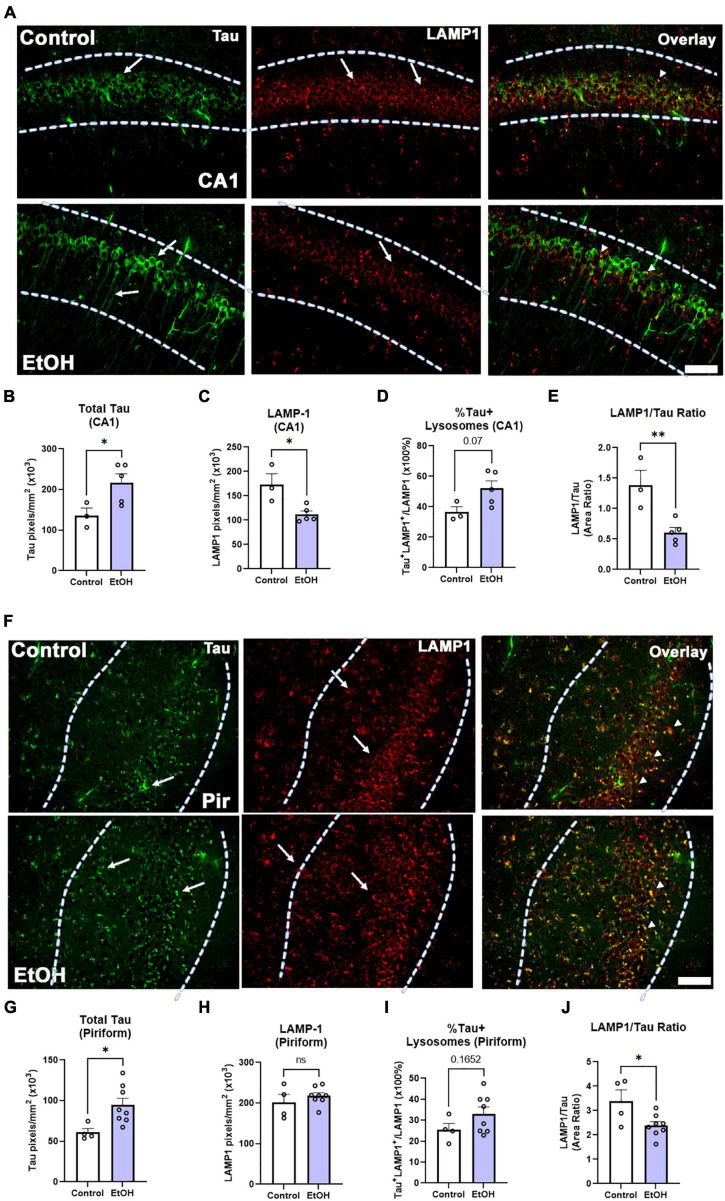
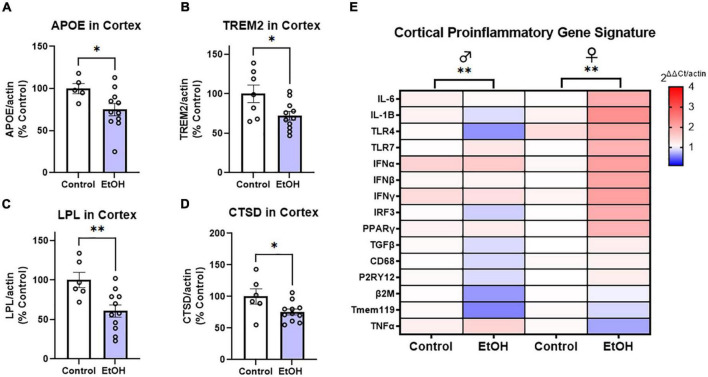
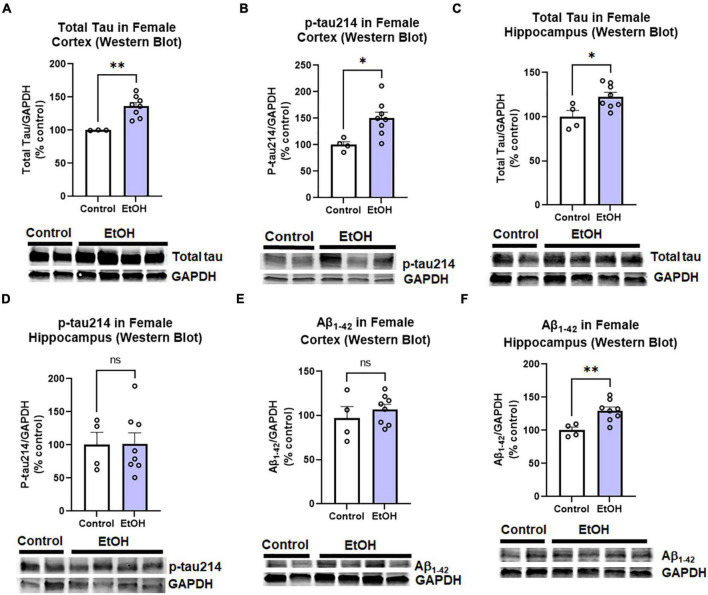
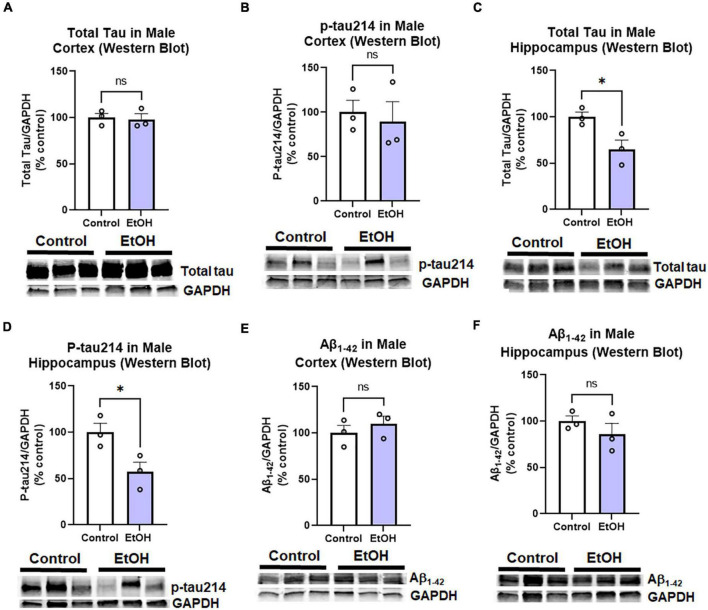
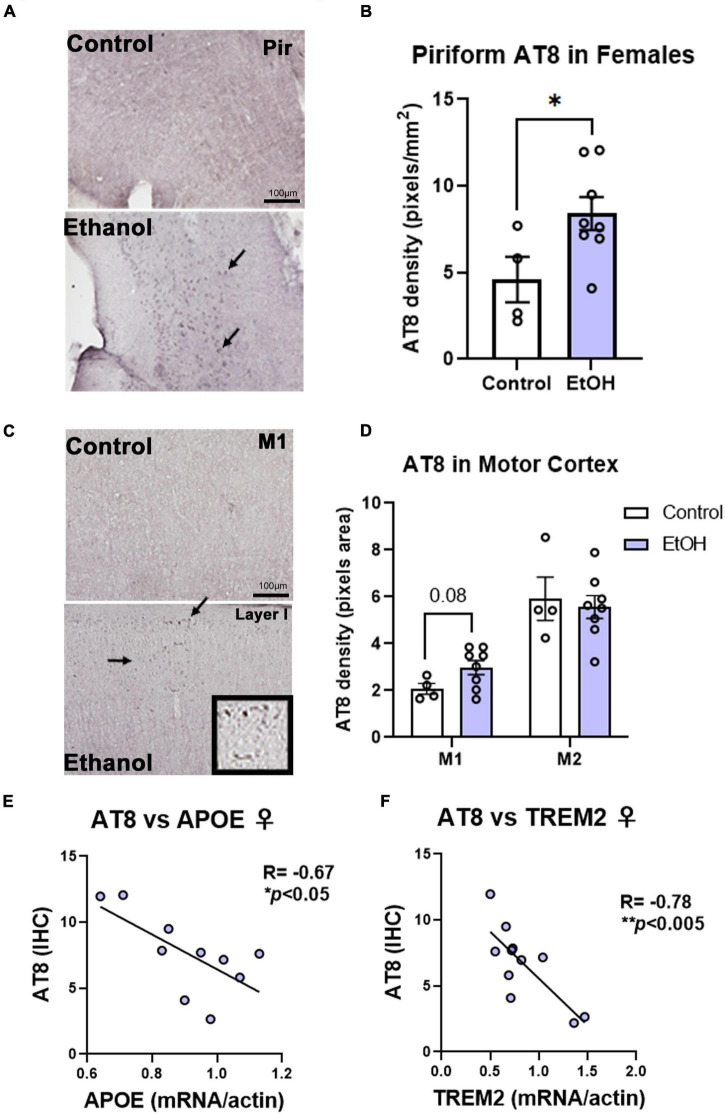
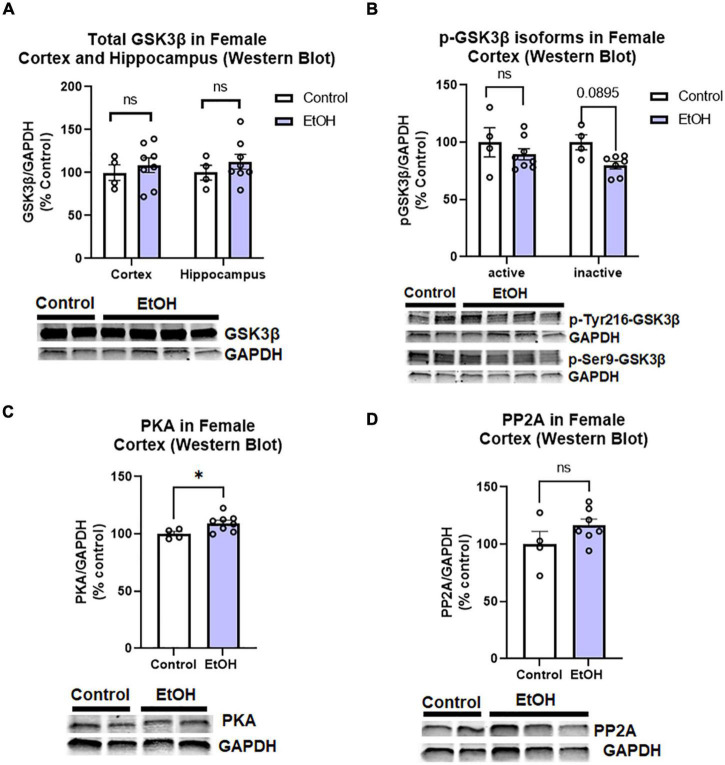
Epidemiological studies have found that heavy alcohol use is associated with increased risk for Alzheimer's disease (AD), with frequent drinking earlier in adulthood increasing risk. The increases in neuroinflammation featured in both heavy alcohol use and AD may be partially responsible for this link. However, it is unknown if abstinence mitigates this risk. We hypothesized that binge ethanol during mid adult life would persistently increase AD pathology even after prolonged abstinence. Male and female 3xTg-AD mice (APPSwe, tauP301, Psen1) which feature progressive amyloid (Aβ) and tau pathology, received chronic binge ethanol (5g/kg/day, 5-days-on/2-days-off, i.g.) or water during adulthood (from 5.5 to 9 months of age), followed by abstinence and assessment at 14 months of age. The effects of ethanol on protective AD genes (e.g., APOE and TREM2) as well as proinflammatory genes were measured by PCR. Levels of pathologic tau and Aβ were measured by immunohistochemistry and western blot. Ethanol caused persistent reductions in protective AD genes: APOE (25% reduction, * 0.05), TREM2 (28%, * 0.05), LPL (40%, 0.01), and CTSD (24%, * 0.05) and promoted a proinflammatory gene signature in female, but not male cortex. Concurrently, ethanol increased total and hyperphosphorylated tau (AT8) in piriform cortex and hippocampus of females, but not males. Levels of AT8 were negatively correlated with APOE ( = -0.67, * 0.05) and TREM2 ( = -0.78, 0.005) suggesting protective roles in pathogenesis. No differences were found in levels of main regulators of tau phosphorylation state (GSK3β, PKA, PP2A), suggesting ethanol disrupted clearance of tau. Therefore, we measured the effect of ethanol on lysosomes, which degrade tau, and lysosomal localization of tau using co-immunofluorescence. In females, ethanol caused a persistent reduction in mature LAMP1 lysosomes in CA1 of hippocampus (35%, * 0.05), along with a 60% increase in total tau (* 0.05). Thus, chronic binge ethanol during mid adult life causes a persistent enhancement of tau pathology in cortical and hippocampal brain regions of females. Persistent AD pathology was associated with an increased proinflammatory signature and a reduction of mature lysosomes. This implicates binge ethanol exposure with increased risk of AD pathologic progression in females.
流行病学研究发现,大量饮酒与患阿尔茨海默病(AD)的风险增加有关,成年早期频繁饮酒会增加患病风险。大量饮酒和AD中都存在的神经炎症增加可能部分导致了这种关联。然而,戒酒是否能降低这种风险尚不清楚。我们假设成年中期的暴饮乙醇即使在长期戒酒之后也会持续增加AD病理学变化。具有进行性淀粉样蛋白(Aβ)和tau病理学特征的雄性和雌性3xTg-AD小鼠(APPSwe、tauP301、Psen1)在成年期(5.5至9月龄)接受慢性暴饮乙醇(5g/kg/天,5天饮酒/2天停饮,灌胃)或水,随后戒酒并在14月龄时进行评估。通过PCR检测乙醇对保护性AD基因(如APOE和TREM2)以及促炎基因的影响。通过免疫组织化学和蛋白质印迹法检测病理性tau和Aβ的水平。乙醇导致保护性AD基因持续减少:APOE(降低25%,*P<0.05)、TREM2(降低28%,*P<0.05)、LPL(降低40%,**P<0.01)和CTSD(降低24%,*P<0.05),并在雌性而非雄性皮质中促进促炎基因特征。同时,乙醇增加了雌性梨状皮质和海马体中总tau和过度磷酸化tau(AT8)的水平,但对雄性没有影响。AT8水平与APOE(r = -0.67,*P<0.05)和TREM2(r = -0.78,**P<0.005)呈负相关,表明它们在发病机制中具有保护作用。在tau磷酸化状态的主要调节因子(GSK3β、PKA、PP2A)水平上未发现差异,表明乙醇破坏了tau的清除。因此,我们使用共免疫荧光检测了乙醇对降解tau的溶酶体以及tau的溶酶体定位的影响。在雌性中,乙醇导致海马体CA1区成熟LAMP1溶酶体持续减少(35%,*P<0.05),同时总tau增加60%(*P<0.05)。因此,成年中期的慢性暴饮乙醇会导致雌性皮质和海马脑区tau病理学变化持续增强。持续的AD病理学变化与促炎特征增加和成熟溶酶体减少有关。这表明暴饮乙醇暴露会增加雌性AD病理进展的风险。