ICMR National Institute of Virology, 20-A, P B No 11, Dr Ambedkar Road, Pune, 411001, Maharashtra, India.
Maastricht University, Minderbroedersberg 4-6, 6211 LK, Maastricht, the Netherlands.
Microb Pathog. 2022 Jul;168:105608. doi: 10.1016/j.micpath.2022.105608. Epub 2022 May 30.
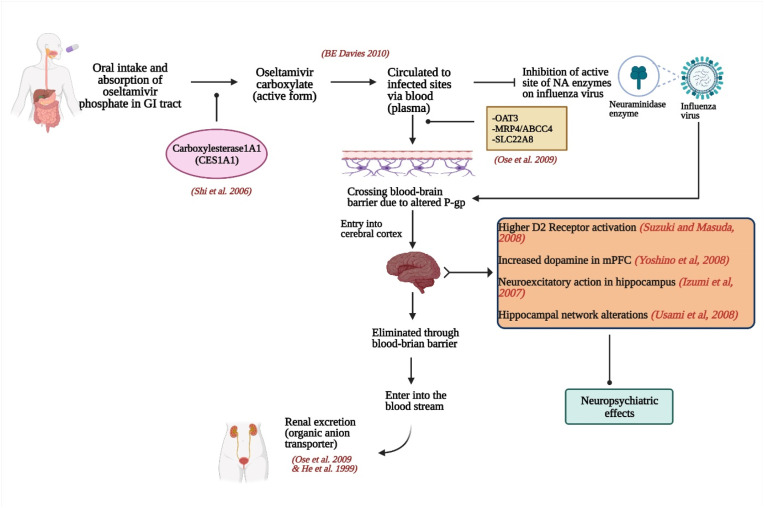
The recent pandemic, Coronavirus Disease 2019 (COVID-19) caused by severe acute respiratory syndrome coronavirus 2 (SARS-CoV-2) has devastated humanity and is continuing to threaten us. Due to the high transmissibility of this pathogen, researchers are still trying to cope with the treatment and prevention of this disease. Few of them were successful in finding cure for COVID-19 by including repurposed drugs in the treatment. In such pandemic situations, when it is nearly impossible to design and implement a new drug target, previously designed antiviral drugs could help against novel viruses, referred to as drug repurposing/redirecting/repositioning or re-profiling. This review describes the current landscape of the repurposing of antiviral drugs for COVID-19 and the impact of these drugs on our nervous system. In some cases, specific antiviral therapy has been notably associated with neurological toxicity, characterized by peripheral neuropathy, neurocognitive and neuropsychiatric effects within the central nervous system (CNS).
最近的一次大流行,由严重急性呼吸系统综合征冠状病毒 2(SARS-CoV-2)引起的 2019 年冠状病毒病(COVID-19)已经使人类遭受重创,并且仍在继续威胁着我们。由于这种病原体具有很高的传染性,研究人员仍在努力应对这种疾病的治疗和预防。其中一些人通过在治疗中加入重新利用的药物成功地找到了 COVID-19 的治疗方法。在这种大流行的情况下,当几乎不可能设计和实施新的药物靶点时,以前设计的抗病毒药物可能有助于对抗新型病毒,这被称为药物再利用/重新定位/重新定位或重新定位。这篇综述描述了抗病毒药物在 COVID-19 中的再利用现状,以及这些药物对我们神经系统的影响。在某些情况下,特定的抗病毒疗法与神经毒性明显相关,其特征是周围神经病、中枢神经系统(CNS)内的神经认知和神经精神效应。