Taiyab Aftab, West-Mays Judith
Department of Pathology and Molecular Medicine, Health Sciences Centre, McMaster University, Hamilton, ON, Canada.
Front Cell Dev Biol. 2022 May 17;10:886053. doi: 10.3389/fcell.2022.886053. eCollection 2022.
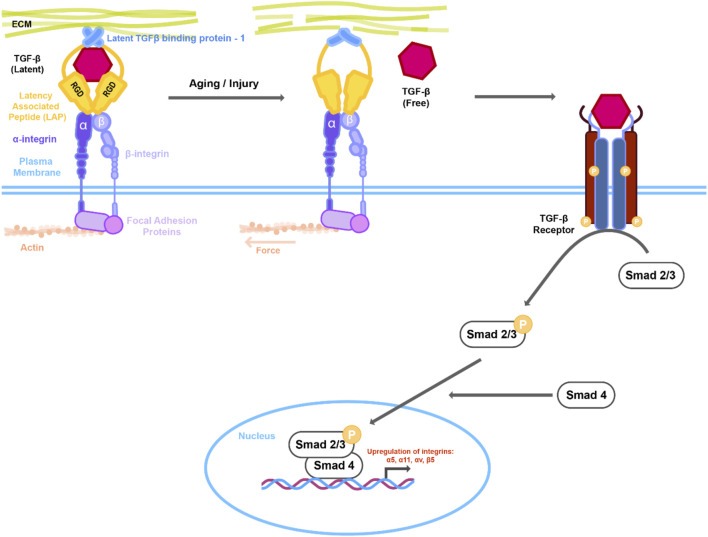
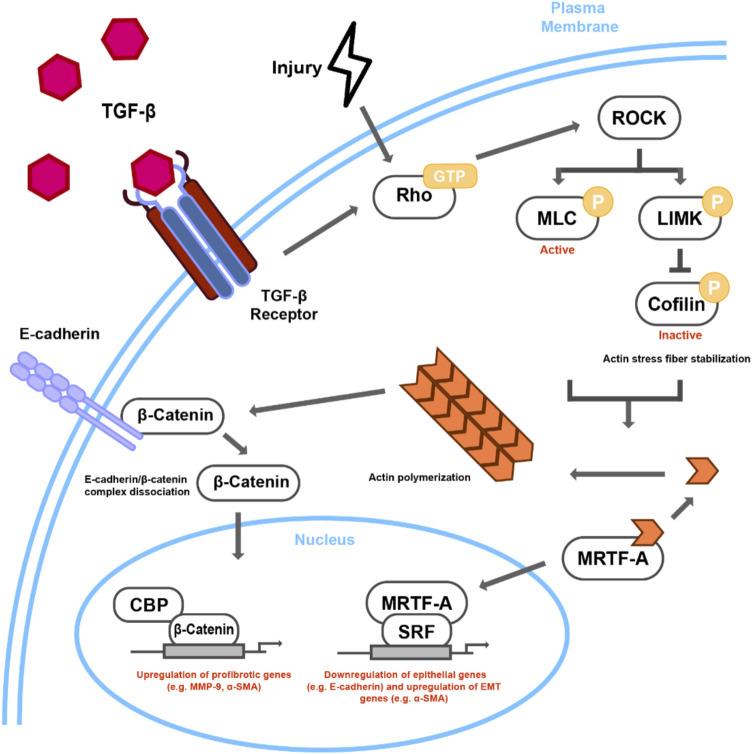
Injury to the ocular lens perturbs cell-cell and cell-capsule/basement membrane interactions leading to a myriad of interconnected signaling events. These events include cell-adhesion and growth factor-mediated signaling pathways that can ultimately result in the induction and progression of epithelial-mesenchymal transition (EMT) of lens epithelial cells and fibrosis. Since the lens is avascular, consisting of a single layer of epithelial cells on its anterior surface and encased in a matrix rich capsule, it is one of the most simple and desired systems to investigate injury-induced signaling pathways that contribute to EMT and fibrosis. In this review, we will discuss the role of key cell-adhesion and mechanotransduction related signaling pathways that regulate EMT and fibrosis in the lens.
眼晶状体损伤会扰乱细胞间以及细胞与囊膜/基底膜之间的相互作用,从而引发无数相互关联的信号事件。这些事件包括细胞黏附以及生长因子介导的信号通路,最终可能导致晶状体上皮细胞发生上皮-间质转化(EMT)并引发纤维化。由于晶状体无血管,其前表面由单层上皮细胞组成,并被富含基质的囊膜包裹,因此它是研究损伤诱导的、导致EMT和纤维化的信号通路的最简单且理想的系统之一。在本综述中,我们将讨论关键的细胞黏附及机械转导相关信号通路在晶状体中调节EMT和纤维化的作用。