Zhang Yuqin, Wu Gonghua, Chen Shirui, Ju Xu, Yimaer Wumitijiang, Zhang Wangjian, Lin Shao, Hao Yuantao, Gu Jing, Li Jinghua
School of Public Health, Sun Yat-Sen University, Guangzhou, China.
Department of Environmental Health Sciences, School of Public Health, University at Albany, State University of New York, Rensselaer, NY, USA.
Med Rev (2021). 2022 Mar 2;2(1):23-49. doi: 10.1515/mr-2021-0023. eCollection 2022 Feb 1.
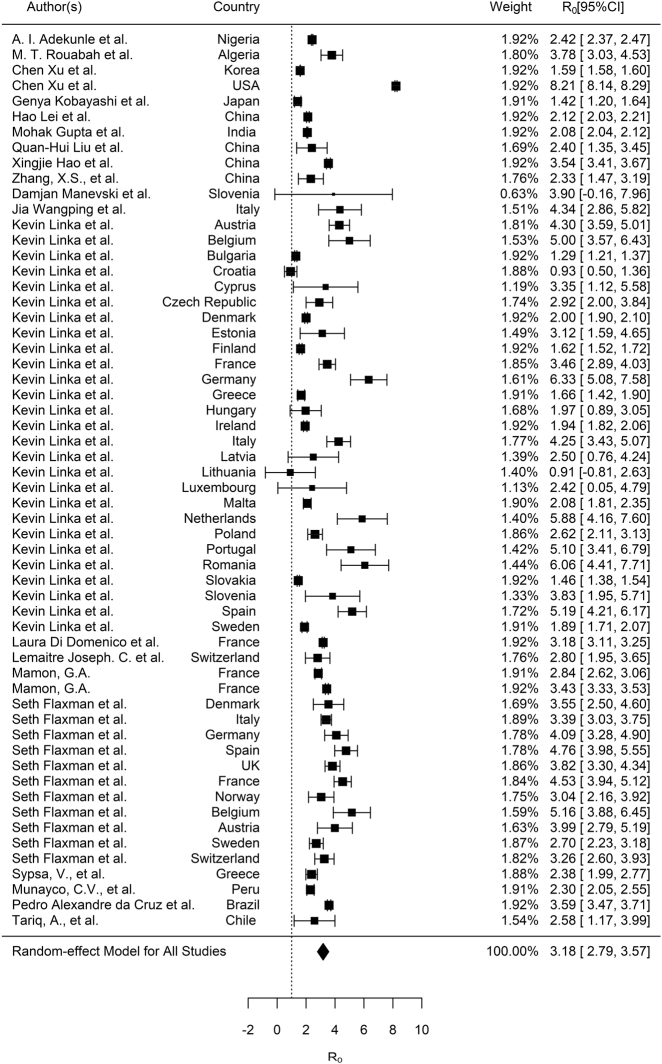
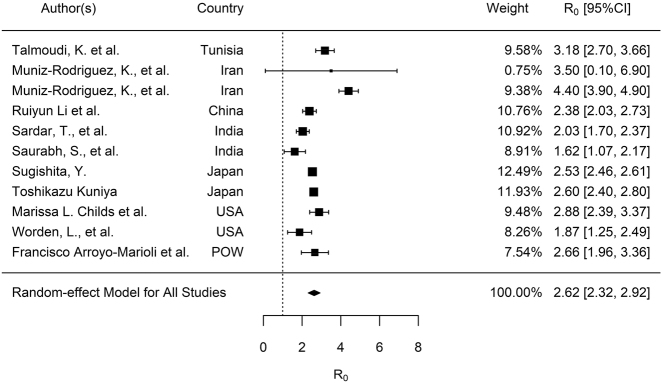
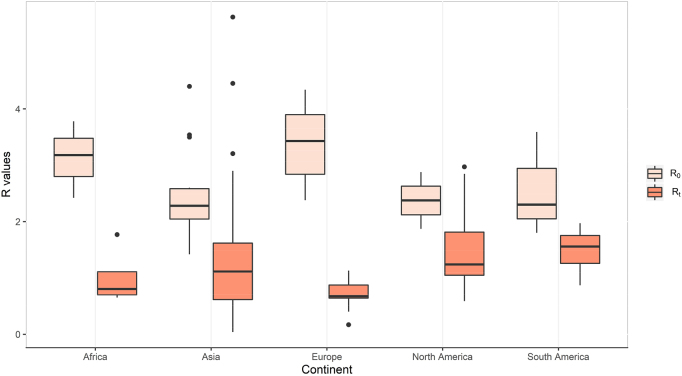
Severe acute respiratory syndrome coronavirus 2 (SARS-CoV-2) has caused hundreds of millions of infections and millions of deaths over past two years. Currently, many countries have still not been able to take the pandemic under control. In this review, we systematically summarized what we have done to mitigate the COVID-19 pandemic, from the perspectives of virus transmission, public health control measures, to the development and vaccination of COVID-19 vaccines. As a virus most likely coming from bats, the SARS-CoV-2 may transmit among people via airborne, faecal-oral, vertical or foodborne routes. Our meta-analysis suggested that the R of COVID-19 was 2.9 (95% CI: 2.7-3.1), and the estimates in Africa and Europe could be higher. The median R could decrease by 23-96% following the nonpharmacological interventions, including lockdown, isolation, social distance, and face mask, etc. Comprehensive intervention and lockdown were the most effective measures to control the pandemic. According to the pooled R in our meta-analysis, there should be at least 93.3% (95% CI: 89.9-96.2%) people being vaccinated around the world. Limited amount of vaccines and the inequity issues in vaccine allocation call for more international cooperation to achieve the anti-epidemic goals and vaccination fairness.
严重急性呼吸综合征冠状病毒2(SARS-CoV-2)在过去两年中已导致数亿人感染和数百万人死亡。目前,许多国家仍未能控制住疫情。在本综述中,我们从病毒传播、公共卫生控制措施以及新冠疫苗的研发和接种等角度,系统总结了我们为缓解新冠疫情所做的工作。作为一种极有可能源自蝙蝠的病毒,SARS-CoV-2可能通过空气传播、粪口传播、垂直传播或食物传播等途径在人群中传播。我们的荟萃分析表明,新冠病毒的R值为2.9(95%置信区间:2.7 - 3.1),非洲和欧洲的估计值可能更高。在采取包括封锁、隔离、社交距离和佩戴口罩等非药物干预措施后,R值中位数可降低23% - 96%。综合干预和封锁是控制疫情最有效的措施。根据我们荟萃分析中的合并R值,全球至少应有93.3%(95%置信区间:89.9% - 96.2%)的人接种疫苗。疫苗数量有限以及疫苗分配中的不公平问题,需要更多国际合作来实现抗疫目标和疫苗接种公平性。