College of Stomatology, Chongqing Medical University, 426# Songshibei Road, Yubei District, Chongqing, 401147, People's Republic of China.
Chongqing Key Laboratory of Oral Diseases and Biomedical Sciences, Chongqing, People's Republic of China.
Stem Cell Res Ther. 2022 Jun 3;13(1):234. doi: 10.1186/s13287-022-02907-y.
Bio-root regeneration is a promising treatment for tooth loss. It has been reported that dental-derived stem cells are effective seed cells for bio-root construction, but further applications are limited by their few sources. Human adipose tissues have a wide range of sources and numerous studies have confirmed the ability of adipose-derived stromal/stem cells (ASCs) in regenerative medicine. In the current study, the odontogenic capacities of ASCs were compared with dental-derived stem cells including dental follicle cells (DFCs), and stem cells from human exfoliated deciduous teeth (SHEDs).
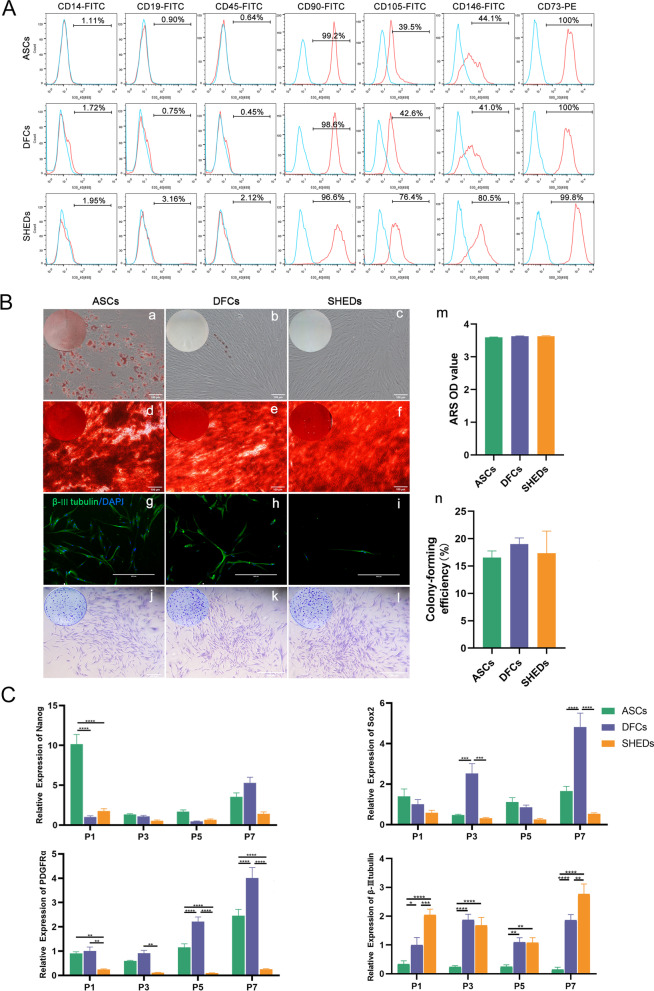
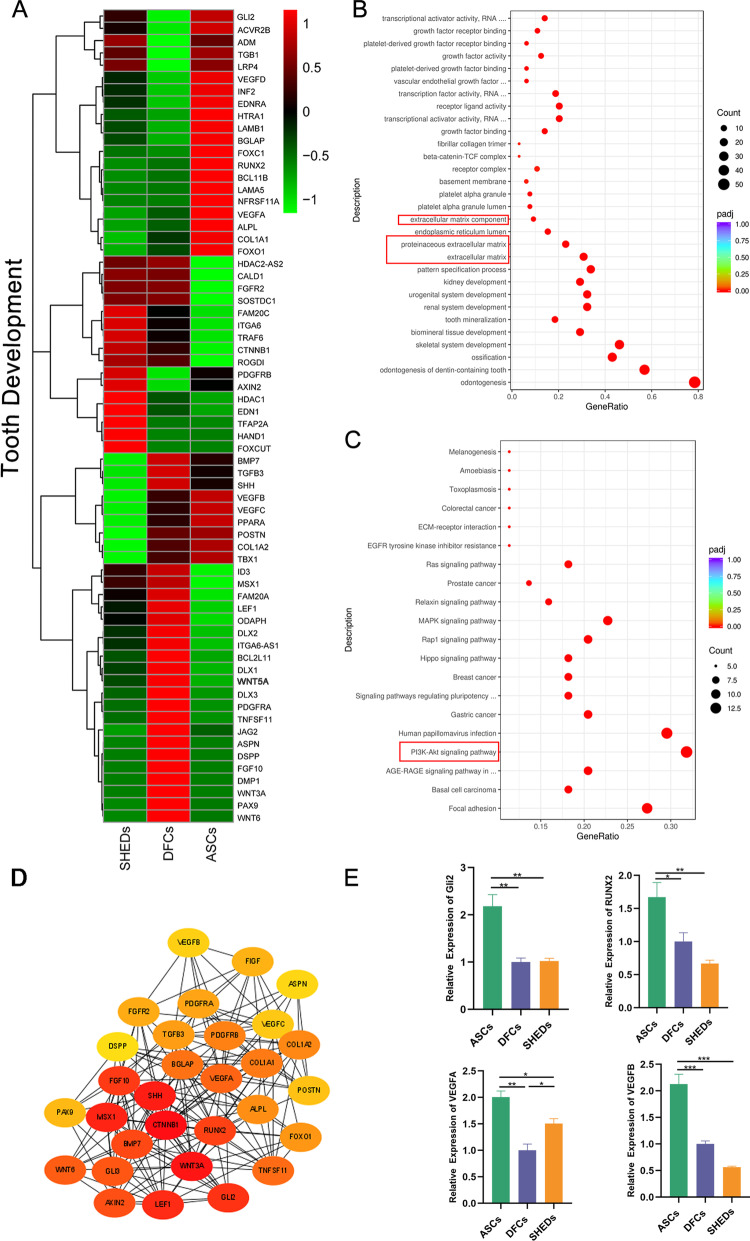
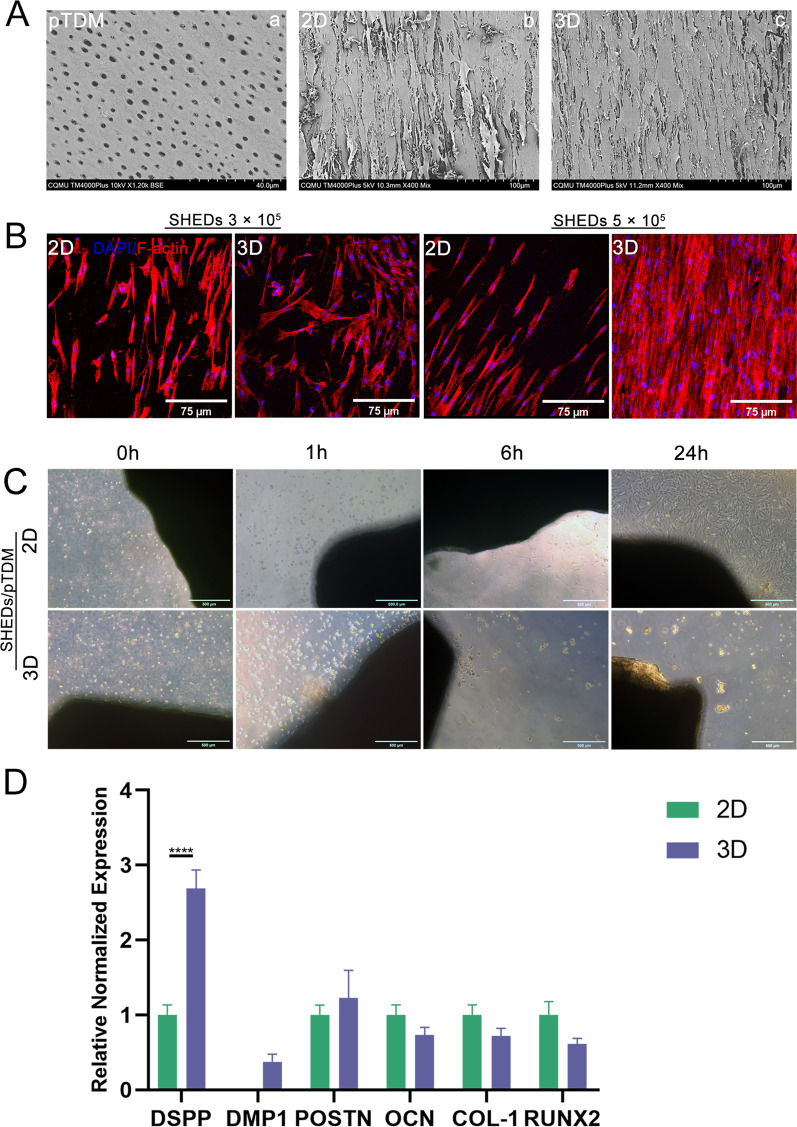
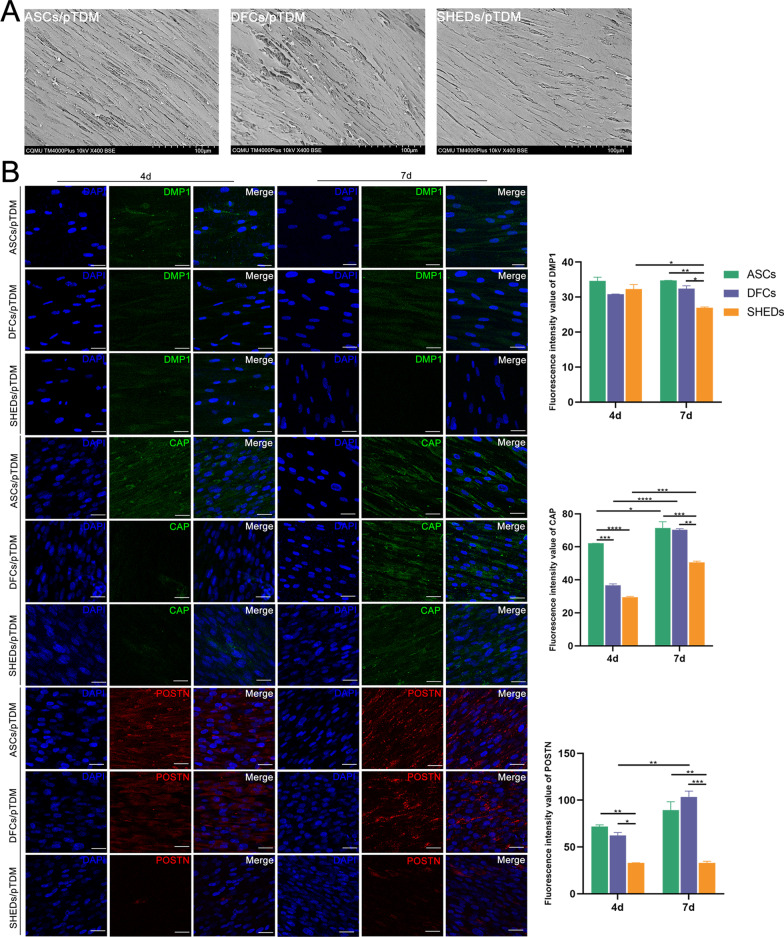
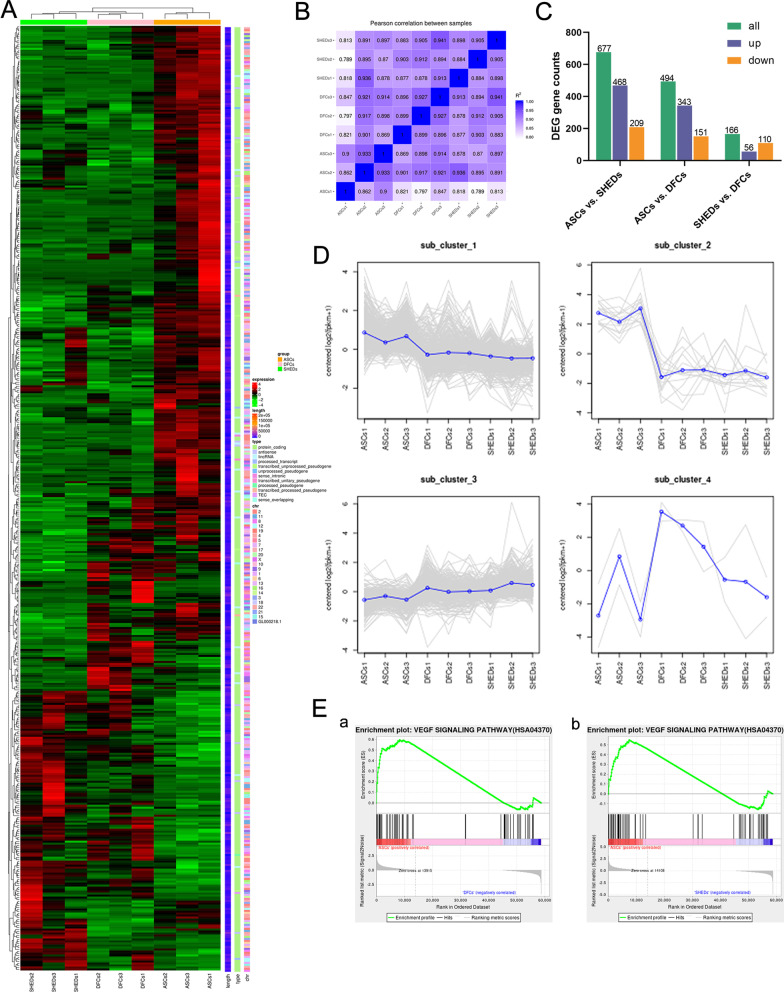
The biological characteristics of ASCs, DFCs, and SHEDs were explored in vitro. Two-dimensional (2D) and three-dimensional (3D) cultures were compared in vitro. Odontogenic characteristics of porcine-treated dentin matrix (pTDM) induced cells under a 3D microenvironment in vitro were compared. The complexes (cell/pTDM) were transplanted subcutaneously into nude mice to verify regenerative potential. RNA sequencing (RNA-seq) was used to explore molecular mechanisms of different seed cells in bio-root regeneration.
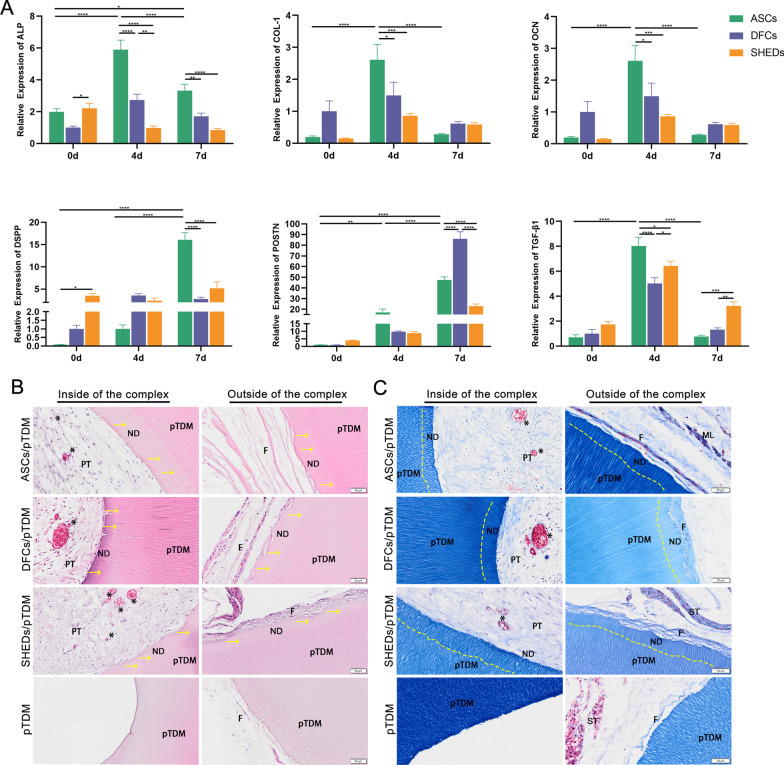
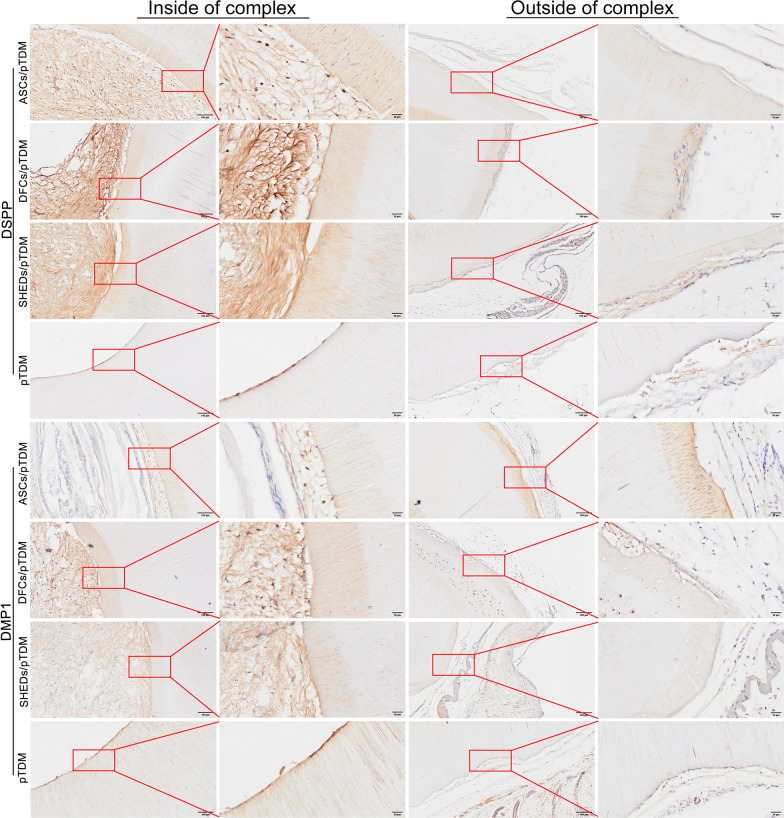
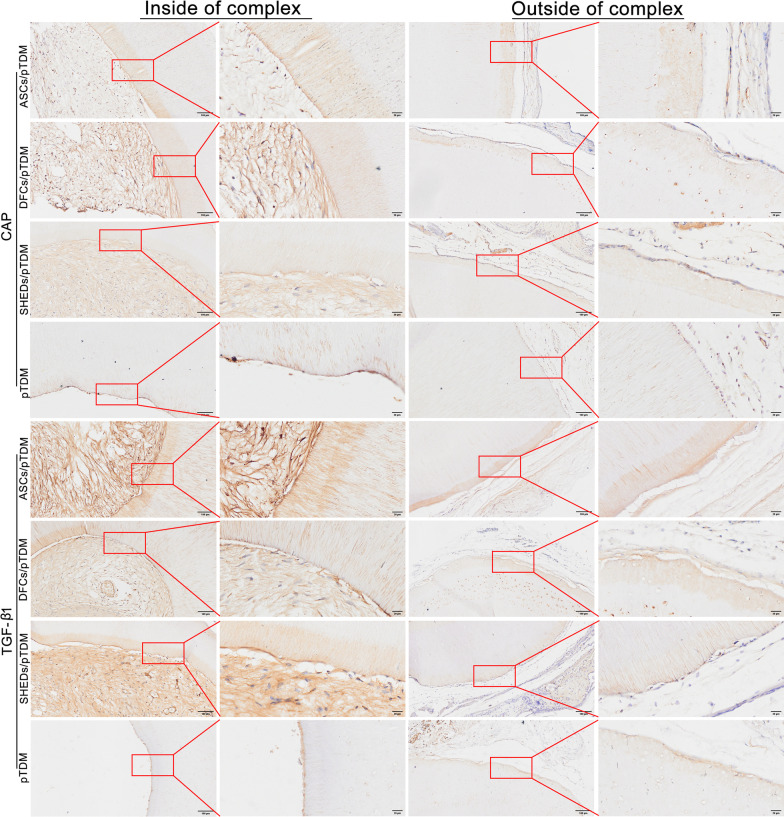
3D culture was more efficient in constructing bio-root complexes. ASCs exhibited good biological characteristics similar to dental-derived stem cells in vitro. Besides, pTDM induced ASCs presented odontogenic ability similar to dental-derived stem cells. Furthermore, 3D cultured ASCs/pTDM complex promoted regeneration of dentin-like, pulp-like, and periodontal fiber-like tissues in vivo. Analysis indicated that PI3K-Akt, VEGF signaling pathways may play key roles in the process of inducing ASCs odontogenic differentiation by pTDM.
ASCs are potential seed cells for pTDM-induced bio-root regeneration, providing a basis for further research and application.
生物牙根再生是治疗牙齿缺失的一种有前途的方法。据报道,牙源性干细胞是构建生物牙根的有效种子细胞,但由于其来源有限,进一步的应用受到限制。人类脂肪组织来源广泛,许多研究已经证实脂肪来源的基质/干细胞(ASCs)在再生医学中的能力。在本研究中,比较了 ASCs 与牙源性干细胞(包括牙囊细胞(DFCs)和人乳牙脱落干细胞(SHEDs))的成牙能力。
体外探索 ASCs、DFCs 和 SHEDs 的生物学特性。比较体外二维(2D)和三维(3D)培养。比较体外 3D 微环境中猪处理牙本质基质(pTDM)诱导细胞的成牙特性。将细胞/pTDM 复合物移植到裸鼠皮下,以验证其再生潜能。使用 RNA 测序(RNA-seq)探索不同种子细胞在生物牙根再生中的分子机制。
3D 培养更有效地构建生物牙根复合物。ASCs 在体外表现出与牙源性干细胞相似的良好生物学特性。此外,pTDM 诱导的 ASCs 表现出类似于牙源性干细胞的成牙能力。此外,3D 培养的 ASCs/pTDM 复合物在体内促进了牙本质样、牙髓样和牙周纤维样组织的再生。分析表明,PI3K-Akt、VEGF 信号通路可能在 pTDM 诱导 ASCs 成牙分化过程中发挥关键作用。
ASCs 是 pTDM 诱导生物牙根再生的潜在种子细胞,为进一步的研究和应用提供了依据。