Bzowski Paweł, Borys Damian, Gorczewski Kamil, Chmura Agnieszka, Daszewska Kinga, Gorczewska Izabela, Kastelik-Hryniewiecka Anna, Szydło Marcin, d'Amico Andrea, Sokół Maria
Department of Nuclear Medicine and Endocrine Oncology, PET Diagnostics Unit, Maria Skłodowska-Curie National Research Institute of Oncology, Gliwice Branch, Gliwice, Poland.
Department of Systems Biology and Engineering, Silesian University of Technology, Akademicka 16, 44-100, Gliwice, Poland.
EJNMMI Phys. 2022 Jun 6;9(1):41. doi: 10.1186/s40658-022-00471-1.
I Iodine (T[Formula: see text] = 4.18 d) is the only long-life positron emitter radioisotope of iodine that may be used for both imaging and therapy as well as for I dosimetry. Its physical characteristics permits taking advantages of the higher Positron Emission Tomography (PET) image quality, whereas the availability of new molecules to be targeted with I makes it a novel innovative radiotracer probe for a specific molecular targeting.
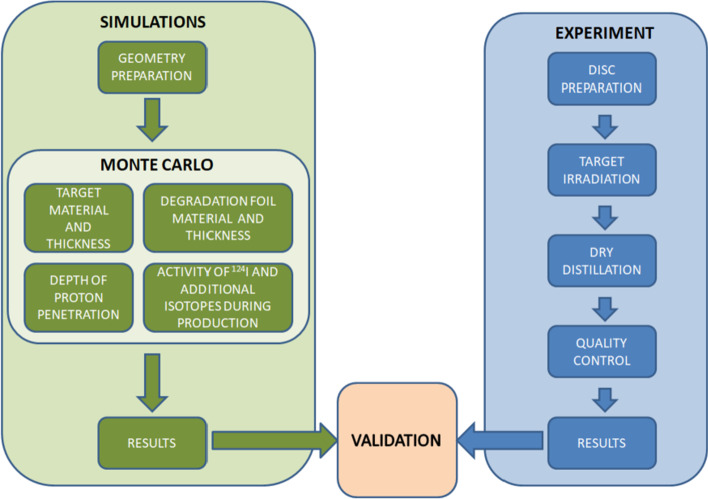
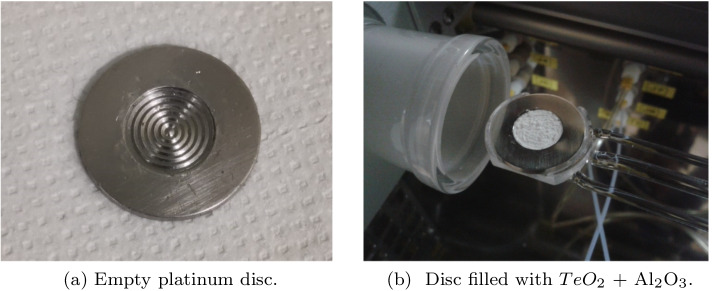
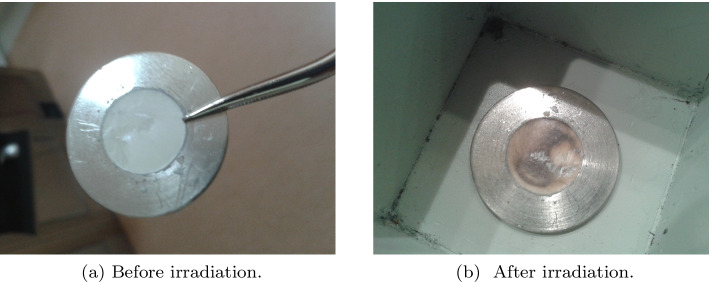
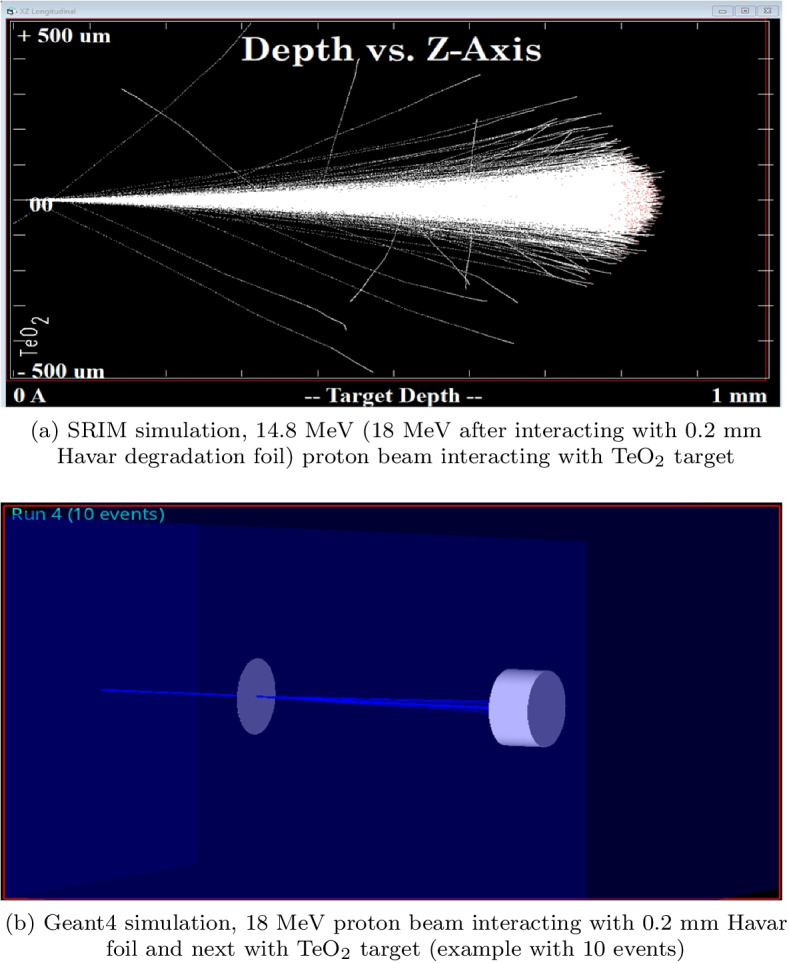
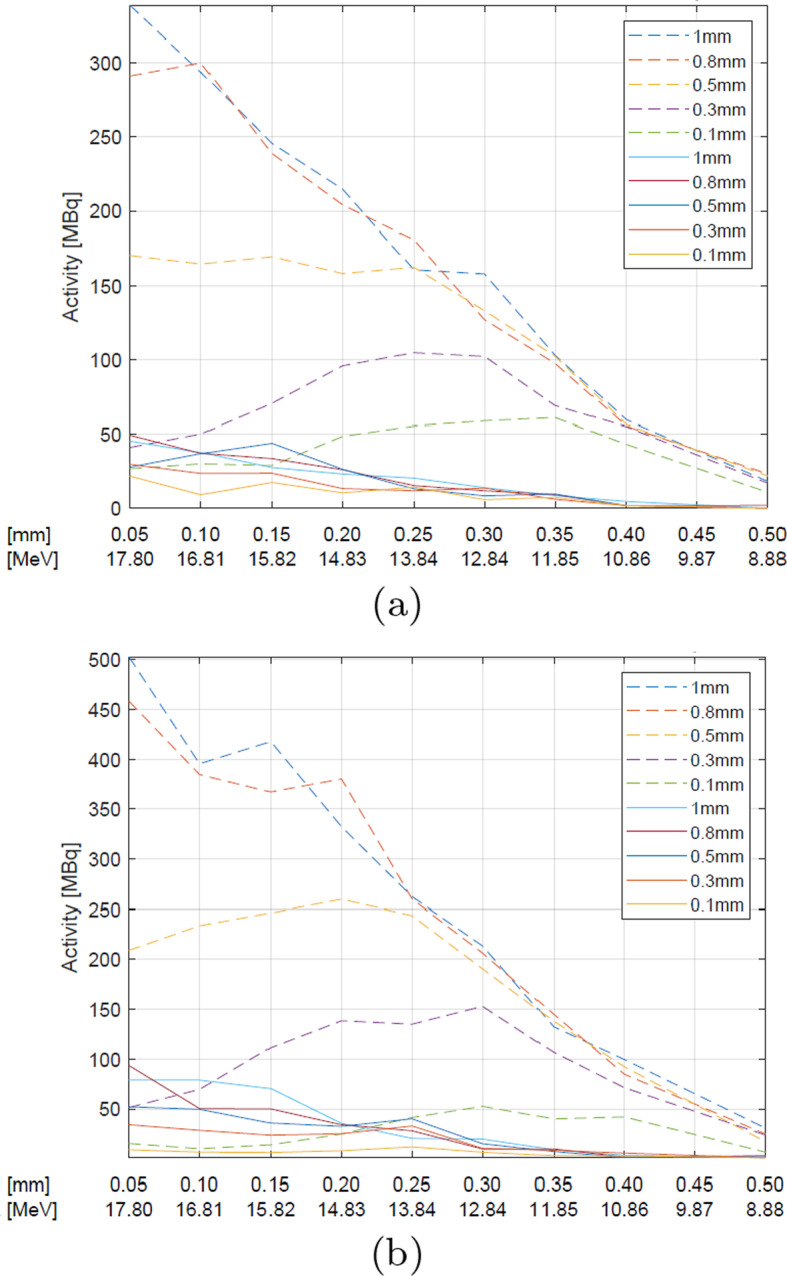
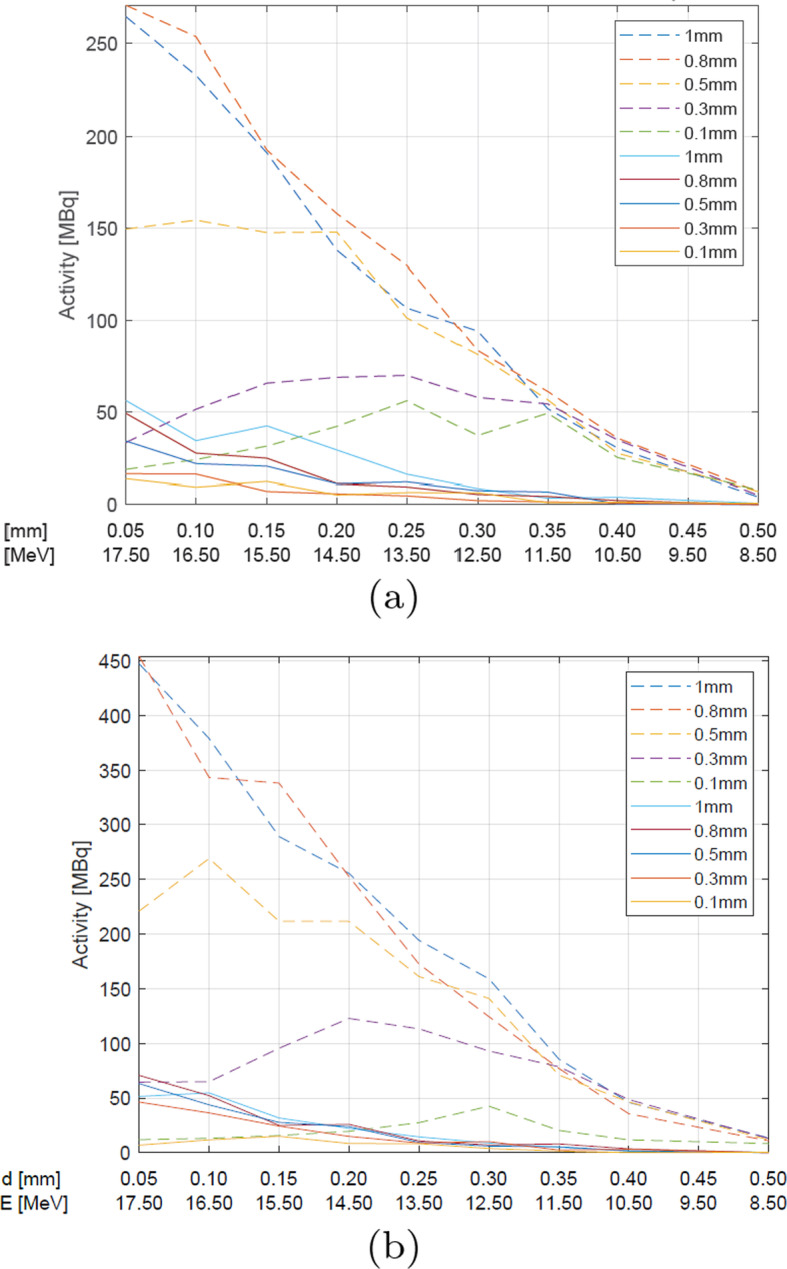
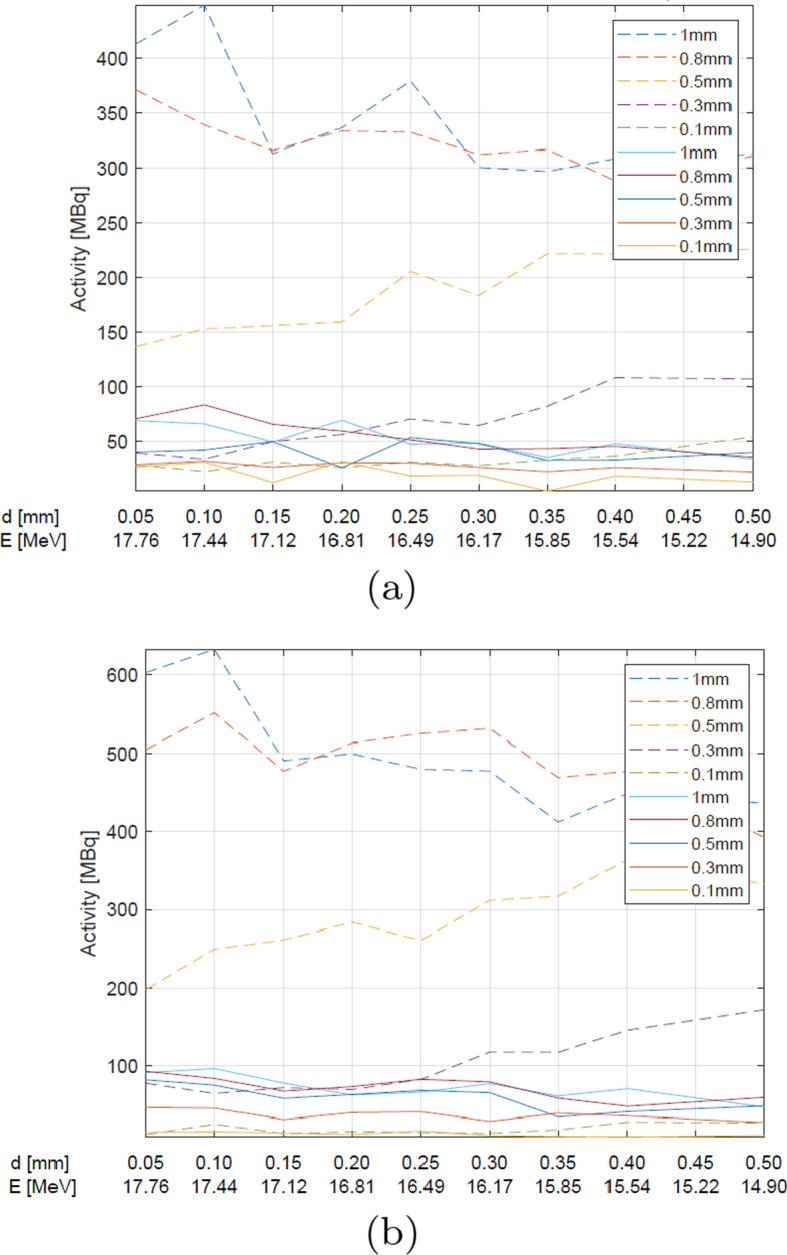
In this study Monte Carlo and SRIM/TRIM modelling was applied to predict the nuclear parameters of the I production process in a small medical cyclotron IBA 18/9 Cyclone. The simulation production yields for I and the polluting radioisotopes were calculated for the natural and enriched TeO + AlO solid targets irradiated with 14.8 MeV protons. The proton beam was degraded energetically from 18 MeV with 0.2 mm Havar foil. The Te(p,xn)I reactions were taken into account in the simulations. The optimal thickness of the target material was calculated using the SRIM/TRIM and Geant4 codes. The results of the simulations were compared with the experimental data obtained for the natural TeO +AlO target. The dry distillation technique of the 124-iodine was applied.
The experimental efficiency for the natural Te target was better than 41% with an average thick target (>0.8 mm) yield of 1.32 MBq/μAh. Joining the Monte Carlo and experimental approaches makes it possible to optimize the methodology for the I production from the expensive Te enriched targets.
碘-124(半衰期T[公式:见文本]=4.18天)是碘唯一的长寿命正电子发射体放射性同位素,可用于成像、治疗以及碘剂量测定。其物理特性有利于利用更高质量的正电子发射断层扫描(PET)图像,而新型可被碘-124靶向的分子的出现使其成为一种用于特定分子靶向的新型创新放射性示踪剂探针。
在本研究中,应用蒙特卡罗和SRIM/TRIM模型来预测小型医用回旋加速器IBA 18/9 Cyclone中碘-124生产过程的核参数。计算了用14.8 MeV质子辐照天然和富集的TeO₂ + Al₂O₃固体靶时碘-124及污染放射性同位素的模拟产率。质子束通过0.2 mm哈瓦尔箔从18 MeV进行能量降解。模拟中考虑了Te(p,xn)I反应。使用SRIM/TRIM和Geant4代码计算靶材料的最佳厚度。将模拟结果与天然TeO₂ + Al₂O₃靶获得的实验数据进行比较。应用了碘-124的干馏技术。
天然碲靶的实验效率优于41%,平均厚靶(>0.8 mm)产率为1.32 MBq/μAh。结合蒙特卡罗和实验方法能够优化从昂贵的富集碲靶生产碘-124的方法。