George K J H, Borjian S, Cross M C, Hicks J W, Schaffer P, Kovacs M S
Lawson Health Research Institute 268 Grosvenor Street London ON N6A 4V2 Canada
Medical Biophysics, Western University 1151 Richmond Street N. London ON N6A 5C1 Canada.
RSC Adv. 2021 Sep 21;11(49):31098-31123. doi: 10.1039/d1ra04480j. eCollection 2021 Sep 14.
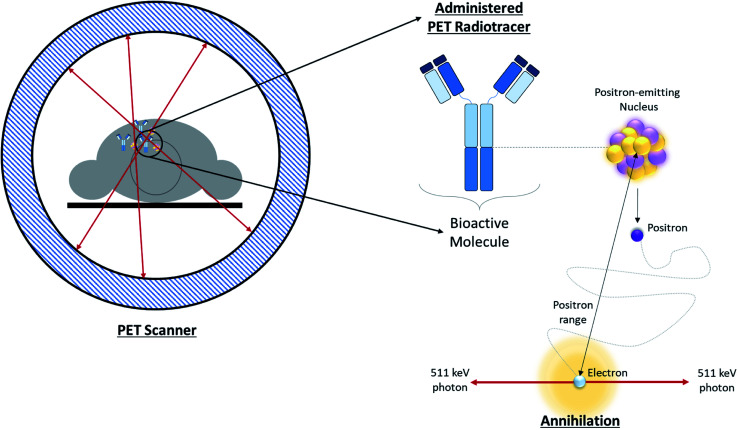
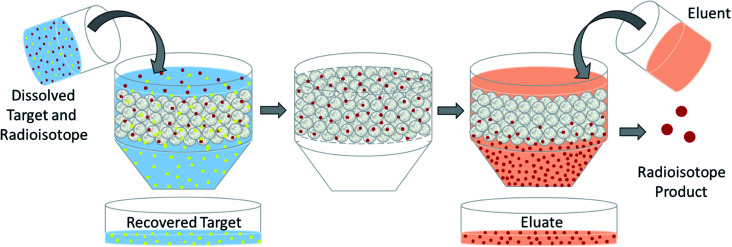
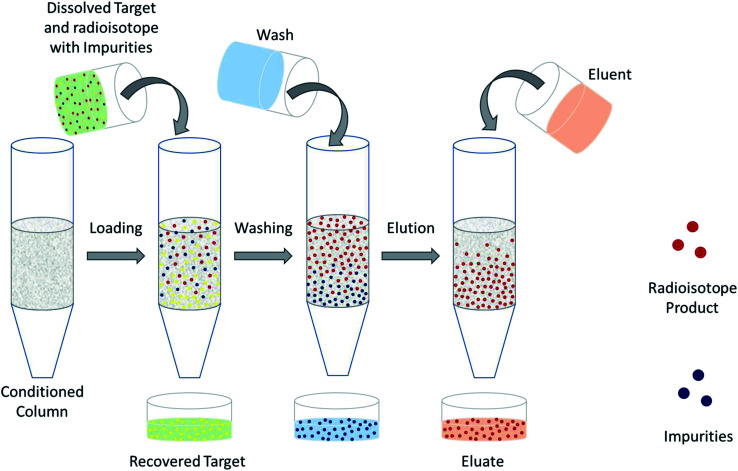
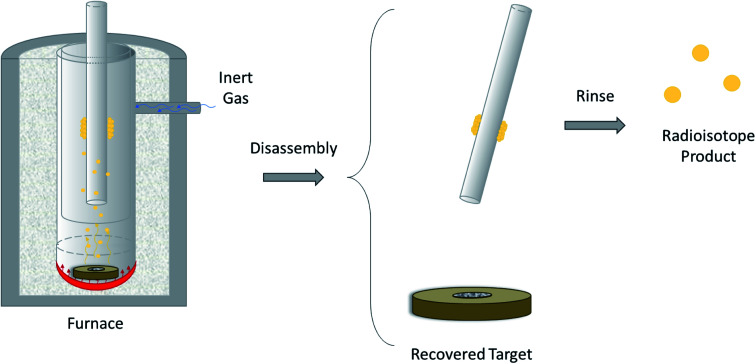
Molecular imaging with medical radioisotopes enables the minimally-invasive monitoring of aberrant biochemical, cellular and tissue-level processes in living subjects. The approach requires the administration of radiotracers composed of radioisotopes attached to bioactive molecules, the pairing of which considers several aspects of the radioisotope in addition to the biological behavior of the targeting molecule to which it is attached. With the advent of modern cellular and biochemical techniques, there has been a virtual explosion in potential disease recognition antigens as well as targeting moieties, which has subsequently opened new applications for a host of emerging radioisotopes with well-matched properties. Additionally, the global radioisotope production landscape has changed rapidly, with reactor-based production and its long-defined, large-scale centralized manufacturing and distribution paradigm shifting to include the manufacture and distribution of many radioisotopes a worldwide fleet of cyclotrons now in operation. Cyclotron-based radioisotope production has become more prevalent given the commercial availability of instruments, coupled with the introduction of new target hardware, process automation and target manufacturing methods. These advances enable sustained, higher-power irradiation of solid targets that allow hospital-based radiopharmacies to produce a suite of radioisotopes that drive research, clinical trials, and ultimately clinical care. Over the years, several different radioisotopes have been investigated and/or selected for radiolabeling due to favorable decay characteristics ( a suitable half-life, high probability of positron decay, ), well-elucidated chemistry, and a feasible production framework. However, longer-lived radioisotopes have surged in popularity given recent regulatory approvals and incorporation of radiopharmaceuticals into patient management within the medical community. This review focuses on the applications, nuclear properties, and production and purification methods for some of the most frequently used/emerging positron-emitting, solid-target-produced radioisotopes that can be manufactured using small-to-medium size cyclotrons (≤24 MeV).
利用医用放射性同位素进行分子成像能够对活体受试者异常的生化、细胞和组织水平过程进行微创监测。该方法需要给予由附着于生物活性分子的放射性同位素组成的放射性示踪剂,除了考虑与其相连的靶向分子的生物学行为外,放射性同位素与靶向分子的配对还需考虑放射性同位素的几个方面。随着现代细胞和生化技术的出现,潜在的疾病识别抗原以及靶向部分几乎呈爆炸式增长,这随后为许多具有匹配良好性质的新兴放射性同位素开辟了新的应用。此外,全球放射性同位素的生产格局迅速变化,基于反应堆的生产及其长期定义的大规模集中制造和分销模式正在转变,以包括许多放射性同位素的制造和分销——目前全球有一批回旋加速器在运行。鉴于仪器的商业可用性,再加上新的靶硬件、过程自动化和靶制造方法的引入,基于回旋加速器的放射性同位素生产变得更加普遍。这些进展使得能够对固体靶进行持续、高功率的辐照,从而使医院放射性药房能够生产一系列推动研究、临床试验并最终用于临床护理的放射性同位素。多年来,由于具有良好的衰变特性(合适的半衰期、正电子衰变的高概率)、明确的化学性质和可行的生产框架,几种不同的放射性同位素已被研究和/或选择用于放射性标记。然而,鉴于最近的监管批准以及放射性药物在医学界患者管理中的应用,寿命更长的放射性同位素越来越受欢迎。本综述重点关注一些最常用/新兴的、通过中小型回旋加速器(≤24 MeV)生产的发射正电子的固体靶放射性同位素的应用、核性质以及生产和纯化方法。