Department of Comparative Development and Genetics, Max Planck Institute for Plant Breeding Research, 50829 Cologne, Germany.
Cologne Biocenter, University of Cologne, 50674 Cologne, Germany.
Proc Natl Acad Sci U S A. 2022 Jun 14;119(24):e2202287119. doi: 10.1073/pnas.2202287119. Epub 2022 Jun 6.
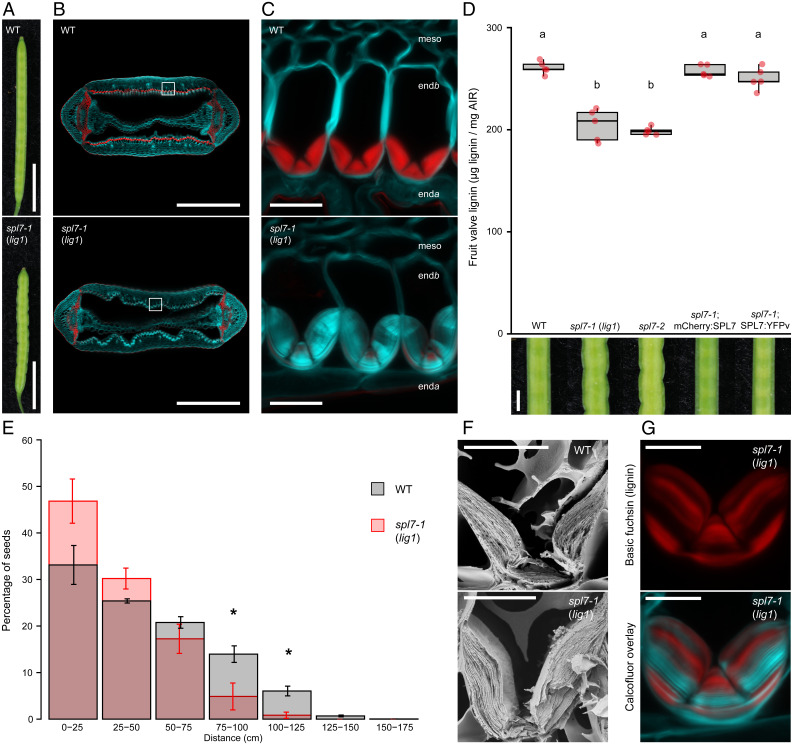
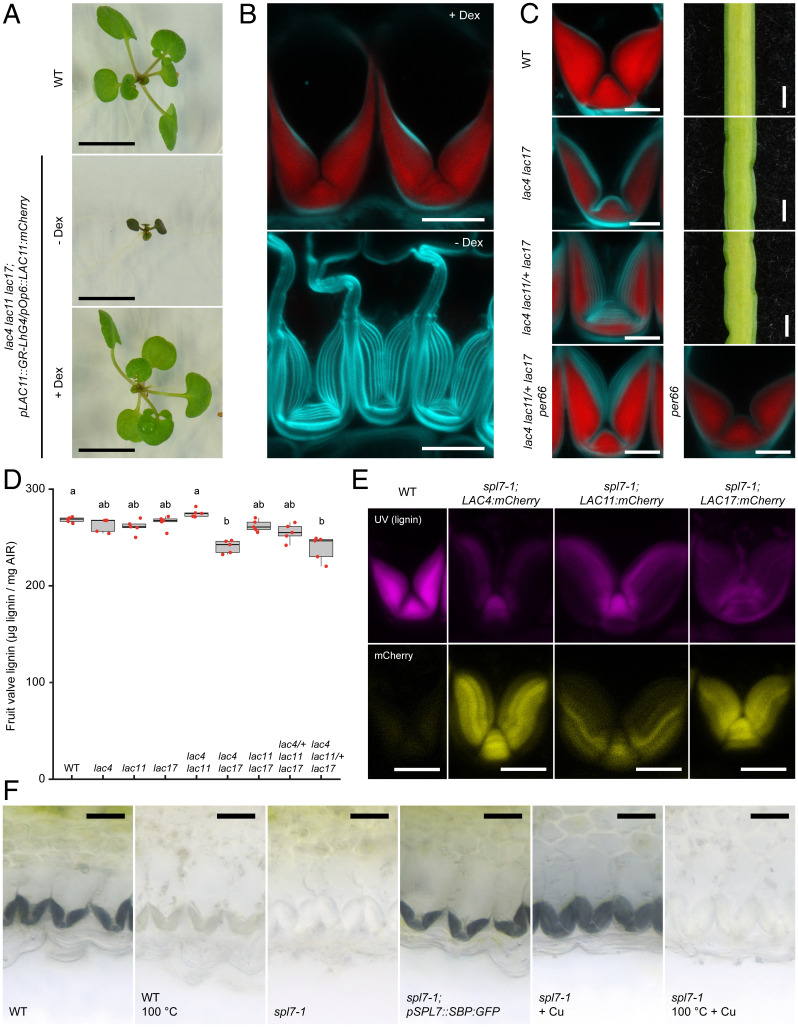
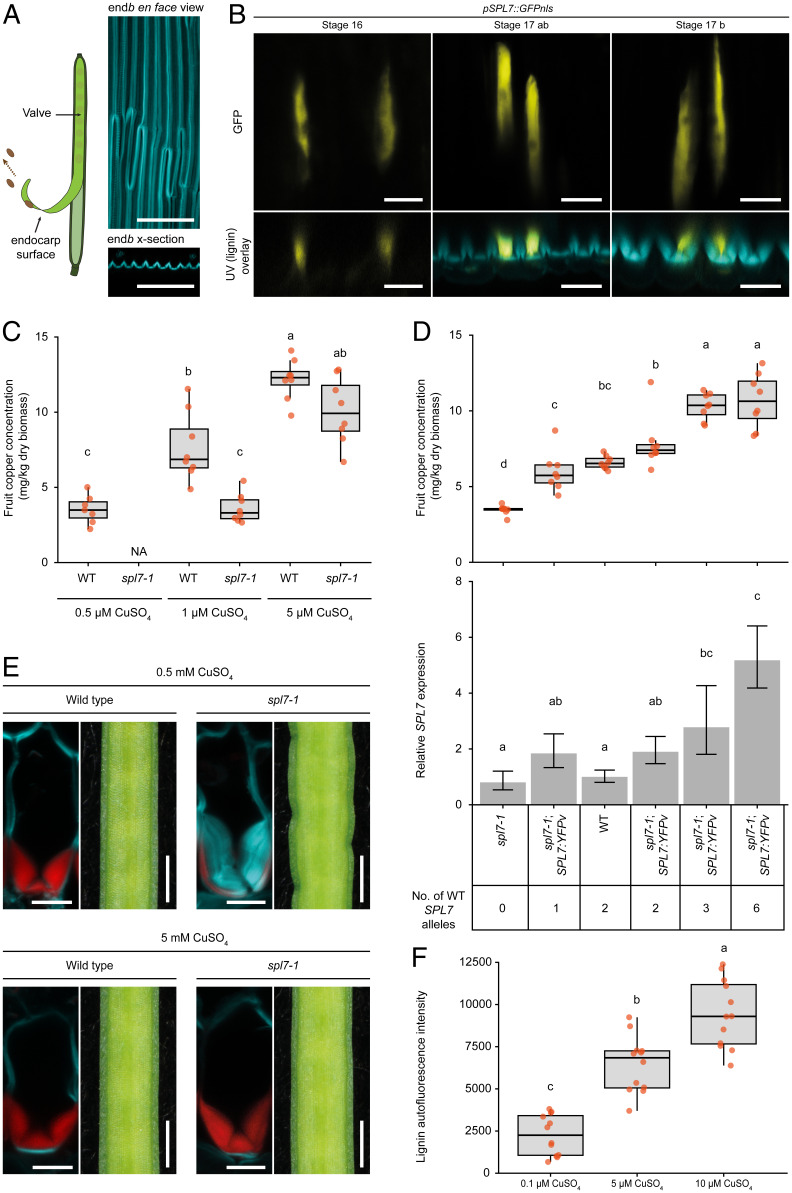
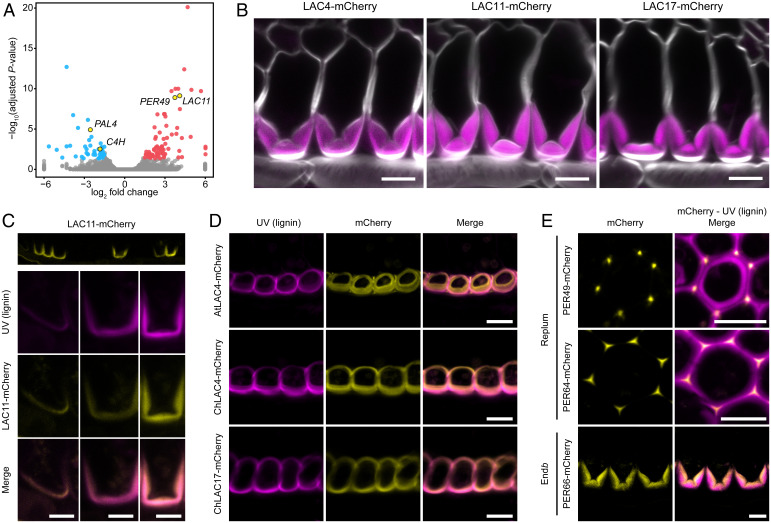
Exploding seed pods evolved in the Arabidopsis relative Cardamine hirsuta via morphomechanical innovations that allow the storage and rapid release of elastic energy. Asymmetric lignin deposition within endocarpb cell walls is one such innovation that is required for explosive seed dispersal and evolved in association with the trait. However, the genetic control of this novel lignin pattern is unknown. Here, we identify three lignin-polymerizing laccases, LAC4, 11, and 17, that precisely colocalize with, and are redundantly required for, asymmetric lignification of endocarpb cells. By screening for C. hirsuta mutants with less lignified fruit valves, we found that loss of function of the transcription factor gene SQUAMOSA PROMOTER-BINDING PROTEIN-LIKE 7 (SPL7) caused a reduction in endocarpb cell-wall lignification and a consequent reduction in seed dispersal range. SPL7 is a conserved regulator of copper homeostasis and is both necessary and sufficient for copper to accumulate in the fruit. Laccases are copper-requiring enzymes. We discovered that laccase activity in endocarpb cell walls depends on the SPL7 pathway to acclimate to copper deficiency and provide sufficient copper for lignin polymerization. Hence, SPL7 links mineral nutrition to efficient dispersal of the next generation.
Arabidopsis 近缘种堇菜属植物的爆裂荚果是通过形态机械创新进化而来的,这种创新使荚果能够储存和快速释放弹性能量。果壳细胞壁内不对称的木质素沉积就是这样一种创新,它是爆裂式种子传播所必需的,并与这一特征共同进化而来。然而,这种新型木质素模式的遗传控制尚不清楚。在这里,我们鉴定了三个木质素聚合漆酶,LAC4、11 和 17,它们与果壳细胞的不对称木质化精确共定位,并冗余地需要木质化。通过筛选木质素含量较低的堇菜果荚突变体,我们发现转录因子基因 SQUAMOSA PROMOTER-BINDING PROTEIN-LIKE 7 (SPL7) 的功能丧失导致果壳细胞壁木质化减少,从而导致种子散布范围减小。SPL7 是铜稳态的保守调控因子,是铜在果实中积累所必需的,也是铜积累所必需的。漆酶是铜依赖酶。我们发现,果壳细胞壁中漆酶的活性依赖于 SPL7 途径来适应铜缺乏,并为木质素聚合提供足够的铜。因此,SPL7 将矿物质营养与下一代的高效传播联系起来。