School of Biomedical Engineering and Imaging Sciences, King's College London, London, United Kingdom.
NumeriCor GmbH, Graz, Austria.
Med Image Anal. 2022 Aug;80:102483. doi: 10.1016/j.media.2022.102483. Epub 2022 May 27.
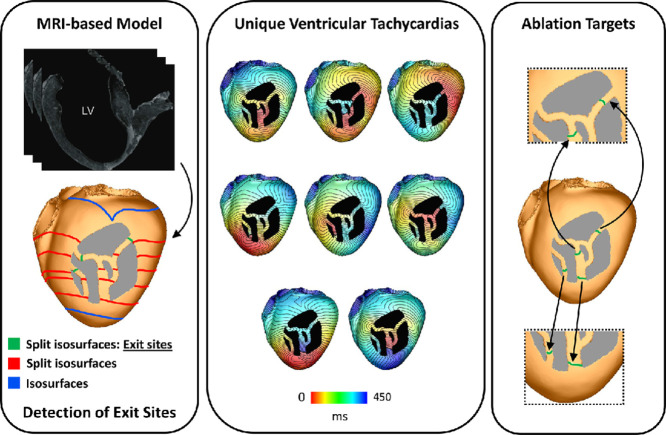
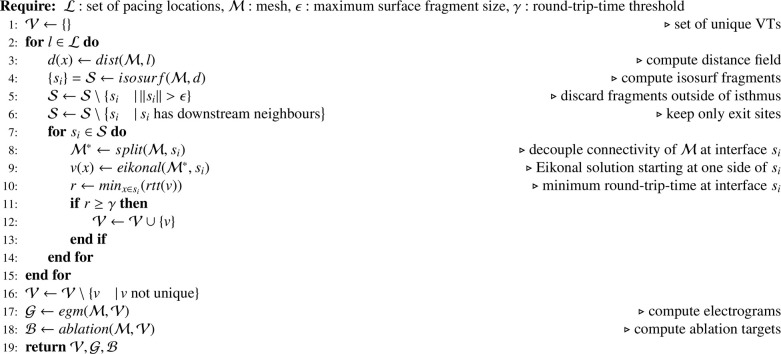
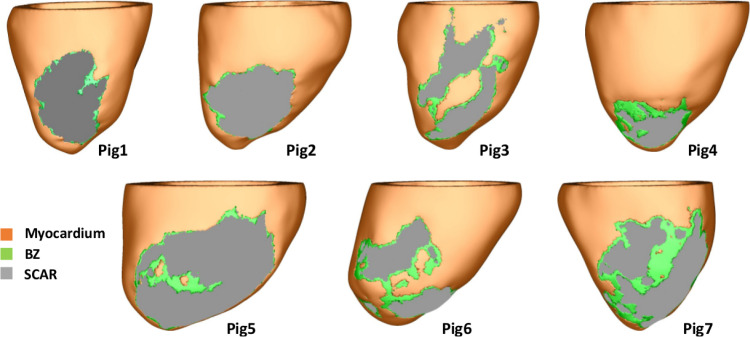
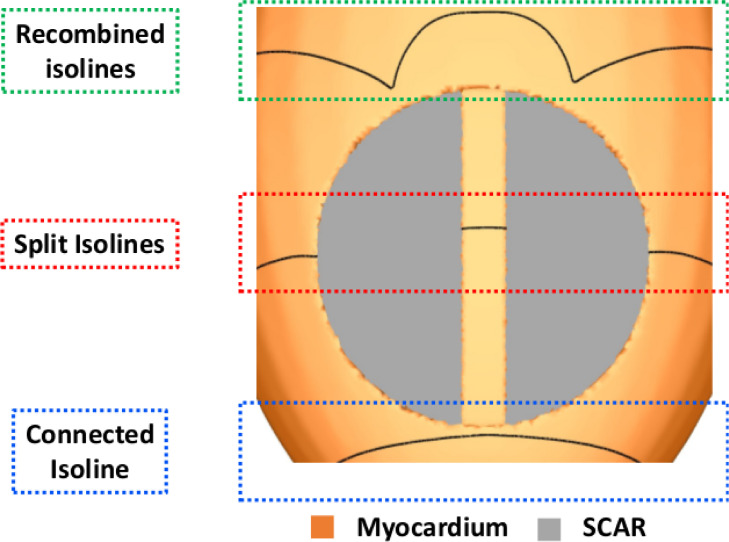
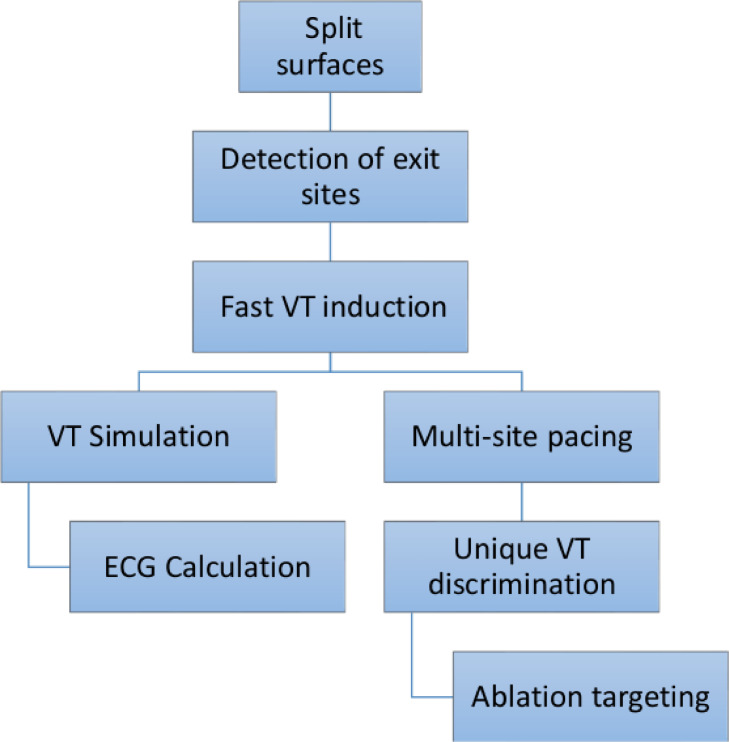
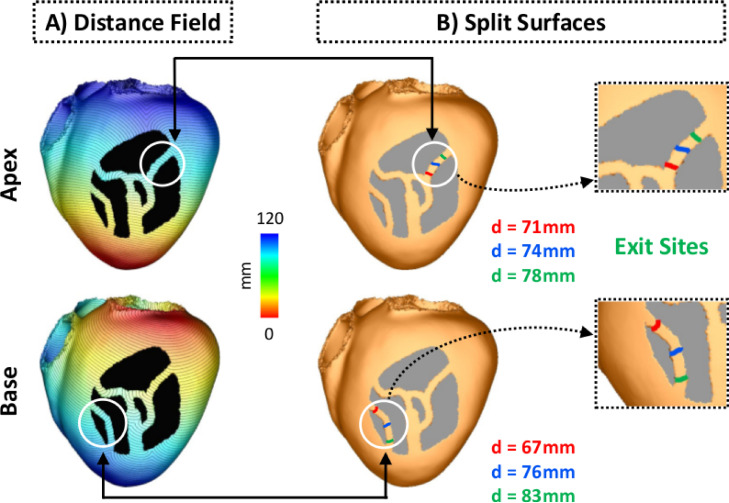
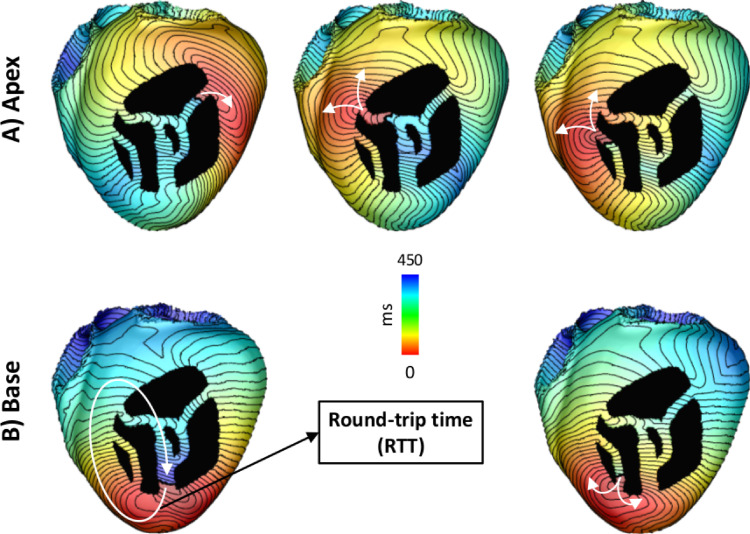
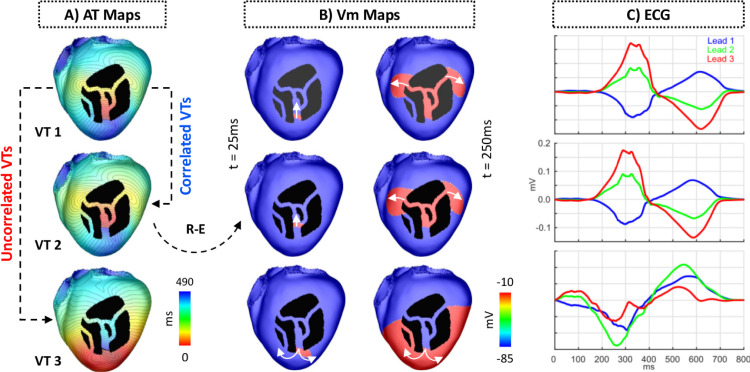
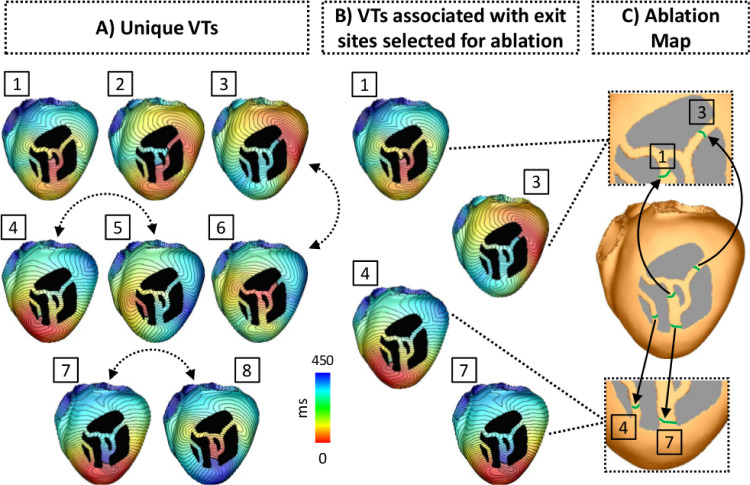
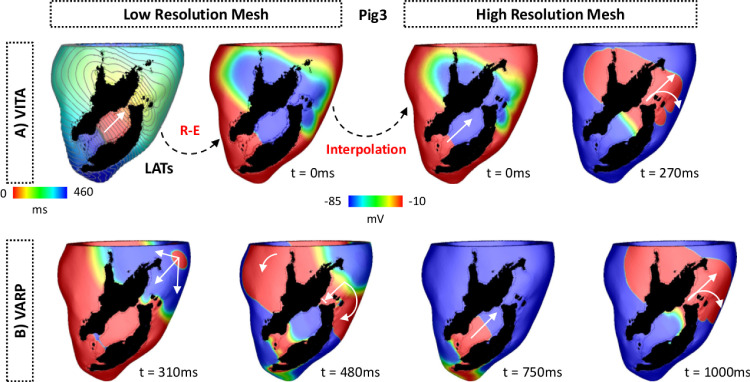
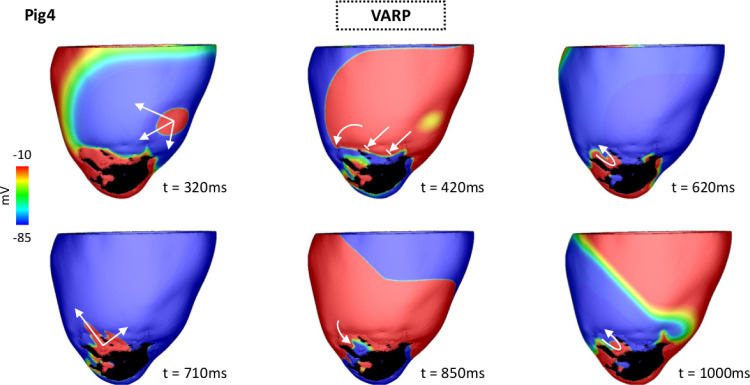
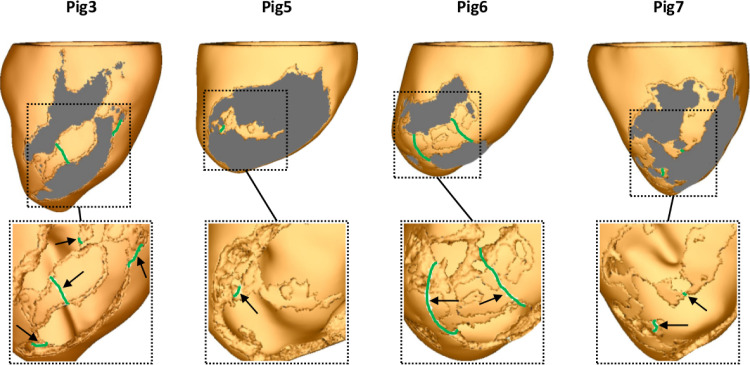
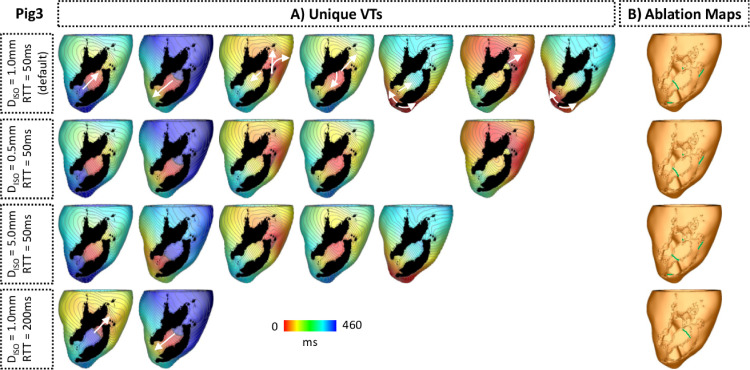
Catheter ablation is currently the only curative treatment for scar-related ventricular tachycardias (VTs). However, not only are ablation procedures long, with relatively high risk, but success rates are punitively low, with frequent VT recurrence. Personalized in-silico approaches have the opportunity to address these limitations. However, state-of-the-art reaction diffusion (R-D) simulations of VT induction and subsequent circuits used for in-silico ablation target identification require long execution times, along with vast computational resources, which are incompatible with the clinical workflow. Here, we present the Virtual Induction and Treatment of Arrhythmias (VITA), a novel, rapid and fully automated computational approach that uses reaction-Eikonal methodology to induce VT and identify subsequent ablation targets. The rationale for VITA is based on finding isosurfaces associated with an activation wavefront that splits in the ventricles due to the presence of an isolated isthmus of conduction within the scar; once identified, each isthmus may be assessed for their vulnerability to sustain a reentrant circuit, and the corresponding exit site automatically identified for potential ablation targeting. VITA was tested on a virtual cohort of 7 post-infarcted porcine hearts and the results compared to R-D simulations. Using only a standard desktop machine, VITA could detect all scar-related VTs, simulating activation time maps and ECGs (for clinical comparison) as well as computing ablation targets in 48 minutes. The comparable VTs probed by the R-D simulations took 68.5 hours on 256 cores of high-performance computing infrastructure. The set of lesions computed by VITA was shown to render the ventricular model VT-free. VITA could be used in near real-time as a complementary modality aiding in clinical decision-making in the treatment of post-infarction VTs.
导管消融术是目前治疗瘢痕相关室性心动过速(VT)的唯一有治愈可能的治疗方法。然而,消融程序不仅漫长,风险相对较高,而且成功率极低,VT 频繁复发。个性化的计算机模拟方法有机会解决这些局限性。然而,用于计算机模拟消融靶点识别的最先进的反应扩散(R-D)模拟诱导 VT 及其随后的电路需要很长的执行时间,以及大量的计算资源,这与临床工作流程不兼容。在这里,我们提出了虚拟诱导和心律失常治疗(VITA),这是一种新颖、快速且完全自动化的计算方法,它使用反应-椭圆积分方法来诱导 VT 并识别随后的消融靶点。VITA 的原理是基于找到与由于瘢痕内存在孤立的传导峡部而在心室中分裂的激活波阵面相关的等位面;一旦确定,每个峡部都可以评估其维持折返电路的脆弱性,并自动识别相应的出口部位以进行潜在的消融靶向。VITA 在 7 个猪梗死心脏的虚拟队列上进行了测试,并将结果与 R-D 模拟进行了比较。仅使用标准台式机,VITA 可以检测到所有与瘢痕相关的 VT,模拟激活时间图和心电图(用于临床比较),并在 48 分钟内计算消融靶点。通过 R-D 模拟探测到的可比 VT 需要在 256 个高性能计算基础设施的核心上花费 68.5 小时。VITA 计算出的病变集可使心室模型无 VT。VITA 可以在近实时作为一种辅助模式,帮助在治疗心肌梗死后 VT 时做出临床决策。