School of Biomedical Engineering, Research and Engineering Center of Biomedical Materials, Anhui Medical University, Hefei, 230032, China.
Department of Neurosurgery, the First Affiliated Hospital of Anhui Medical University, Hefei, 230032, China.
Mil Med Res. 2022 Jun 9;9(1):26. doi: 10.1186/s40779-022-00386-z.
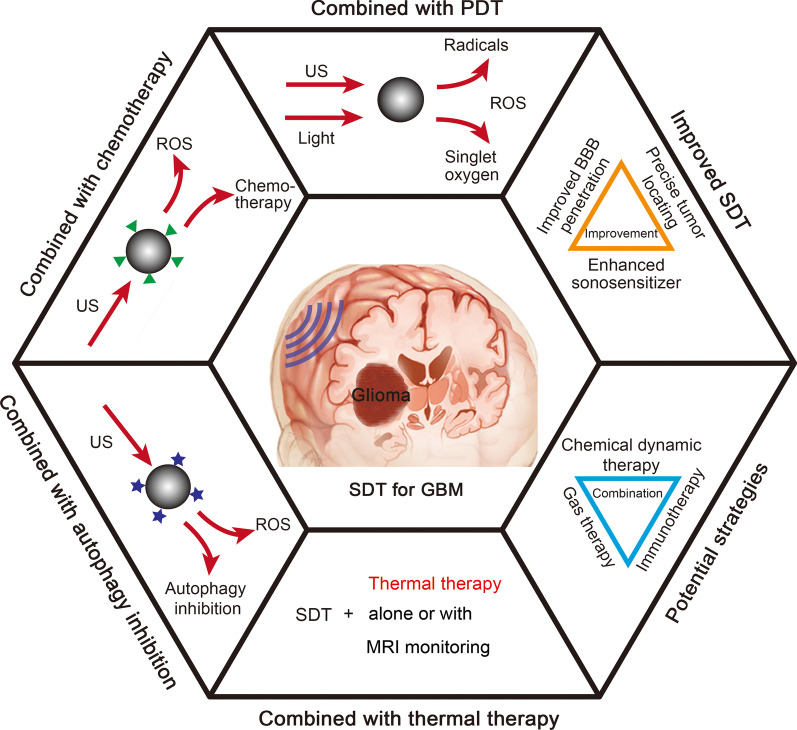
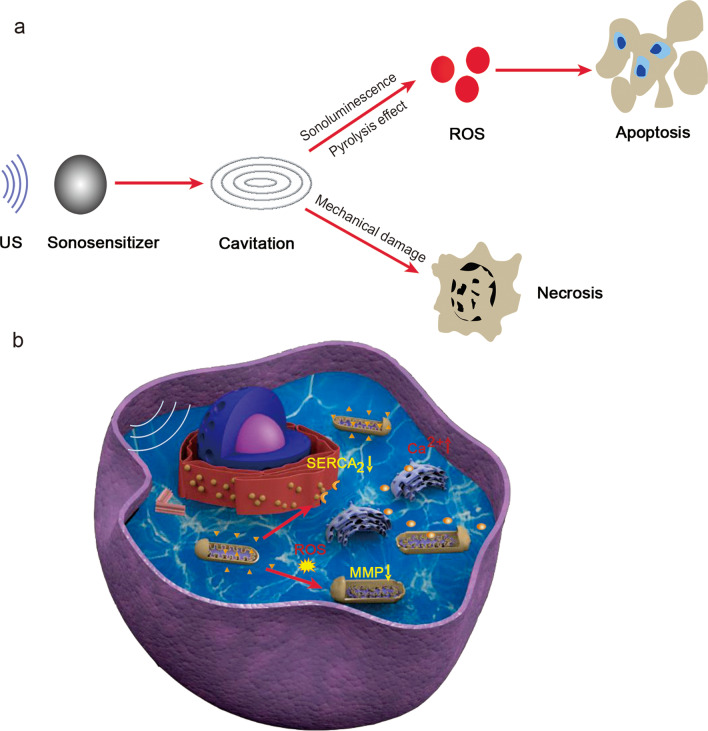
Glioblastoma multiforme (GBM) is the most common primary malignant brain tumor, and it is associated with poor prognosis. Its characteristics of being highly invasive and undergoing heterogeneous genetic mutation, as well as the presence of the blood-brain barrier (BBB), have reduced the efficacy of GBM treatment. The emergence of a novel therapeutic method, namely, sonodynamic therapy (SDT), provides a promising strategy for eradicating tumors via activated sonosensitizers coupled with low-intensity ultrasound. SDT can provide tumor killing effects for deep-seated tumors, such as brain tumors. However, conventional sonosensitizers cannot effectively reach the tumor region and kill additional tumor cells, especially brain tumor cells. Efforts should be made to develop a method to help therapeutic agents pass through the BBB and accumulate in brain tumors. With the development of novel multifunctional nanosensitizers and newly emerging combination strategies, the killing ability and selectivity of SDT have greatly improved and are accompanied with fewer side effects. In this review, we systematically summarize the findings of previous studies on SDT for GBM, with a focus on recent developments and promising directions for future research.
多形性胶质母细胞瘤(GBM)是最常见的原发性恶性脑肿瘤,预后不良。其高度侵袭性和异质性基因突变的特点,以及血脑屏障(BBB)的存在,降低了 GBM 治疗的效果。一种新的治疗方法,即声动力学疗法(SDT)的出现,为通过激活声敏剂联合低强度超声来消灭肿瘤提供了一个有前途的策略。SDT 可以为深部肿瘤(如脑肿瘤)提供肿瘤杀伤效果。然而,传统的声敏剂不能有效地到达肿瘤区域并杀死额外的肿瘤细胞,特别是脑肿瘤细胞。应努力开发一种方法来帮助治疗剂通过血脑屏障并在脑肿瘤中积累。随着新型多功能纳米敏化剂和新出现的联合策略的发展,SDT 的杀伤能力和选择性有了很大提高,副作用也更少。在这篇综述中,我们系统地总结了以前关于 GBM 的 SDT 研究结果,重点介绍了最近的发展和未来研究的有前途的方向。