Wen Ling, Li Minyan, Lin Xiaojun, Li Yan, Song Huidong, Chen Hanqing
Guangzhou Twelfth People's Hospital, Guangzhou, China.
Department of Gastroenterology, Guangzhou Twelfth People's Hospital, Guangzhou Medical University, Guangzhou, China.
Front Bioeng Biotechnol. 2022 May 19;10:912178. doi: 10.3389/fbioe.2022.912178. eCollection 2022.
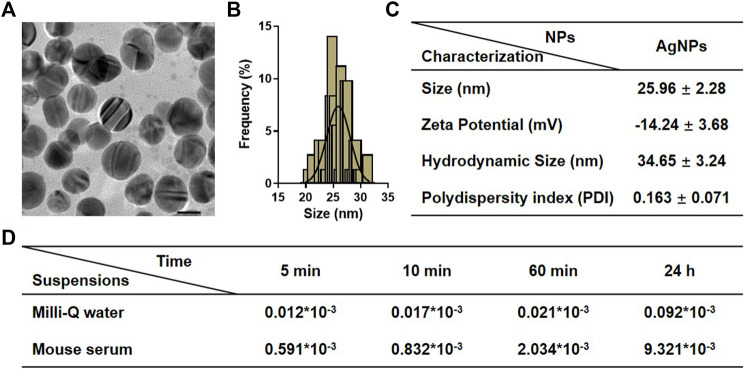
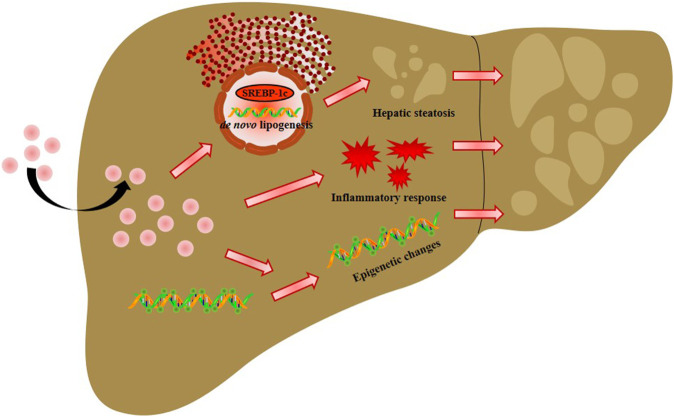
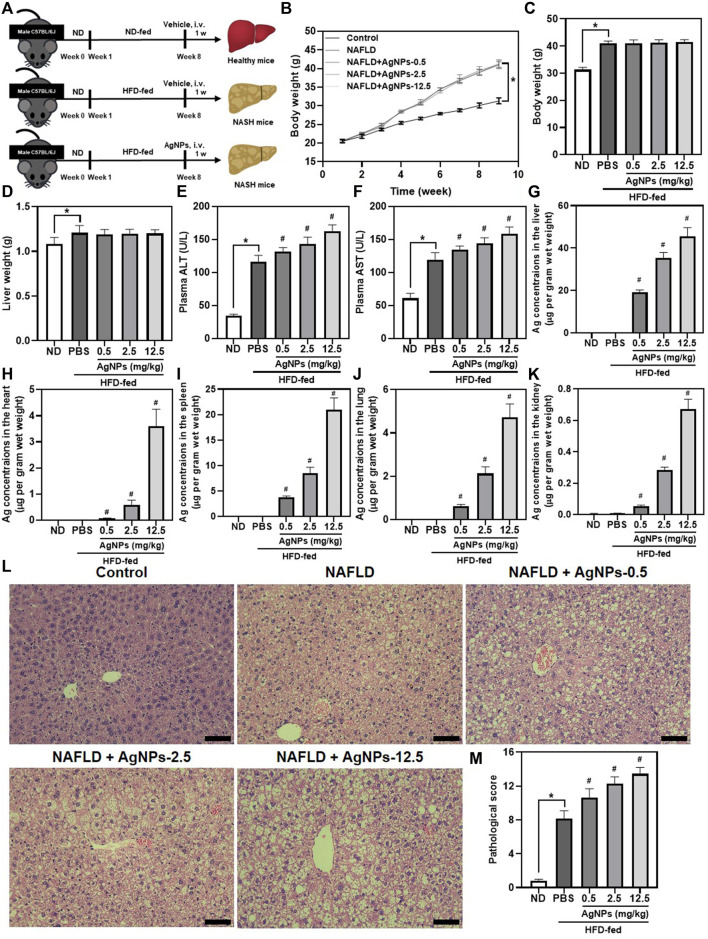
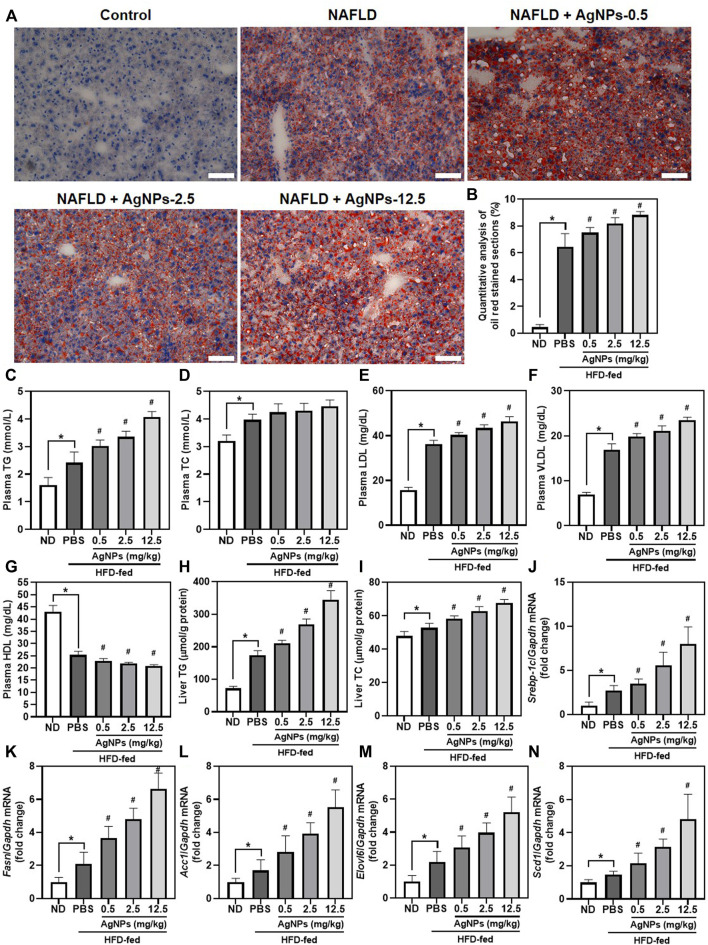
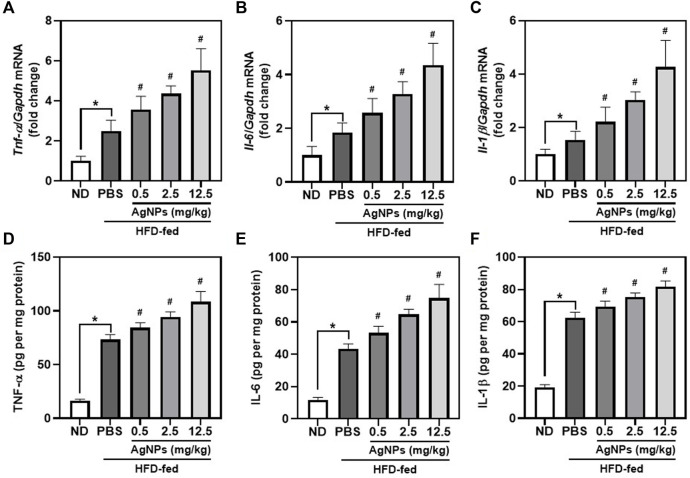
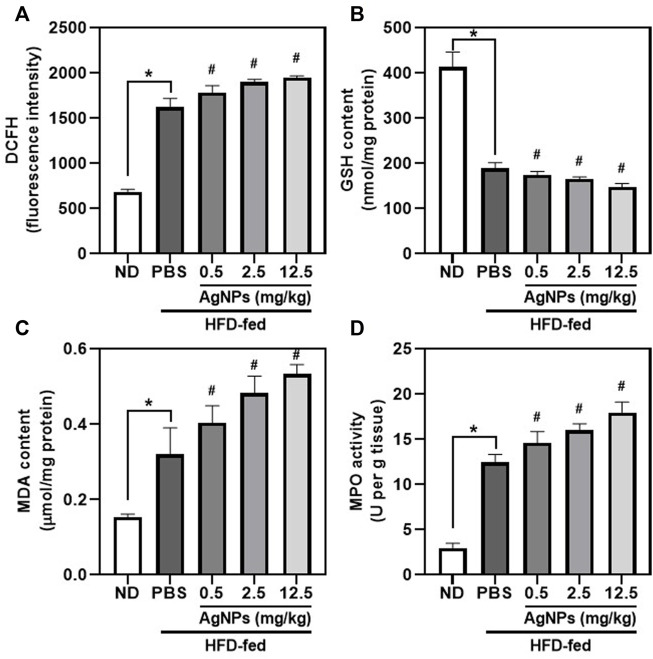
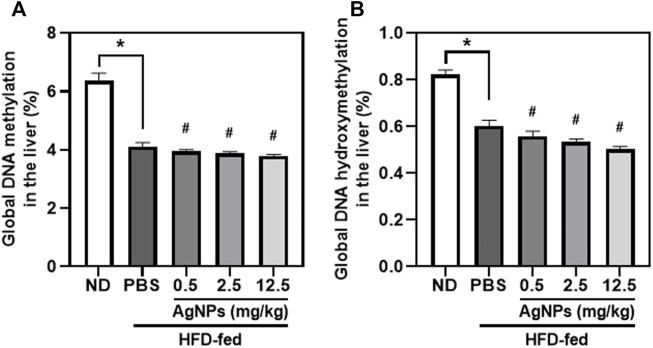
The recent development of silver nanoparticles (AgNPs) has sparked increased interest in biomedical and pharmaceutical applications, leading to the possibility of human exposure. The liver is the primary target organ in the metabolism and transport of nanoparticles. Non-alcoholic fatty liver disease (NAFLD) is the most common and leading cause of hepatic metabolic syndrome with approximately 15% of patients will develop into non-alcoholic steatohepatitis, fibrosis, cirrhosis, and eventually hepatocellular carcinoma. Thus, the potential hepatotoxicity of AgNPs on NAFLD development and progression should be of great concern. Herein, we explored the potential hepatic effect of a single intravenously injected dose of 0.5, 2.5, and 12.5 mg/kg BW on the liver function of high-fat-diet (HFD)-fed mice for 7 days. AgNP treatment increased serum levels of alanine aminotransferase, aspartate transaminase, triglycerides and cholesterols, the number of lipid droplets, and the contents of triglycerides and cholesterols in NAFLD mice livers compared to HFD-fed mice. The mechanism of AgNP-induced worsen hepatotoxicity in mice is associated with hyperactivation of SREBP-1c-mediated lipogenesis and liver inflammation. Additionally, HFD-fed mice treated with AgNPs had significantly higher oxidative damage and lower global DNA methylation and DNA hydroxymethylation than NAFLD mice. This study suggests that AgNP treatment exacerbated HFD-induced hepatic steatosis, liver inflammation, oxidative stress, and epigenetic changes in mice, which is relevant to the risk of AgNP exposure on NAFLD development and progression.
银纳米颗粒(AgNPs)的最新进展引发了人们对其在生物医学和制药应用方面日益增长的兴趣,这导致了人类接触的可能性。肝脏是纳米颗粒代谢和转运的主要靶器官。非酒精性脂肪性肝病(NAFLD)是肝代谢综合征最常见的主要病因,约15%的患者会发展为非酒精性脂肪性肝炎、纤维化、肝硬化,最终发展为肝细胞癌。因此,AgNPs对NAFLD发生和发展的潜在肝毒性应引起高度关注。在此,我们探究了单次静脉注射剂量为0.5、2.5和12.5 mg/kg体重,对高脂饮食(HFD)喂养7天的小鼠肝功能的潜在肝脏影响。与HFD喂养的小鼠相比,AgNP处理增加了NAFLD小鼠肝脏中谷丙转氨酶、谷草转氨酶、甘油三酯和胆固醇的血清水平、脂滴数量以及甘油三酯和胆固醇的含量。AgNP诱导小鼠肝毒性恶化的机制与SREBP-1c介导的脂肪生成过度激活和肝脏炎症有关。此外,与NAFLD小鼠相比,用AgNPs处理的HFD喂养小鼠具有更高的氧化损伤以及更低的整体DNA甲基化和DNA羟甲基化水平。本研究表明,AgNP处理加剧了HFD诱导的小鼠肝脏脂肪变性、肝脏炎症、氧化应激和表观遗传变化,这与AgNP暴露对NAFLD发生和发展的风险相关。