Zhang Jihong, Wang Quanjiu, Wei Kai, Guo Yi, Mu Weiyi, Sun Yan
State Key Laboratory of Eco-Hydraulics in Northwest Arid Region of China, Xi'an University of Technology, Xi'an 710048, China.
Plants (Basel). 2022 May 25;11(11):1397. doi: 10.3390/plants11111397.
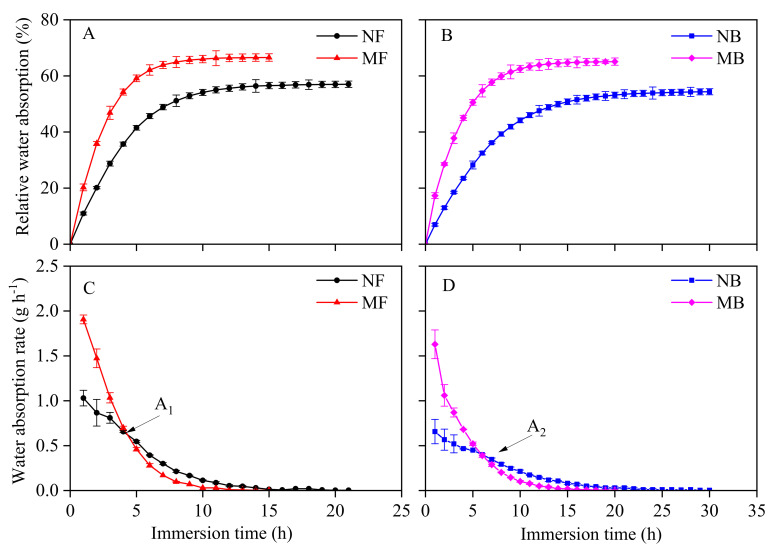
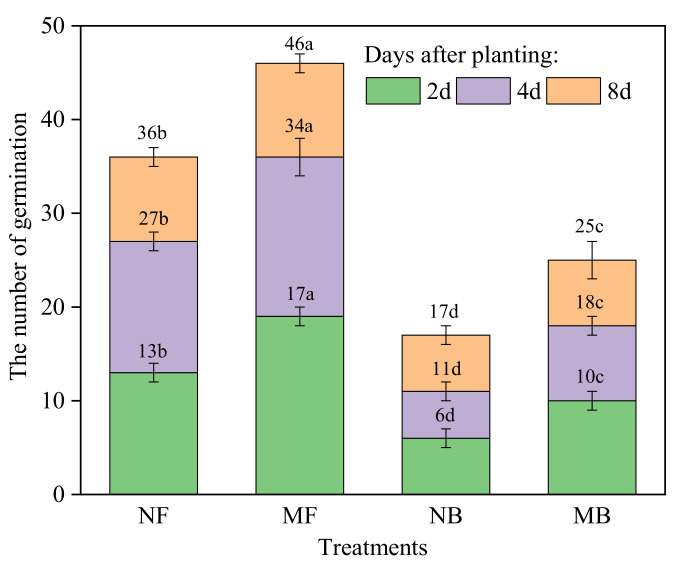
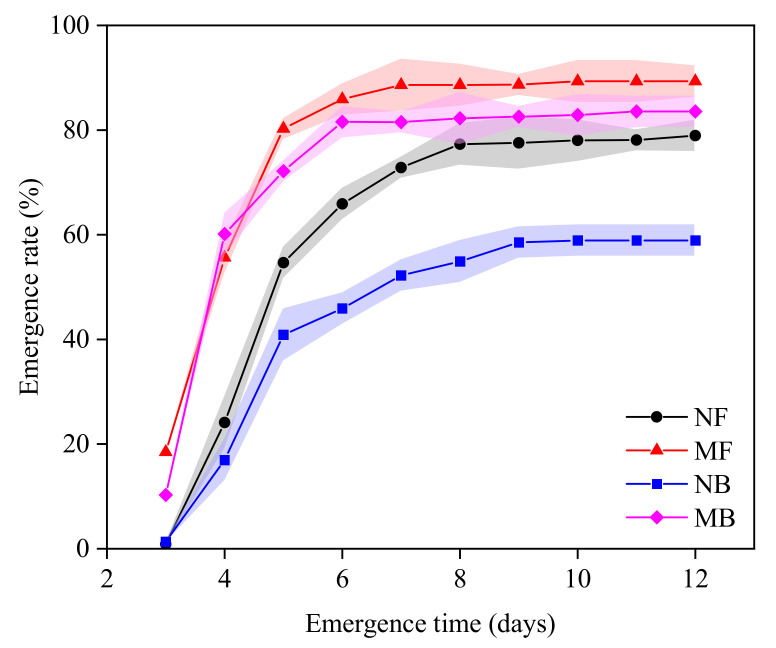
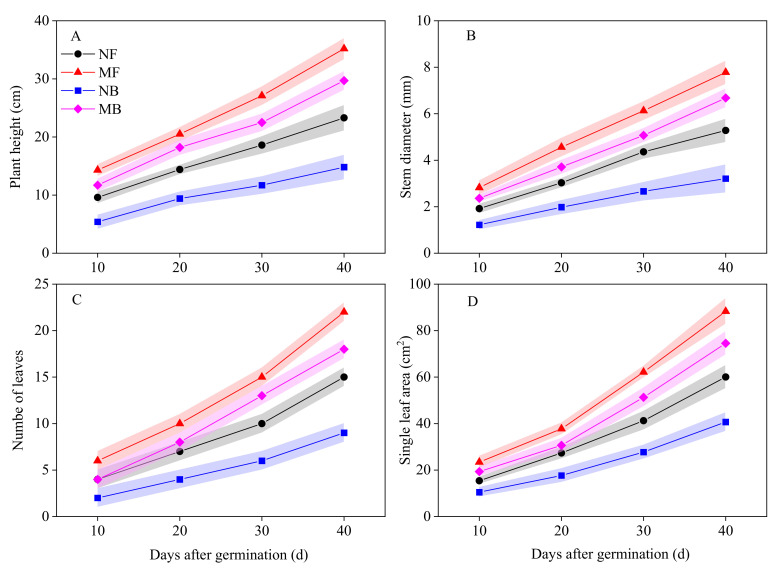
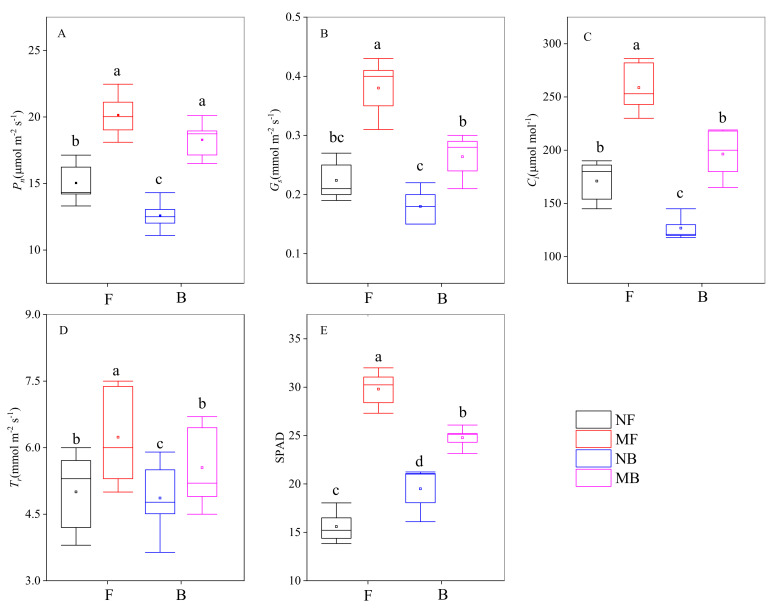
Magnetized water has been a promising approach to improve crop productivity but the conditions for its effectiveness remain contradictory and inconclusive. The objective of this research was to understand the influences of different magnetized water with varying quality on seed absorption, germination, and early growth of cotton. To this end, a series of experiments involving the seed soaking process, germination test, and pot experiment were carried out to study the effects of different qualities (fresh and brackish water) of magnetized water on seed water absorption, germination, seedling growth, photosynthetic characteristics, and biomass of cotton in 2018. The results showed that the maximum relative water absorption of magnetized fresh and magnetized brackish water relatively increased by 16.76% and 19.75%, respectively, and the magnetic effect time of brackish water was longer than fresh water. The relative promotion effect of magnetized brackish water on cotton seed germination and growth potential was greater than magnetized fresh water. The cotton seeds germination rate under magnetized fresh and magnetized brackish water irrigation relatively increased by 13.14% and 41.86%, respectively, and the relative promoting effect of magnetized brackish water on the vitality indexes and the morphological indexes of cotton seedlings was greater than magnetized fresh water. Unlike non-magnetized water, the net photosynthetic rate (), transpiration rate (), and instantaneous water use efficiency () of cotton irrigated with magnetized water increased significantly, while the stomatal limit value () decreased. The influences of photosynthesis and water use efficiency of cotton under magnetized brackish water were greater than magnetized fresh water. Magnetized fresh water had no significant effect on biomass proportional distribution of cotton but magnetized brackish water irrigation markedly improved the root-to-stem ratio of cotton within a 35.72% range. Therefore, the magnetization of brackish water does improve the growth characteristics of cotton seedlings, and the biological effect of magnetized brackish water is more significant than that of fresh water. It is suggested that magnetized brackish water can be used to irrigate cotton seedlings when freshwater resources are insufficient.
磁化水一直是提高作物产量的一种有前景的方法,但其有效条件仍然相互矛盾且尚无定论。本研究的目的是了解不同质量的磁化水对棉花种子吸收、萌发和早期生长的影响。为此,在2018年进行了一系列包括种子浸泡过程、发芽试验和盆栽试验的实验,以研究不同质量(淡水和微咸水)的磁化水对棉花种子吸水、萌发、幼苗生长、光合特性和生物量的影响。结果表明,磁化淡水和磁化微咸水的最大相对吸水量分别相对增加了16.76%和19.75%,微咸水的磁效应时间比淡水长。磁化微咸水对棉花种子萌发和生长势的相对促进作用大于磁化淡水。在磁化淡水和磁化微咸水灌溉下,棉花种子发芽率分别相对提高了13.14%和41.86%,磁化微咸水对棉苗活力指标和形态指标的相对促进作用大于磁化淡水。与非磁化水不同,用磁化水灌溉的棉花的净光合速率、蒸腾速率和瞬时水分利用效率显著提高,而气孔限制值降低。磁化微咸水对棉花光合作用和水分利用效率的影响大于磁化淡水。磁化淡水对棉花生物量比例分布没有显著影响,但磁化微咸水灌溉显著提高了棉花的根茎比,提高幅度在35.72%以内。因此,微咸水的磁化确实改善了棉苗的生长特性,磁化微咸水的生物学效应比淡水更显著。建议在淡水资源不足时,可用磁化微咸水灌溉棉苗。