Institute for Advanced Biosciences, Keio University, Tsuruoka 997-0017, Japan.
Systems Biology Program, Graduate School of Media and Governance, Keio University, Fujisawa 252-0882, Japan.
RNA. 2022 Aug;28(8):1041-1057. doi: 10.1261/rna.079103.122. Epub 2022 Jun 10.
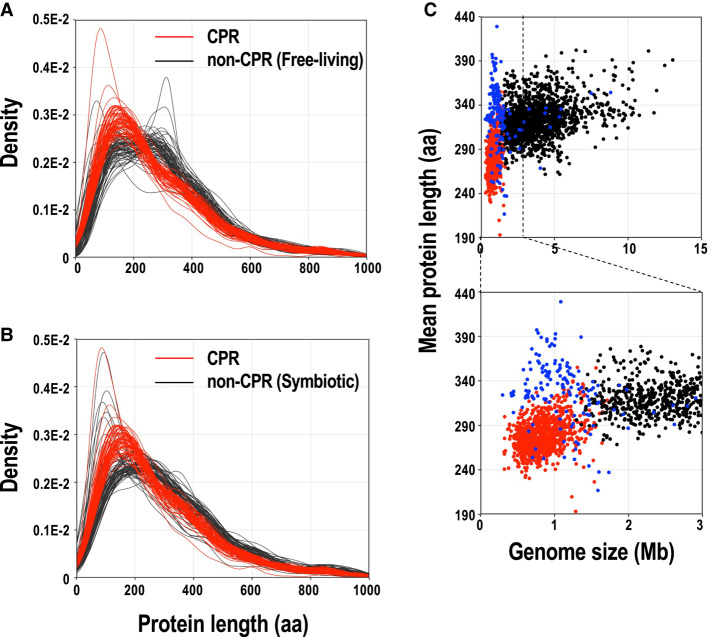
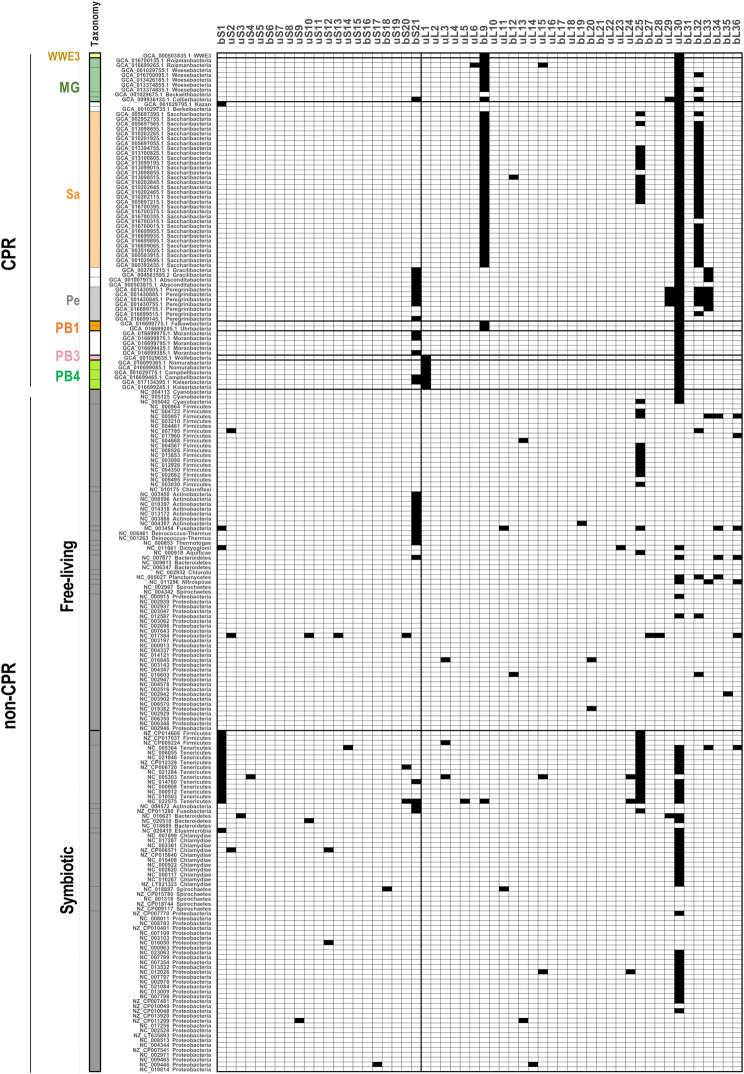
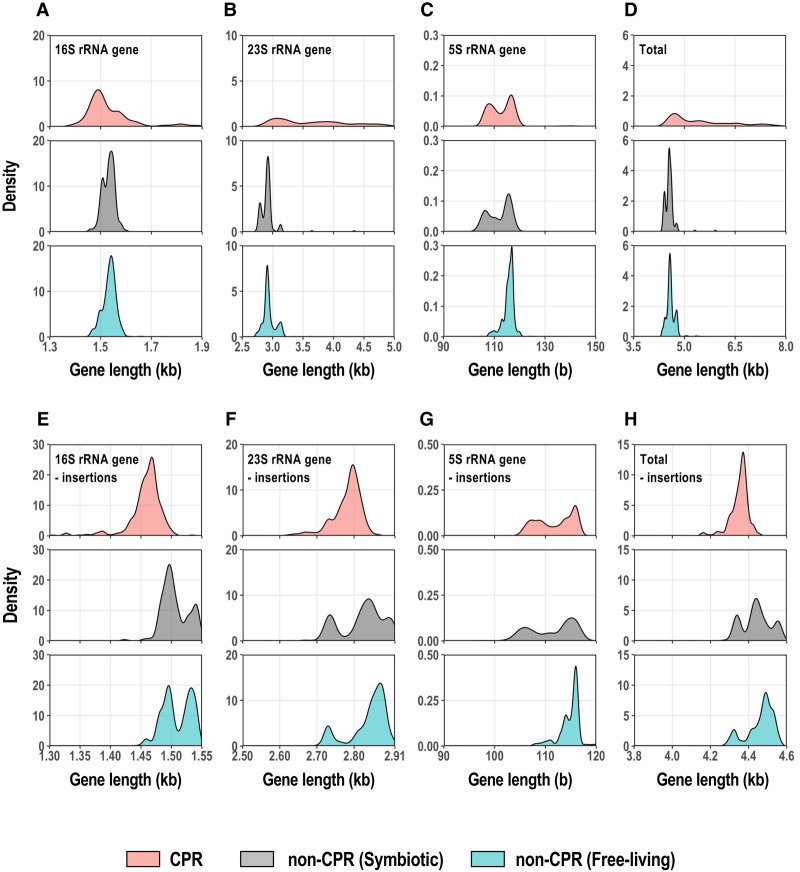
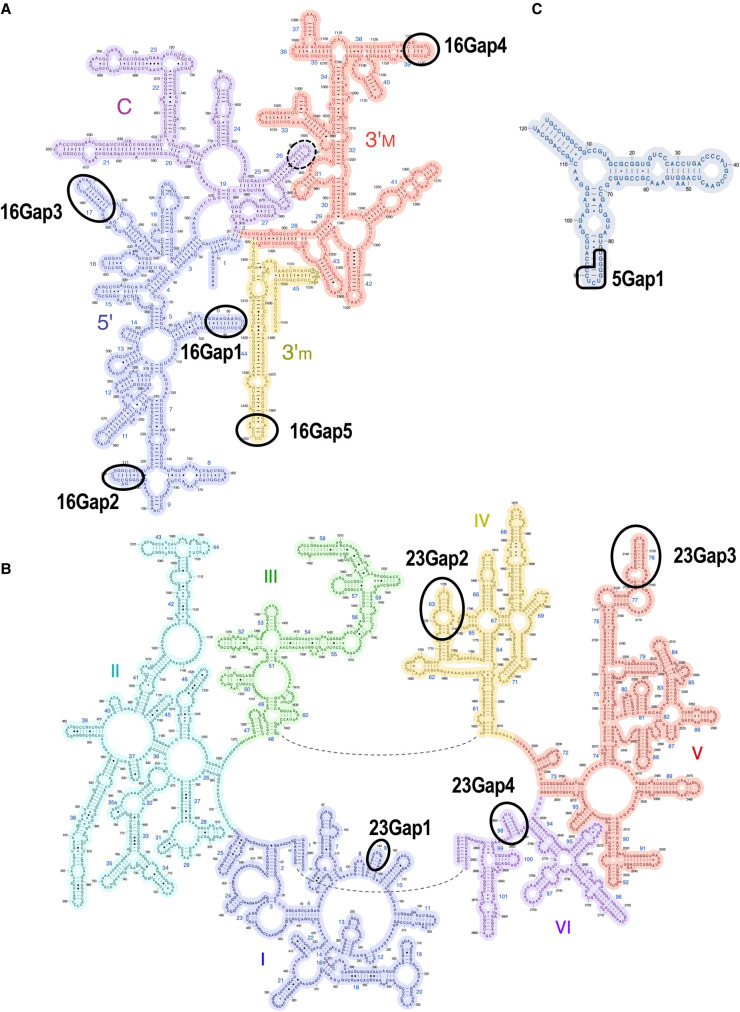
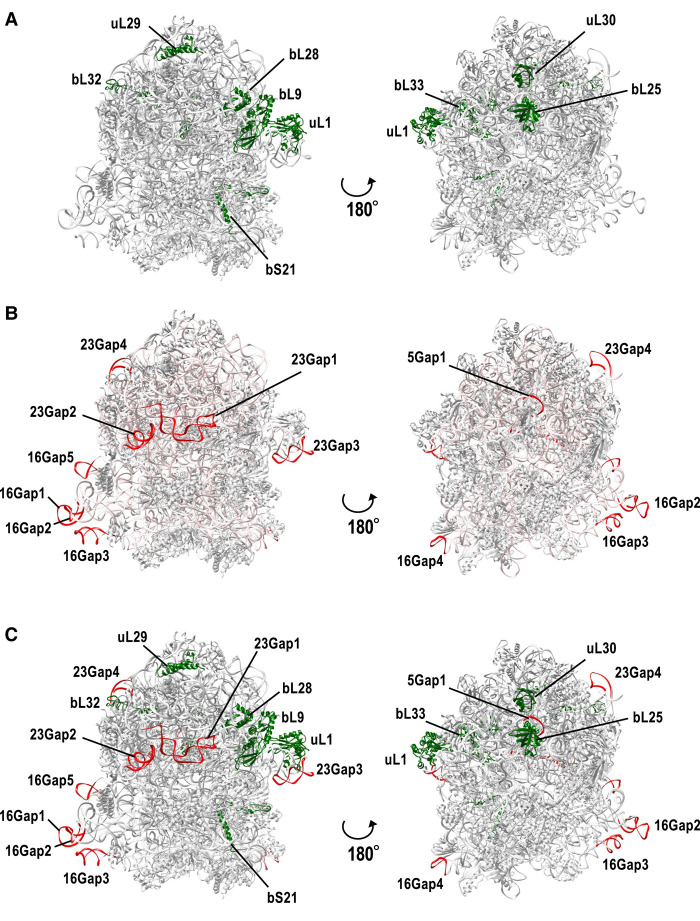
The candidate phyla radiation (CPR) is a large bacterial group consisting mainly of uncultured lineages. They have small cells and small genomes, and they often lack ribosomal proteins uL1, bL9, and/or uL30, which are basically ubiquitous in non-CPR bacteria. Here, we comprehensively analyzed the genomic information on CPR bacteria and identified their unique properties. The distribution of protein lengths in CPR bacteria peaks at around 100-150 amino acids, whereas the position of the peak varies in the range of 100-300 amino acids in free-living non-CPR bacteria, and at around 100-200 amino acids in most symbiotic non-CPR bacteria. These results show that the proteins of CPR bacteria are smaller, on average, than those of free-living non-CPR bacteria, like those of symbiotic non-CPR bacteria. We found that ribosomal proteins bL28, uL29, bL32, and bL33 have been lost in CPR bacteria in a taxonomic lineage-specific manner. Moreover, the sequences of approximately half of all ribosomal proteins of CPR differ, in part, from those of non-CPR bacteria, with missing regions or specifically added regions. We also found that several regions in the 16S, 23S, and 5S rRNAs of CPR bacteria are lacking, which presumably caused the total predicted lengths of the three rRNAs of CPR bacteria to be smaller than those of non-CPR bacteria. The regions missing in the CPR ribosomal proteins and rRNAs are located near the surface of the ribosome, and some are close to one another. These observations suggest that ribosomes are smaller in CPR bacteria than those in free-living non-CPR bacteria, with simplified surface structures.
候选真细菌门辐射(CPR)是一个由主要未培养谱系组成的大型细菌群。它们具有小细胞和小基因组,并且通常缺乏核糖体蛋白 uL1、bL9 和/或 uL30,而这些蛋白在非-CPR 细菌中基本普遍存在。在这里,我们全面分析了 CPR 细菌的基因组信息,并确定了它们的独特性质。CPR 细菌的蛋白质长度分布峰值约为 100-150 个氨基酸,而自由生活的非-CPR 细菌的峰值位置在 100-300 个氨基酸范围内,而大多数共生的非-CPR 细菌的峰值位置在 100-200 个氨基酸左右。这些结果表明,CPR 细菌的蛋白质平均比自由生活的非-CPR 细菌小,与共生的非-CPR 细菌的蛋白质相似。我们发现核糖体蛋白 bL28、uL29、bL32 和 bL33 在 CPR 细菌中以分类谱系特异性的方式丢失。此外,CPR 细菌的核糖体蛋白的大约一半的序列与非-CPR 细菌的序列不同,存在缺失区域或特异性添加区域。我们还发现 CPR 细菌的 16S、23S 和 5S rRNA 中的几个区域缺失,这大概导致了 CPR 细菌的三种 rRNA 的总预测长度小于非-CPR 细菌的 rRNA 长度。CPR 核糖体蛋白和 rRNA 中缺失的区域位于核糖体的表面附近,有些区域彼此靠近。这些观察结果表明,CPR 细菌的核糖体比自由生活的非-CPR 细菌的核糖体小,表面结构简化。