Griffiths S, Furszyfer Del Rio D, Sovacool B
Khalifa University of Science and Technology, Abu Dhabi, United Arab Emirates.
Science Policy Research Unit, University of Sussex, Brighton, UK.
Renew Sustain Energy Rev. 2021 Jun;143:110919. doi: 10.1016/j.rser.2021.110919. Epub 2021 Mar 10.
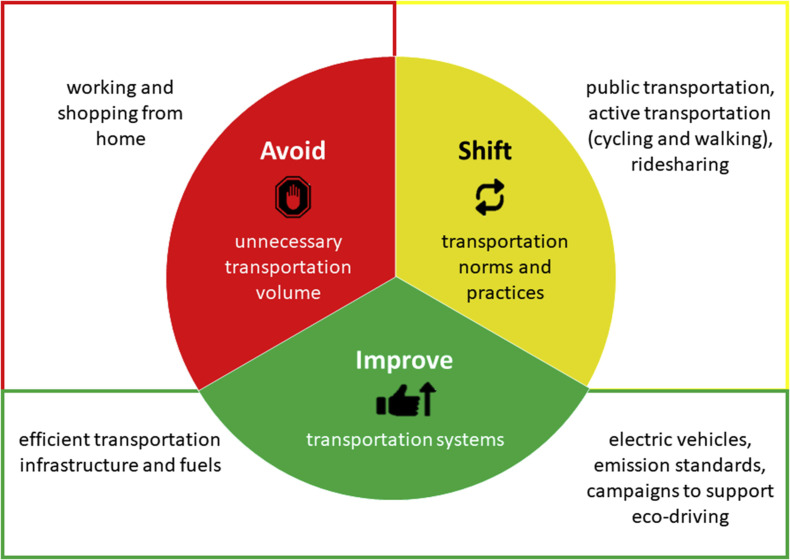
The COVID-19 pandemic has the potential to have lasting impacts on energy and the environment at the global scale. Shelter-in-place measures implemented to mitigate the spread of COVID-19 have resulted in expectations for 2020 global energy demand to contract by nearly 5% with related global CO emissions declining by as much as 7%. Exactly how long and to what extent we will see continue to see energy demand, CO and related greenhouse gas (GHG) emission destruction resulting from COVID-19 is uncertain but dependent on global policy responses to the pandemic. Policy responses targeting the transportation sector, particularly ground-based transportation, can stimulate a sustainable mobility transition that mitigates the potential for long-term environmental damage. This paper reviews and examines social and cultural dynamics of transportation and extends state-of-the-art knowledge to consider how events surrounding the COVID-19 crisis may have created a sustainable mobility opportunity though (1) avoiding unnecessary transportation volume, (2) shifting transportation norms and practices and/or (3) improving the carbon-efficiency of transportation systems. Relevant policies for a low-carbon transportation transition are considered and those most appropriate to the current context are proposed with consideration of key factors that may help or hinder their implementation success.
新冠疫情有可能在全球范围内对能源和环境产生持久影响。为减缓新冠疫情传播而实施的就地避难措施,使得人们预计2020年全球能源需求将收缩近5%,相关全球二氧化碳排放量将下降多达7%。新冠疫情导致的能源需求、二氧化碳及相关温室气体排放减少究竟会持续多久、程度如何尚不确定,但这取决于全球对该疫情的政策应对措施。针对交通运输部门,特别是地面交通的政策应对措施,能够推动可持续的交通出行转型,从而降低长期环境破坏的可能性。本文回顾并审视了交通出行的社会和文化动态,并拓展了现有前沿知识,以探讨围绕新冠疫情危机发生的各种事件如何通过以下方式创造了可持续交通出行的机会:(1)避免不必要的交通流量;(2)改变交通规范和做法;和/或(3)提高交通系统的碳效率。本文考虑了低碳交通转型的相关政策,并结合可能有助于或阻碍其实施成功的关键因素,提出了最适合当前形势的政策。