Department of Cardiology, Xi'an International Medical Center Hospital, Xi'an 710100, China.
Department of Rehabilitation Medicine, Peking University Third Hospital, Beijing 100191, China.
Oxid Med Cell Longev. 2022 Jun 6;2022:4253651. doi: 10.1155/2022/4253651. eCollection 2022.
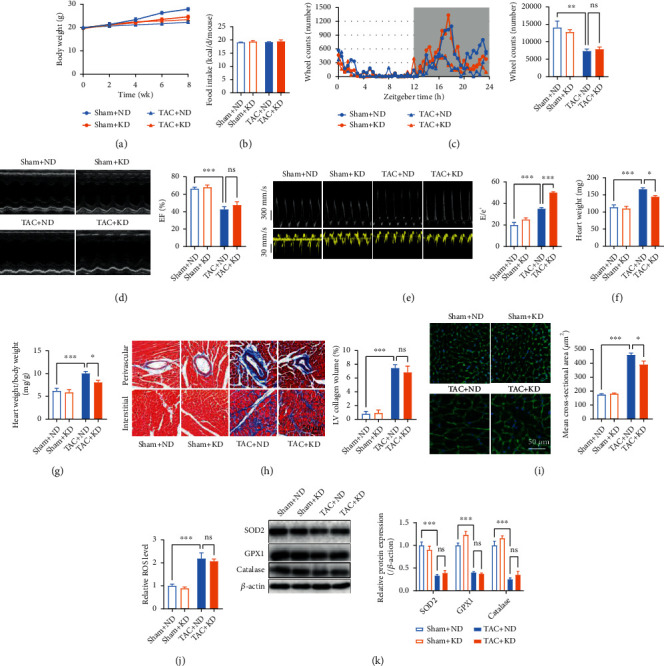
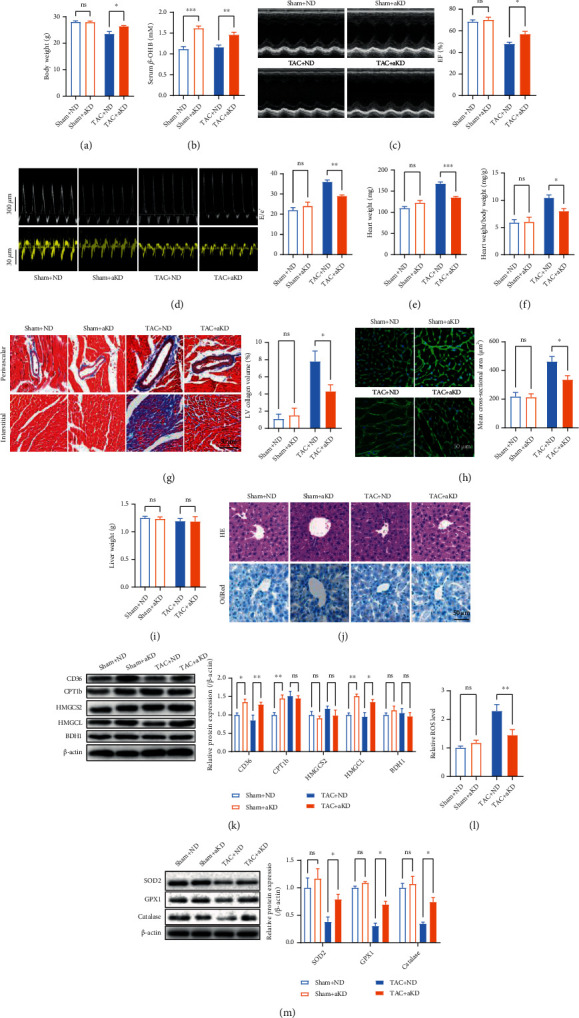
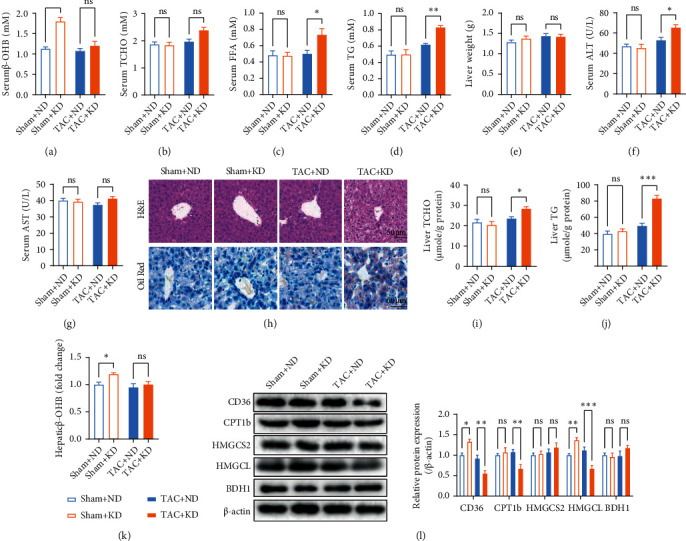
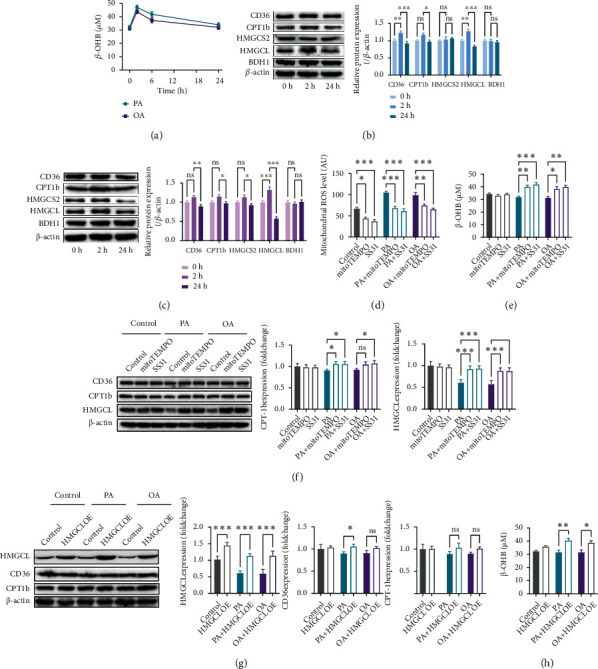
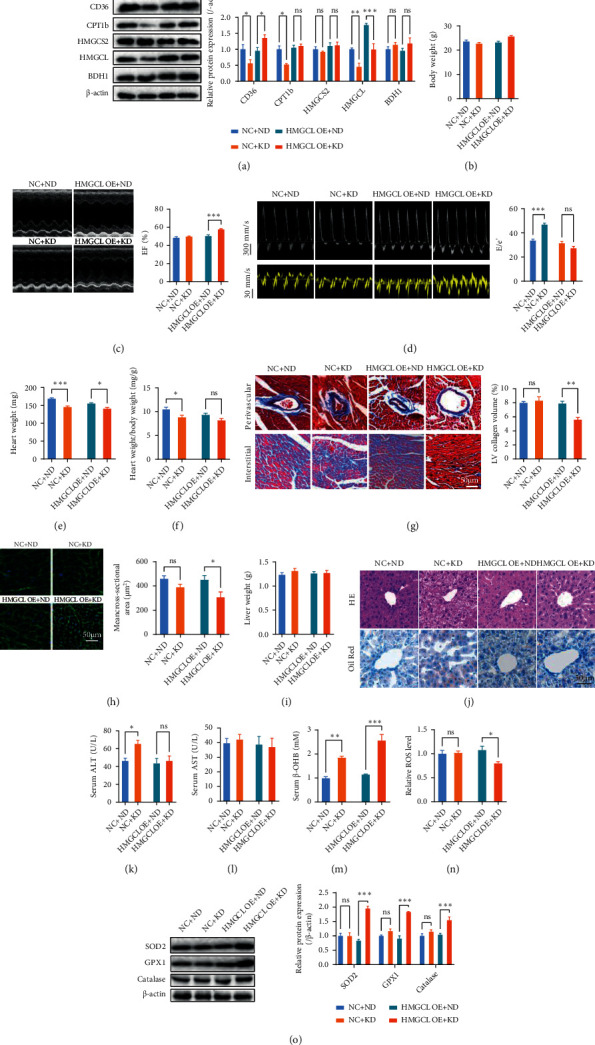
As heart failure develops, the heart utilizes ketone bodies at increased rates, indicating an adaptive stress response. Thus, increasing ketone body availability exerts protective effects against heart failure. However, although it is the widely used approach for increasing ketone body availability, the ketogenic diet shows limited cardioprotective effects against heart failure. This study was aimed at examining the effects of the ketogenic diet on heart failure and the underlying mechanisms. Pressure overload-induced heart failure was established by transverse aortic constriction (TAC) in mice. Continuous ketogenic diet feeding for 8 weeks failed to protect the heart against heart failure. It showed no significant effects on cardiac systolic function and fibrosis but aggravated cardiac diastolic function in TAC mice. Specifically, it induced systemic lipid metabolic disorder and hepatic dysfunction in TAC mice. It decreased the content of 3-hydroxy-3-methylglutaryl-CoA lyase (HMGCL), a key enzyme in ketogenesis, and impaired the capacity of hepatic ketogenesis in TAC mice. It preserved the capacity of hepatic ketogenesis and exerted cardioprotective effects against heart failure, increasing cardiac function and decreasing cardiac fibrosis, in liver-specific HMGCL-overexpressed TAC mice. Importantly, we found that alternate-day ketogenic diet feeding did not impair the capacity of hepatic ketogenesis and exerted potent cardioprotective effects against heart failure. These results suggested that alternate-day but not continuous ketogenic diet protects against heart failure through preservation of ketogenesis in the liver.
随着心力衰竭的发展,心脏以更高的速率利用酮体,表明这是一种适应性应激反应。因此,增加酮体的可用性对心力衰竭具有保护作用。然而,尽管酮饮食是增加酮体可用性的常用方法,但它对心力衰竭的心脏保护作用有限。本研究旨在研究酮饮食对心力衰竭的影响及其潜在机制。通过横主动脉缩窄(TAC)在小鼠中建立压力超负荷诱导的心力衰竭模型。连续 8 周的酮饮食喂养未能保护心脏免受心力衰竭的影响。它对心脏收缩功能和纤维化没有显著影响,但加重了 TAC 小鼠的心脏舒张功能。具体来说,它在 TAC 小鼠中诱导了全身脂质代谢紊乱和肝损伤。它降低了酮生成的关键酶 3-羟-3-甲基戊二酰辅酶 A 裂解酶(HMGCL)的含量,损害了 TAC 小鼠的肝酮生成能力。它在肝特异性 HMGCL 过表达的 TAC 小鼠中保持了肝酮生成能力,并发挥了心脏保护作用,增加了心脏功能,减少了心脏纤维化。重要的是,我们发现隔日酮饮食喂养不会损害肝酮生成能力,并对心力衰竭发挥强大的心脏保护作用。这些结果表明,隔日而非连续酮饮食通过在肝脏中保存酮生成来保护心脏免受心力衰竭的影响。