Gao Yankun, Wang Xingwei, Wang Shihui, Miao Yingying, Zhu Chao, Li Cuiping, Huang Guoquan, Jiang Yan, Li Jianying, Zhao Xiaoying, Wu Xingwang
Department of Radiology, The First Affiliated Hospital of Anhui Medical University, Hefei, China.
Department of Radiology, The First Affiliated Hospital of Wannan Medical college, Wuhu, China.
Front Oncol. 2022 Jun 3;12:854979. doi: 10.3389/fonc.2022.854979. eCollection 2022.
To construct a contrast-enhanced CT-based radiomics nomogram that combines clinical factors and a radiomics signature to distinguish papillary renal cell carcinoma (pRCC) type 1 from pRCC type 2 tumours.
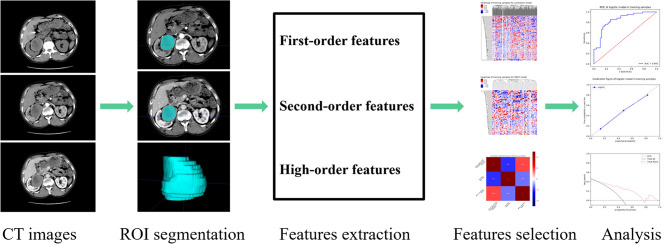
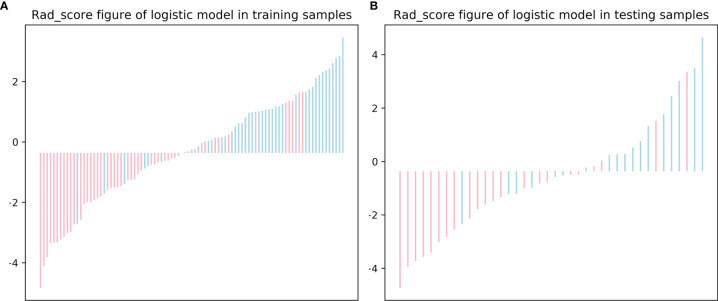
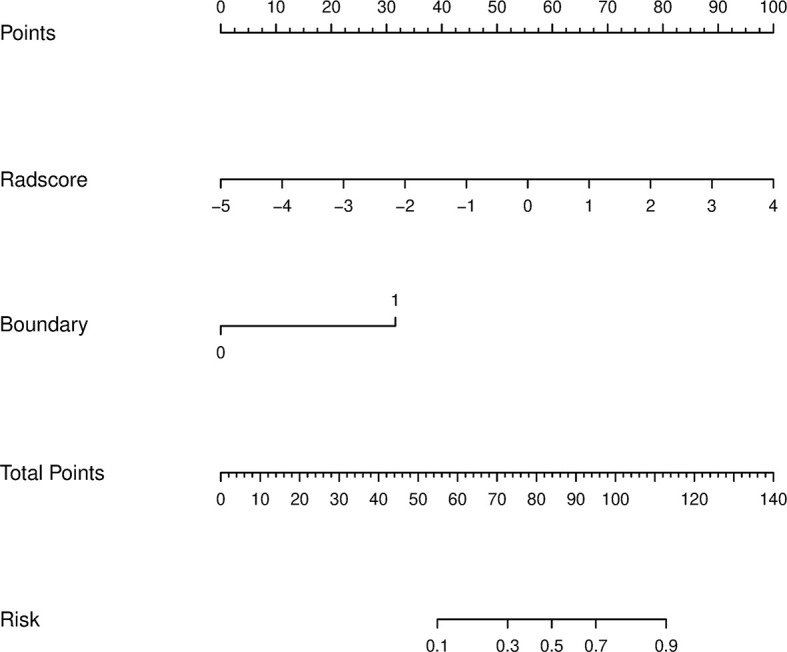
A total of 131 patients with 60 in pRCC type 1 and 71 in pRCC type 2 were enrolled and divided into training set (n=91) and testing set (n=40). Patient demographics and enhanced CT imaging characteristics were evaluated to set up a clinical factors model. A radiomics signature was constructed and radiomics score (Rad-score) was calculated by extracting radiomics features from contrast-enhanced CT images in corticomedullary phase (CMP) and nephrographic phase (NP). A radiomics nomogram was then built by incorporating the Rad-score and significant clinical factors according to multivariate logistic regression analysis. The diagnostic performance of the clinical factors model, radiomics signature and radiomics nomogram was evaluated on both the training and testing sets.
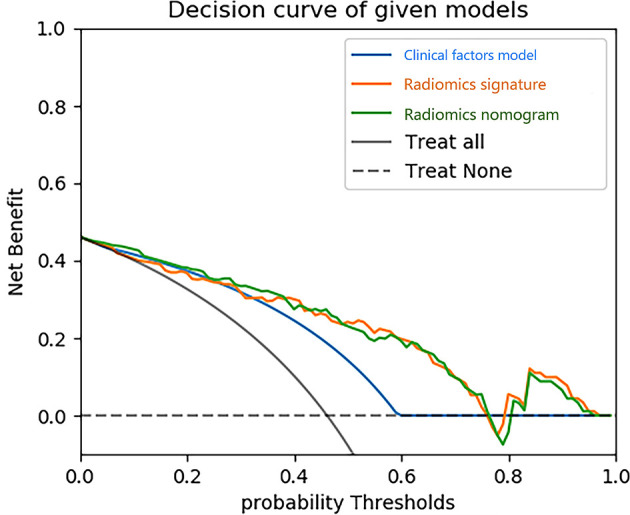
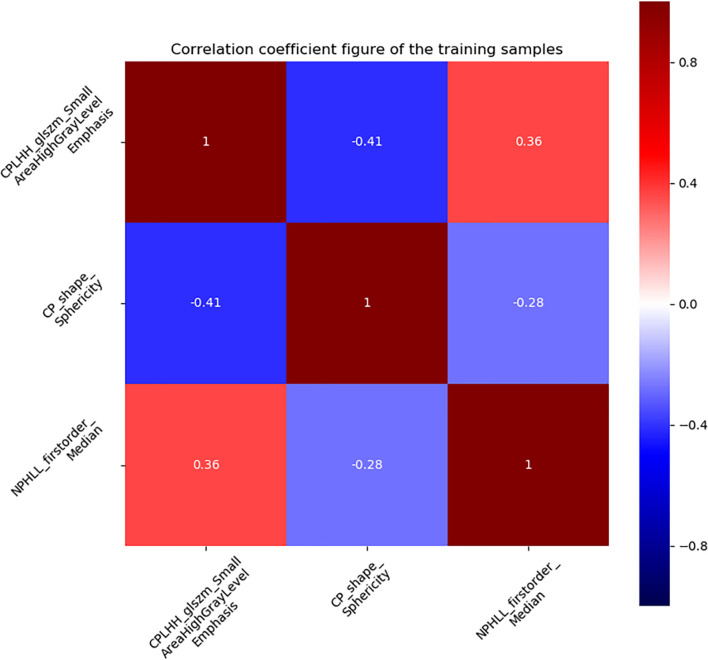
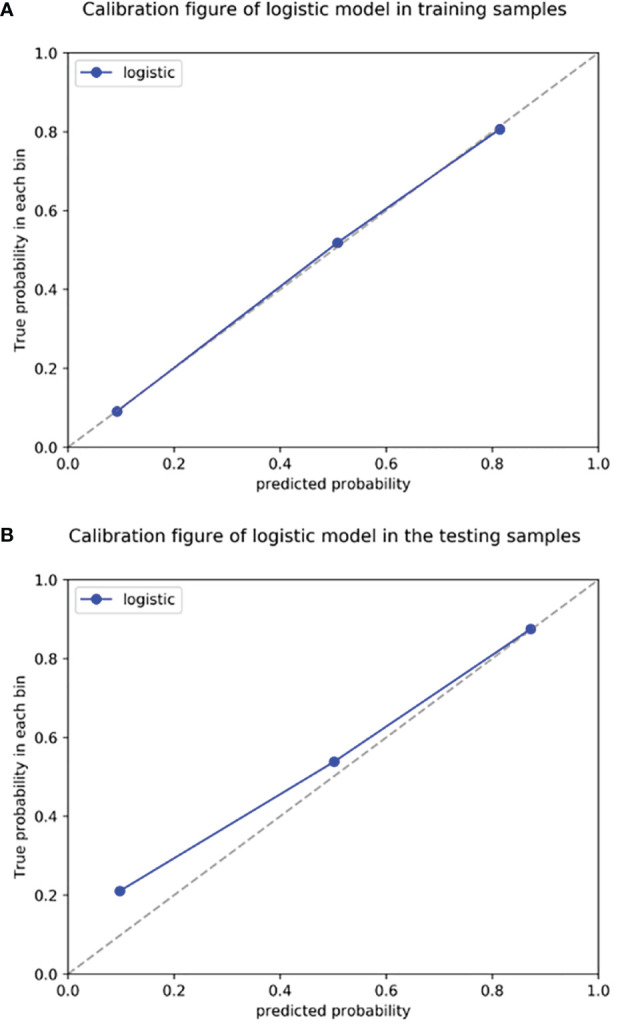
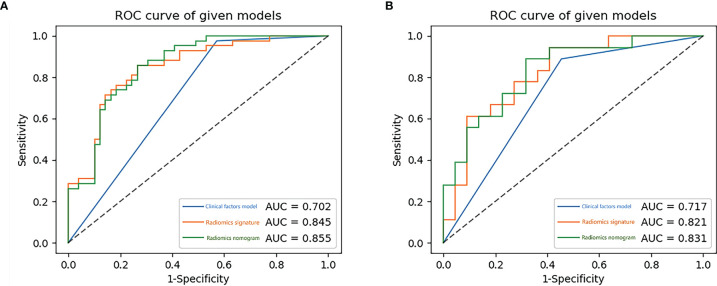
Three validated features were extracted from the CT images and used to construct the radiomics signature. Boundary blurring as an independent risk factor for tumours was used to build clinical factors model. The AUC value of the radiomics nomogram, which was based on the selected clinical factors and Rad-score, were 0.855 and 0.831 in the training and testing sets, respectively. The decision curves of the radiomics nomogram and radiomics signature in the training set indicated an overall net benefit over the clinical factors model.
Radiomics nomogram combining clinical factors and radiomics signature is a non-invasive prediction method with a good prediction for pRCC type 1 tumours and type 2 tumours preoperatively and has some significance in guiding clinicians selecting subsequent treatment plans.
构建基于对比增强CT的影像组学列线图,结合临床因素和影像组学特征,以鉴别1型乳头状肾细胞癌(pRCC)和2型pRCC肿瘤。
共纳入131例患者,其中1型pRCC患者60例,2型pRCC患者71例,并将其分为训练集(n = 91)和测试集(n = 40)。评估患者的人口统计学特征和增强CT影像特征,以建立临床因素模型。通过从皮质髓质期(CMP)和肾实质期(NP)的对比增强CT图像中提取影像组学特征,构建影像组学特征并计算影像组学评分(Rad-score)。然后根据多变量逻辑回归分析,将Rad-score和重要临床因素纳入,构建影像组学列线图。在训练集和测试集上评估临床因素模型、影像组学特征和影像组学列线图的诊断性能。
从CT图像中提取了三个经过验证的特征,并用于构建影像组学特征。将边界模糊作为肿瘤的独立危险因素,用于建立临床因素模型。基于所选临床因素和Rad-score的影像组学列线图在训练集和测试集的AUC值分别为0.855和0.831。训练集中影像组学列线图和影像组学特征的决策曲线表明,其总体净效益优于临床因素模型。
结合临床因素和影像组学特征的影像组学列线图是一种非侵入性预测方法,对术前1型和2型pRCC肿瘤具有良好的预测能力,对指导临床医生选择后续治疗方案具有一定意义。