Laboratory of Receptor Biology and Gene Expression, Center for Cancer Research, National Cancer Institute, NIH, Bethesda, MD 20892.
Department of Developmental Biology, Stanford University School of Medicine, Stanford, CA 94305.
Proc Natl Acad Sci U S A. 2022 Jun 28;119(26):e2201267119. doi: 10.1073/pnas.2201267119. Epub 2022 Jun 22.
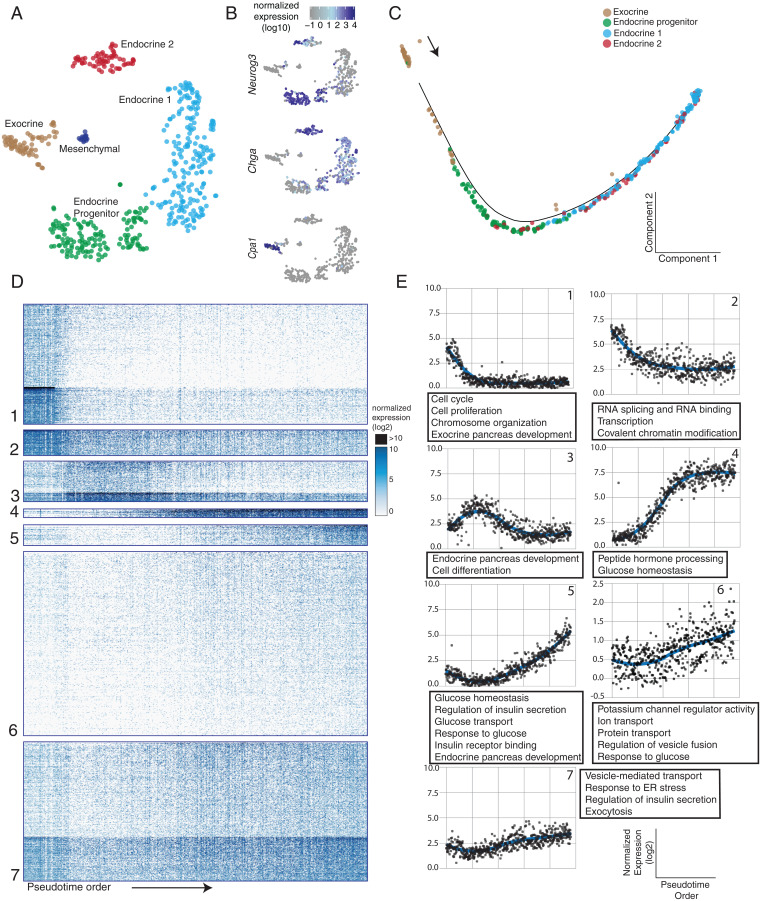
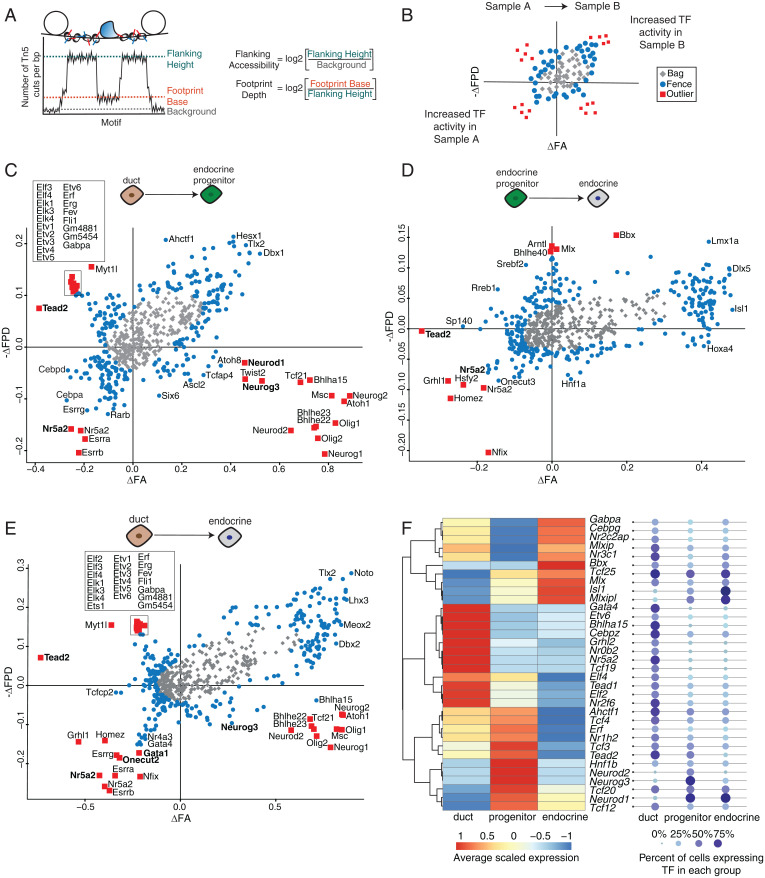
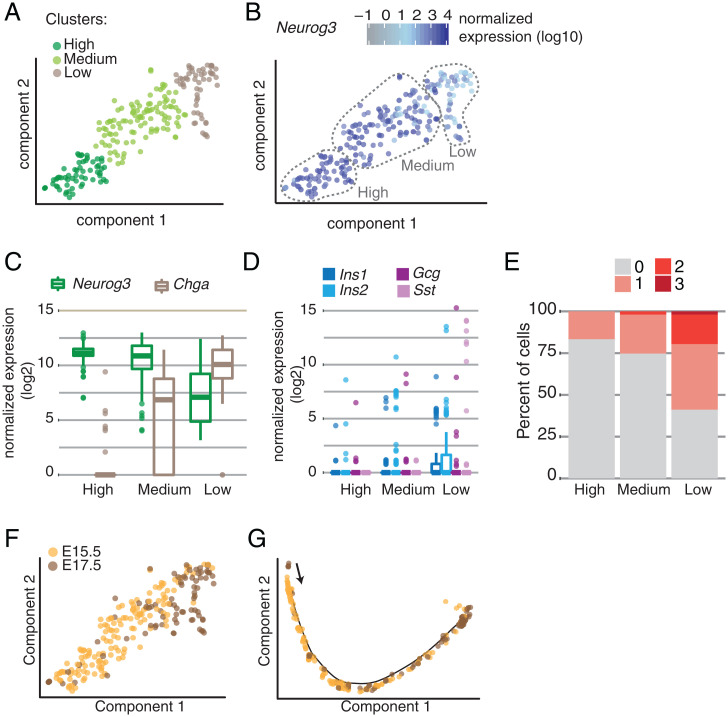
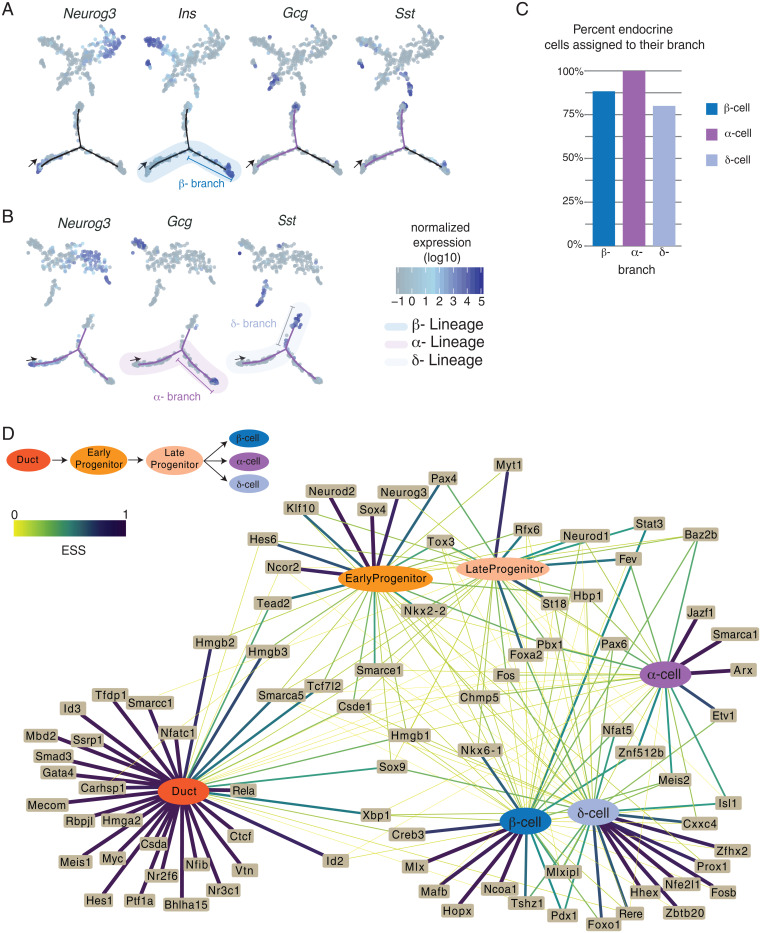
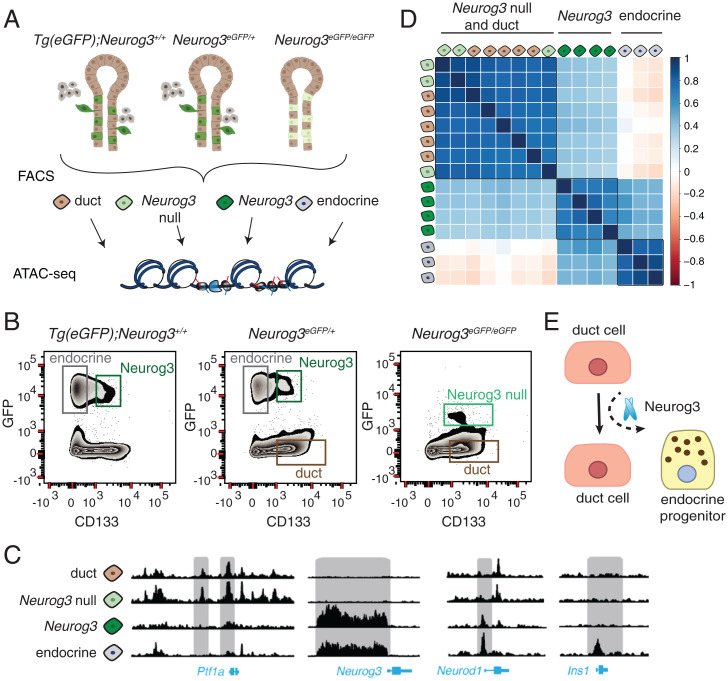
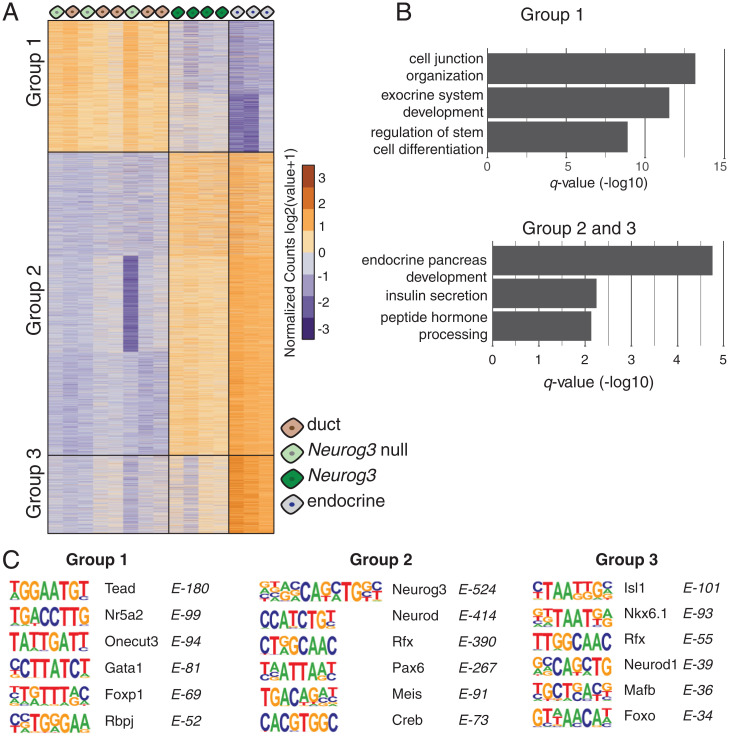
Delineating gene regulatory networks that orchestrate cell-type specification is a continuing challenge for developmental biologists. Single-cell analyses offer opportunities to address these challenges and accelerate discovery of rare cell lineage relationships and mechanisms underlying hierarchical lineage decisions. Here, we describe the molecular analysis of mouse pancreatic endocrine cell differentiation using single-cell transcriptomics, chromatin accessibility assays coupled to genetic labeling, and cytometry-based cell purification. We uncover transcription factor networks that delineate β-, α-, and δ-cell lineages. Through genomic footprint analysis, we identify transcription factor-regulatory DNA interactions governing pancreatic cell development at unprecedented resolution. Our analysis suggests that the transcription factor Neurog3 may act as a pioneer transcription factor to specify the pancreatic endocrine lineage. These findings could improve protocols to generate replacement endocrine cells from renewable sources, like stem cells, for diabetes therapy.
阐明调控细胞类型特化的基因调控网络,是发育生物学家面临的持续挑战。单细胞分析为应对这些挑战并加速发现罕见的细胞谱系关系以及层次谱系决策的机制提供了机会。在这里,我们使用单细胞转录组学、与遗传标记相结合的染色质可及性测定以及基于细胞计数的细胞纯化,描述了小鼠胰腺内分泌细胞分化的分子分析。我们揭示了可区分β、α 和 δ 细胞谱系的转录因子网络。通过基因组足迹分析,我们以空前的分辨率确定了调控胰腺细胞发育的转录因子调控 DNA 相互作用。我们的分析表明,转录因子 Neurog3 可能作为一种先驱转录因子来指定胰腺内分泌谱系。这些发现可以改进从可再生资源(如干细胞)中生成替代内分泌细胞的方案,用于糖尿病治疗。