Department of Endocrinology, St Vincent's Hospital, Sydney, NSW, Australia.
Front Endocrinol (Lausanne). 2022 Jun 6;13:919942. doi: 10.3389/fendo.2022.919942. eCollection 2022.
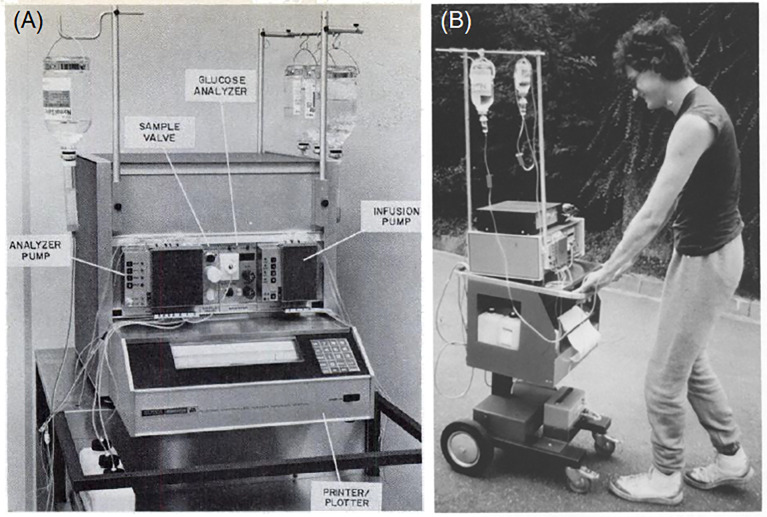
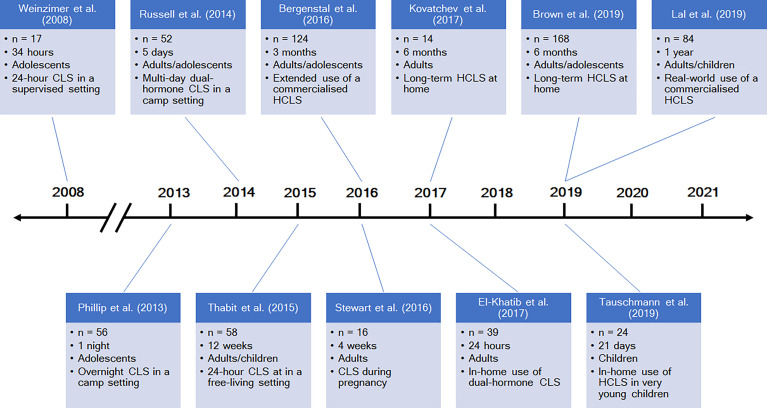
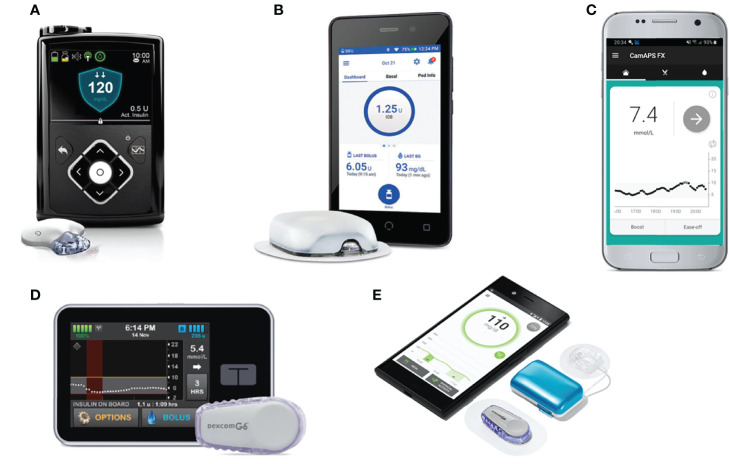
Closed-loop (artificial pancreas) systems for automated insulin delivery have been likened to the holy grail of diabetes management. The first iterations of glucose-responsive insulin delivery were pioneered in the 1960s and 1970s, with the development of systems that used venous glucose measurements to dictate intravenous infusions of insulin and dextrose in order to maintain normoglycemia. Only recently have these bulky, bedside technologies progressed to miniaturized, wearable devices. These modern closed-loop systems use interstitial glucose sensing, subcutaneous insulin pumps, and increasingly sophisticated algorithms. As the number of commercially available hybrid closed-loop systems has grown, so too has the evidence supporting their efficacy. Future challenges in closed-loop technology include the development of fully closed-loop systems that do not require user input for meal announcements or carbohydrate counting. Another evolving avenue in research is the addition of glucagon to mitigate the risk of hypoglycemia and allow more aggressive insulin dosing.
闭环(人工胰腺)系统自动胰岛素输送被誉为糖尿病管理的圣杯。20 世纪 60 年代和 70 年代,第一代葡萄糖反应性胰岛素输送系统问世,这些系统利用静脉血糖测量来指导静脉输注胰岛素和葡萄糖以维持正常血糖水平。直到最近,这些庞大的床边技术才发展成小型可穿戴设备。这些现代闭环系统使用间质葡萄糖感测、皮下胰岛素泵和日益复杂的算法。随着商业上可用的混合闭环系统数量的增加,支持其疗效的证据也越来越多。闭环技术未来面临的挑战包括开发无需用户输入即可进行膳食通告或碳水化合物计数的全闭环系统。研究中另一个不断发展的领域是添加胰高血糖素以降低低血糖风险并允许更积极的胰岛素给药。