Chulpanova Daria S, Pukhalskaia Tamara V, Rizvanov Albert A, Solovyeva Valeriya V
Institute of Fundamental Medicine and Biology, Kazan Federal University, 420008 Kazan, Russia.
Bioengineering (Basel). 2022 Jun 4;9(6):245. doi: 10.3390/bioengineering9060245.
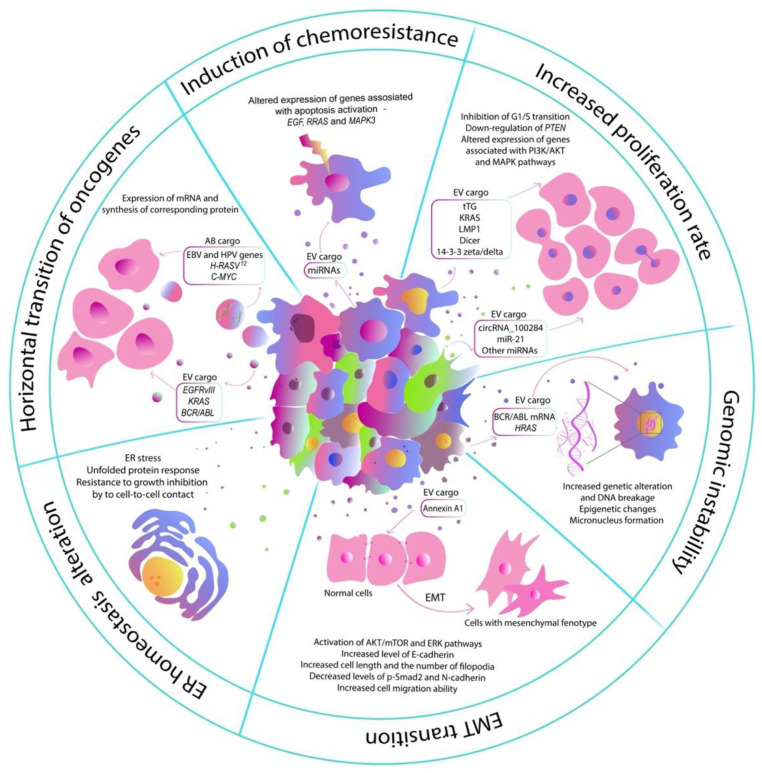
Tumor-cell-derived extracellular vesicles (EVs) are known to carry biologically active molecules of parental cells, which can actively modulate the tumor microenvironment. EVs produced by tumor cells play significant roles in the development and maintenance of tumor growth, metastasis, immune escape, and other important processes. However, the ability of EVs to induce the transformation of normal cells has hardly been investigated. This review discusses studies that describe the ability of tumor-cell-derived EVs to alter the metabolism and morphology of normal cells, causing changes associated with malignant transformation. Additionally, the horizontal transfer of oncogenes through EVs of tumor cells and the induction of epigenetic changes in normal cells, which leads to genomic instability and subsequent oncogenic transformation of normal cells, are also discussed.
已知肿瘤细胞衍生的细胞外囊泡(EVs)携带亲代细胞的生物活性分子,这些分子可积极调节肿瘤微环境。肿瘤细胞产生的EVs在肿瘤生长、转移、免疫逃逸及其他重要过程的发生和维持中发挥着重要作用。然而,EVs诱导正常细胞转化的能力几乎未被研究。本综述讨论了一些研究,这些研究描述了肿瘤细胞衍生的EVs改变正常细胞代谢和形态的能力,从而导致与恶性转化相关的变化。此外,还讨论了癌基因通过肿瘤细胞的EVs进行水平转移以及在正常细胞中诱导表观遗传变化,进而导致基因组不稳定及随后正常细胞发生致癌转化的情况。