Magalhães Gabriela de A P, Fraga May Anny A, de Souza Araújo Isaac J, Pacheco Rafael R, Correr Américo B, Puppin-Rontani Regina M
Department of Restorative Dentistry, Dental Materials Division, Piracicaba Dental School, UNICAMP, State University of Campinas, Piracicaba 13414903, Brazil.
Department of Health Sciences and Pediatric Dentistry, Pediatric Division, Piracicaba Dental School, UNICAMP, State University of Campinas, Piracicaba 13414903, Brazil.
J Funct Biomater. 2022 Jun 13;13(2):79. doi: 10.3390/jfb13020079.
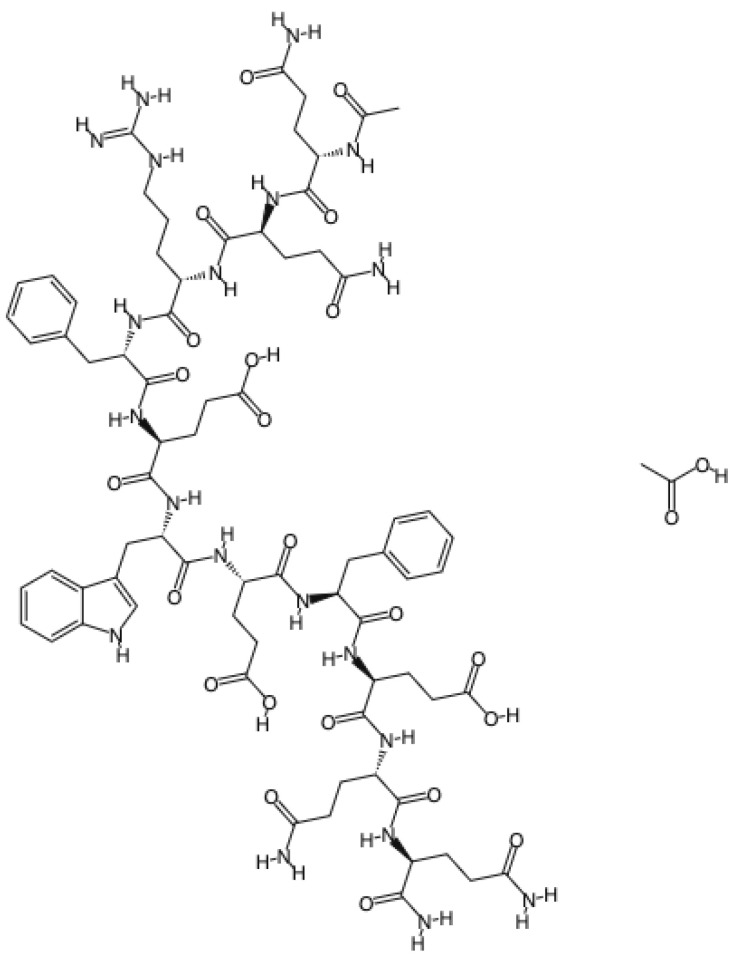
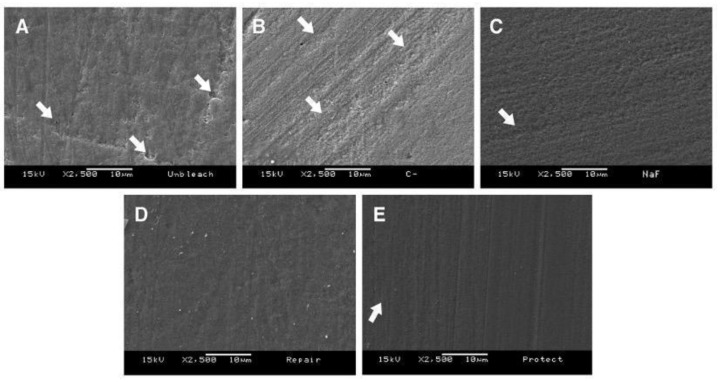
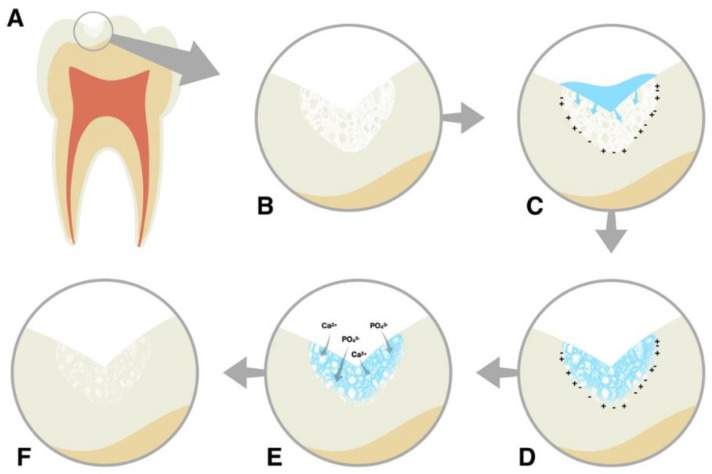
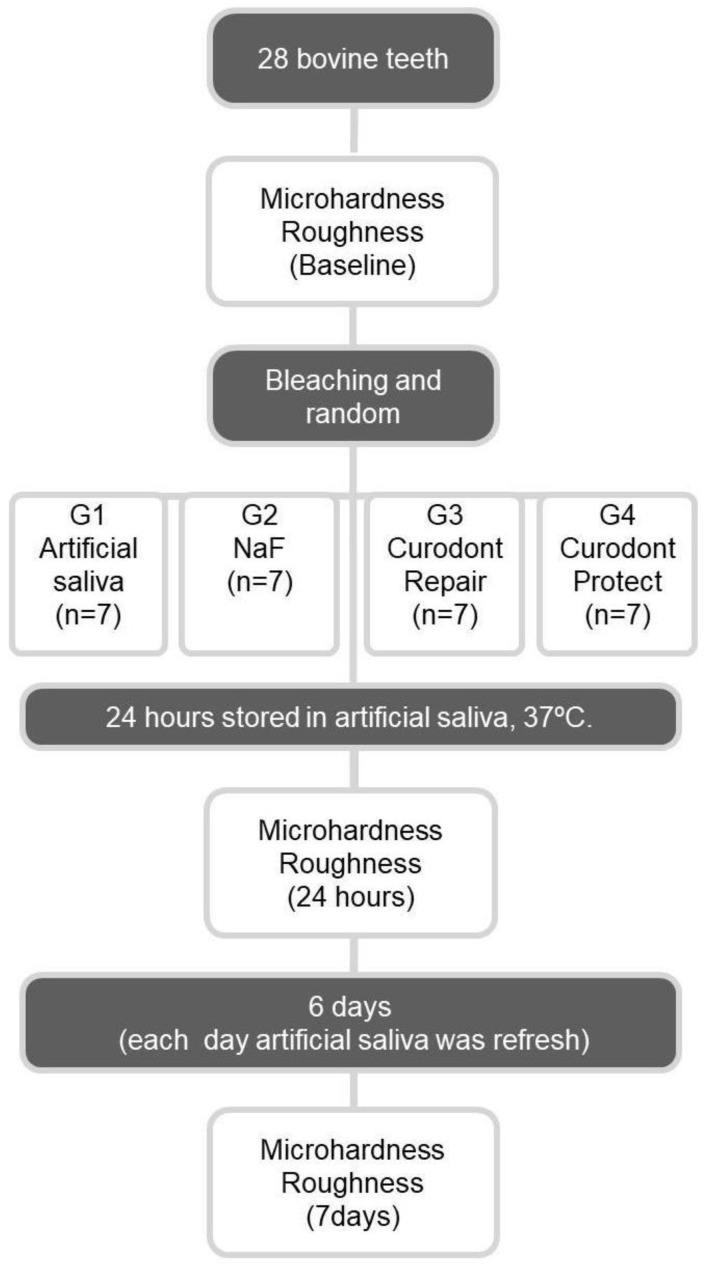
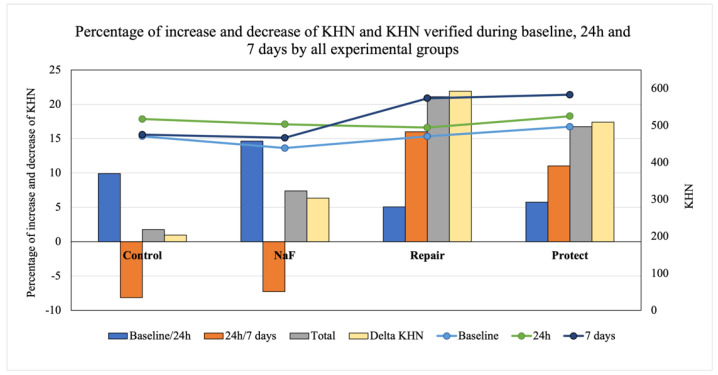
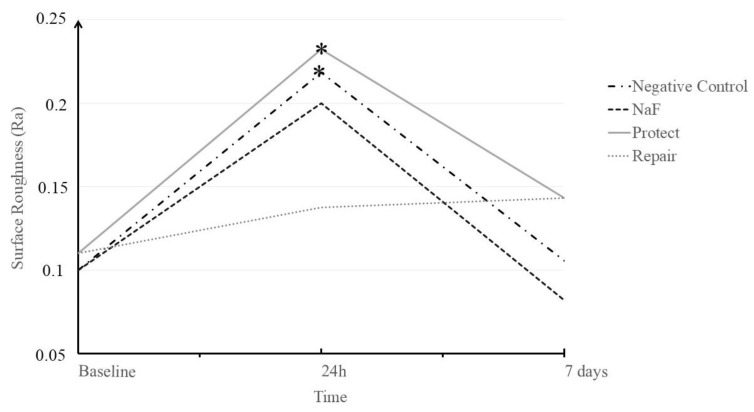
After bleaching, enamel surfaces are damaged, contributing to erosion and tooth sensitivity. Although fluoride is used after bleaching to try and revert alterations, it is not capable of repairing tooth structure. This study compared the effect of a self-assembly peptide (P11-4), with and without fluoride, and sodium fluoride (NaF 2%) on the Knoop microhardness (KHN) and surface roughness (Ra (μm)) of bleached enamel with an in-office bleaching regimen. Enamel blocks of bovine teeth (5 × 5 × 2 mm) with standardized surface hardness were bleached with 35% carbamide peroxide, following the manufacturer’s instructions. The teeth were randomly divided into the following groups (n = 7) according to post-bleaching treatment: no treatment (negative control) (C-); 2% NaF (NaF); Curodont™ Repair (Repair); and Curodont™ Protect (Protect). Specimens were stored in artificial saliva at 37 °C. To evaluate the effect of the post-bleaching treatments, KHN and Ra were measured before bleaching (baseline) and 24 h and 7 days after bleaching. Data were submitted to repeated measures ANOVA and Bonferroni tests (α = 0.05). There were significant interactions between the study factors (p = 0.001). After 7 days, Repair (572.50 ± 79.04) and Protect (583.00 ± 74.76) specimens showed increased surface KHN, with values higher than the NaF (465.50 ± 41.50) and C- (475.22 ± 58.95) baseline values. There was no significant difference in KHN at 24 h among groups (p = 0.587). At 24 h after bleaching, Repair was significantly different from all groups (p < 0.05). Repair showed the lowest Ra (μm) values (0.133 ± 0.035). After seven days, there was no significant difference in Ra values among groups when compared to the baseline. The use of P11-4-based materials after bleaching resulted in the fastest recovery to baseline enamel properties.
漂白后,牙釉质表面会受到损伤,导致侵蚀和牙齿敏感。尽管漂白后会使用氟化物来试图恢复这些改变,但它无法修复牙齿结构。本研究比较了含氟和不含氟的自组装肽(P11-4)以及2%氟化钠(NaF)对采用诊室漂白方案的漂白牙釉质努氏显微硬度(KHN)和表面粗糙度(Ra(μm))的影响。按照制造商的说明,用35%的过氧化脲对具有标准化表面硬度的牛牙釉质块(5×5×2毫米)进行漂白。根据漂白后的处理方法,将牙齿随机分为以下几组(n = 7):不做处理(阴性对照)(C-);2% NaF(NaF);Curodont™ Repair(Repair);以及Curodont™ Protect(Protect)。样本储存在37℃的人工唾液中。为了评估漂白后处理的效果,在漂白前(基线)、漂白后24小时和7天测量KHN和Ra。数据进行重复测量方差分析和Bonferroni检验(α = 0.05)。研究因素之间存在显著交互作用(p = 0.001)。7天后,Repair组(572.50±79.04)和Protect组(583.00±74.76)的样本表面KHN增加,其值高于NaF组(465.50±41.50)和C-组(475.22±58.95)的基线值。各组在24小时时的KHN没有显著差异(p = 0.587)。漂白后24小时,Repair组与所有组均有显著差异(p < 0.05)。Repair组的Ra(μm)值最低(0.133±0.035)。7天后,与基线相比,各组的Ra值没有显著差异。漂白后使用基于P11-4的材料能使牙釉质性能最快恢复到基线水平。