Department of Life Science, Chung-Ang Universitygrid.254224.7, Seoul, Republic of Korea.
mSystems. 2022 Aug 30;7(4):e0045522. doi: 10.1128/msystems.00455-22. Epub 2022 Jun 23.
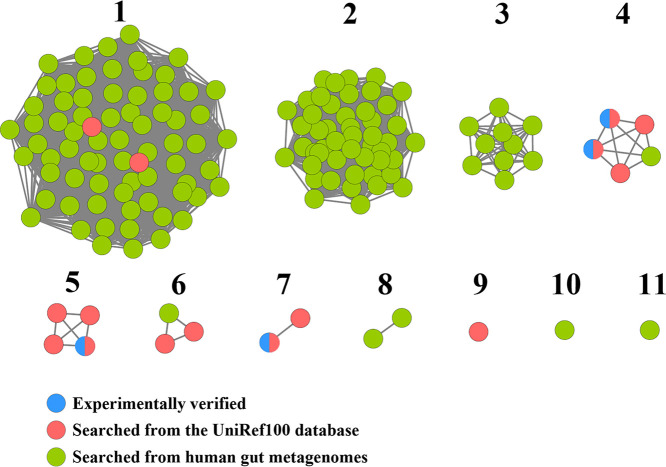
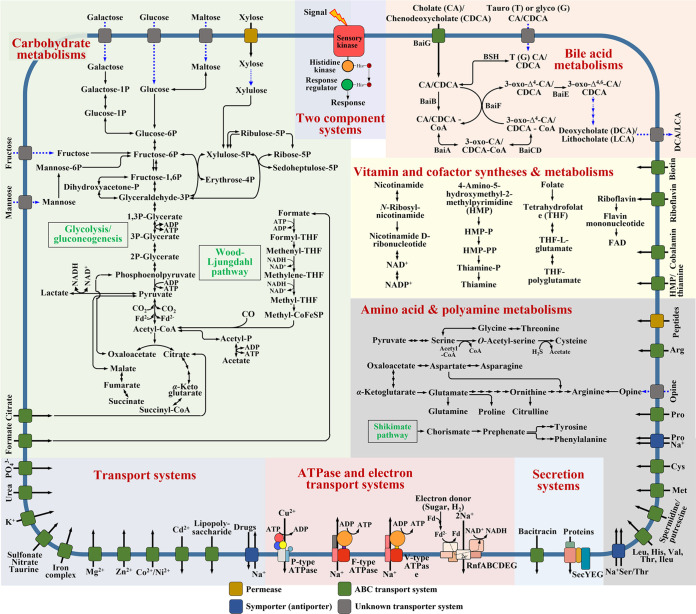
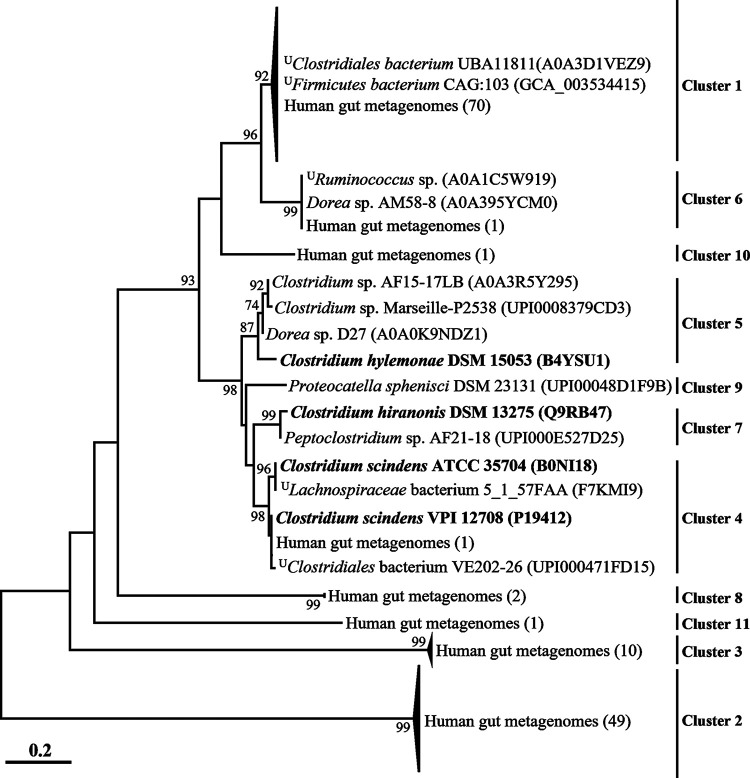
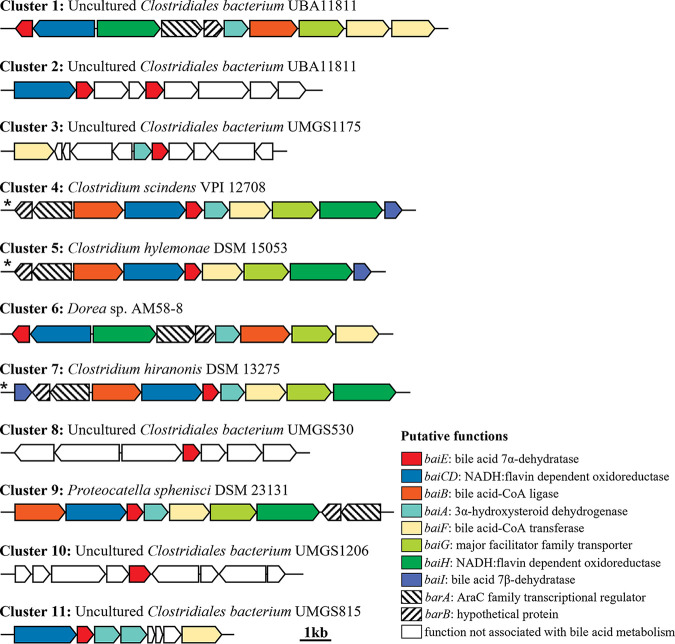
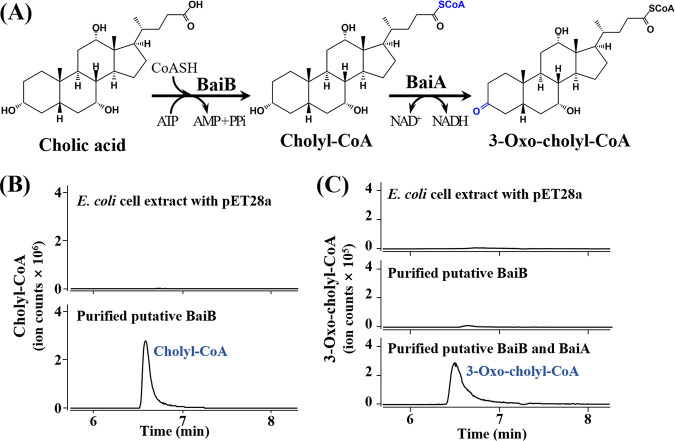
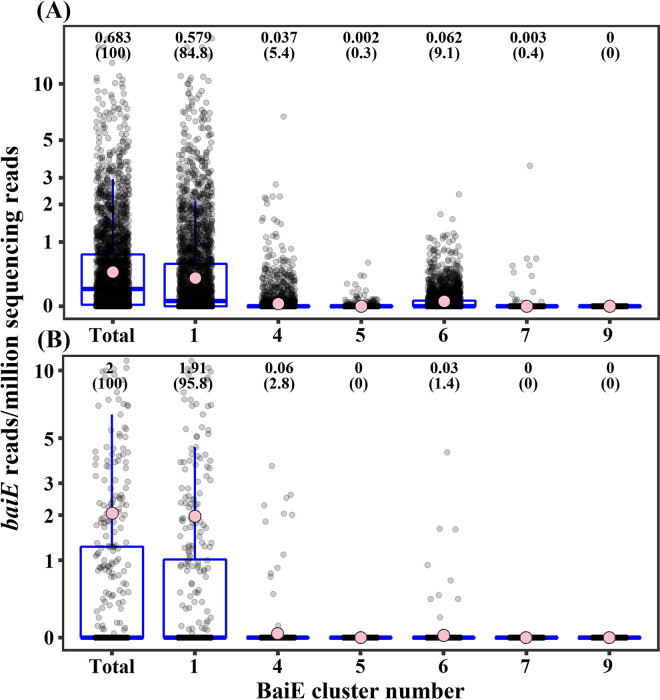
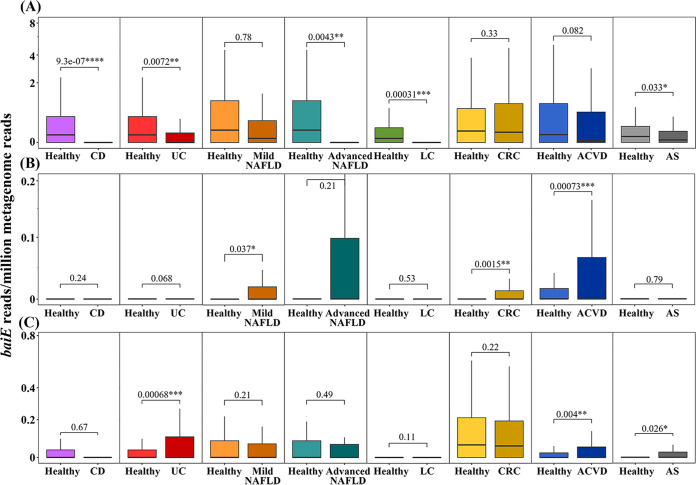
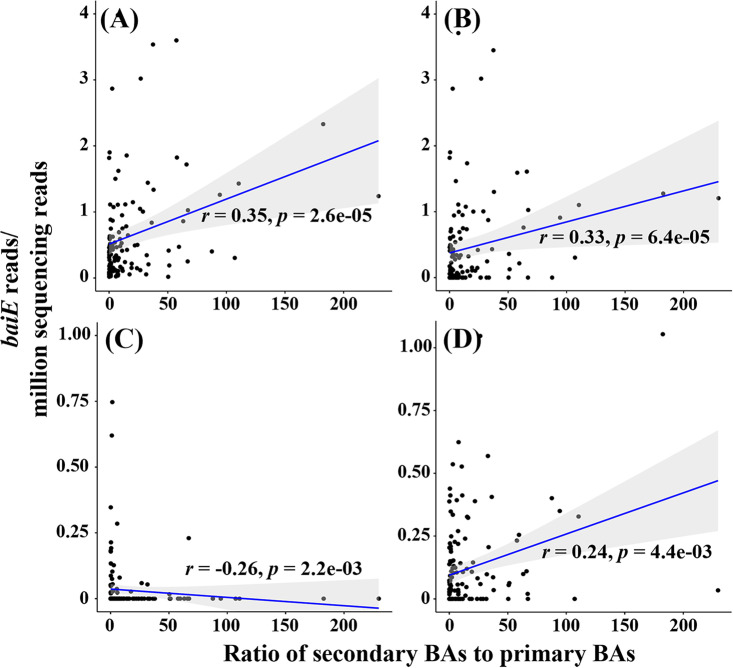
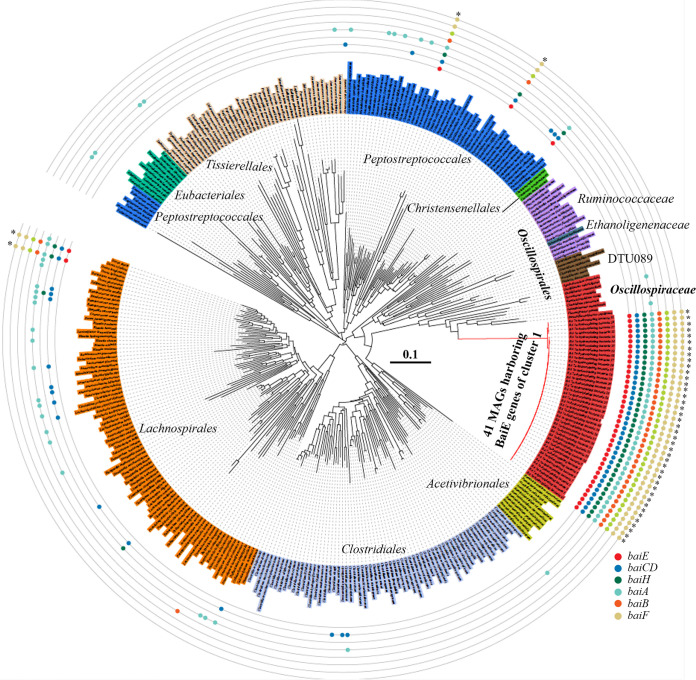
The metabolism of bile acids (BAs) by gut bacteria plays an important role in human health. This study identified and characterized 7α-dehydroxylating bacteria, which are majorly responsible for converting primary BAs to secondary BAs, in the human gut and investigated their association with human disease. Six 7α-dehydratase (BaiE) clusters were identified from human gut metagenomes through sequence similarity network and genome neighborhood network analyses. Abundance analyses of gut metagenomes and metatranscriptomes identified a cluster of bacteria (cluster 1) harboring genes that may be key 7α-dehydroxylating bacteria in the human gut. The gene abundance of cluster 1 was significantly and positively correlated with the ratio of secondary BAs to primary BAs. Furthermore, the gene abundances of cluster 1 were significantly negatively correlated with inflammatory bowel disease, including Crohn's disease and ulcerative colitis, as well as advanced nonalcoholic fatty liver disease, liver cirrhosis, and ankylosing spondylitis. Phylogenetic and metagenome-assembled genome analyses showed that the 7α-dehydroxylating bacterial clade of cluster 1 was affiliated with the family and may demonstrate efficient BA dehydroxylation ability by harboring both a complete operon, for proteins which produce secondary BAs from primary BAs, and a gene for bile salt hydrolase, which deconjugates BAs, in the human gut. In this study, we identified a key 7α-dehydroxylating bacterial group predicted to be largely responsible for converting primary bile acids (BAs) to secondary BAs in the human gut through sequence similarity network, genome neighborhood network, and gene abundance analyses using human gut metagenomes. The key bacterial group was phylogenetically quite different from known 7α-dehydroxylating bacteria, and their abundance was highly correlated with the occurrence of diverse diseases associated with bile acid 7α-dehydroxylation. In addition, we characterized the metabolic features of the key bacterial group using their metagenome-assembled genomes. This approach is useful to identify and characterize key gut bacteria highly associated with human health and diseases.
胆汁酸(BAs)的肠道细菌代谢在人类健康中起着重要作用。本研究鉴定和描述了 7α-脱羟细菌,它们主要负责将初级 BAs 转化为次级 BAs,在人类肠道中,并研究了它们与人类疾病的关联。通过序列相似性网络和基因组邻居网络分析,从人类肠道宏基因组中鉴定了 6 个 7α-脱氨酶(BaiE)簇。肠道宏基因组和宏转录组的丰度分析鉴定了一个含有 基因的细菌簇(簇 1),这些基因可能是人类肠道中关键的 7α-脱羟细菌。簇 1 的 基因丰度与次级 BAs 与初级 BAs 的比值呈显著正相关。此外,簇 1 的 基因丰度与炎症性肠病(包括克罗恩病和溃疡性结肠炎)以及非酒精性脂肪性肝病、肝硬化和强直性脊柱炎呈显著负相关。系统发育和宏基因组组装基因组分析表明,簇 1 的 7α-脱羟细菌进化枝与科有关,可能通过在人类肠道中同时携带完整的 操纵子(用于将初级 BAs 转化为次级 BAs 的蛋白质)和编码胆汁盐水解酶的基因,表现出高效的 BA 脱羟能力,胆汁盐水解酶可使 BAs 去共轭。在本研究中,我们通过人类肠道宏基因组的序列相似性网络、基因组邻居网络和基因丰度分析,鉴定了一个关键的 7α-脱羟细菌群,该细菌群被预测在人类肠道中主要负责将初级胆汁酸(BAs)转化为次级 BAs。该关键细菌群与已知的 7α-脱羟细菌在系统发育上有很大的不同,其丰度与与胆汁酸 7α-脱羟作用相关的多种疾病的发生高度相关。此外,我们使用宏基因组组装基因组对关键细菌群的代谢特征进行了表征。这种方法有助于鉴定和描述与人类健康和疾病高度相关的关键肠道细菌。