Lianou Daphne T, Fthenakis George C
Veterinary Faculty, University of Thessaly, 43100 Karditsa, Greece.
Antibiotics (Basel). 2022 May 31;11(6):753. doi: 10.3390/antibiotics11060753.
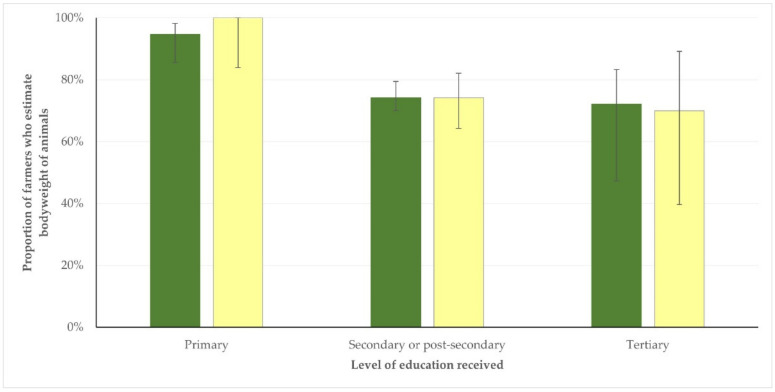
The objectives of the study were (a) to describe the patterns of antibiotic usage against four major clinical problems and (b) to evaluate factors that were associated with their use on small ruminant farms. Sheep and goat farmers mostly administered the antibiotics to animals at the dose prescribed (80.4%) and observed the necessary withdrawal period (98.7%), but fewer farmers (22.3%) weighed the animals to calculate their bodyweight before antibiotic administration. For the treatment of clinical mastitis, oxytetracycline, penicillin and streptomycin were the antibiotics used more frequently; 2.03 different antibiotics were used per sheep flock and 2.06 per goat herd, most frequently administered in injectable forms (88.8% of farms). In cases of abortion, oxytetracycline was administered more frequently; 1.12 different antibiotics were used per sheep flock and 1.03 per goat herd. In 94 farms (21.2%), routine administration of antibiotics was performed to newborns; oxytetracycline and ampicillin were administered more often. For the treatment of pneumonia in newborns, oxytetracycline, penicillin and tulathromycin were used more frequently; 1.33 antibiotics were used per sheep flock and 1.29 per goat herd. For the treatment of diarrhoea in lambs and kids, oxytetracycline, amoxicillin and penicillin were the antibiotics used more frequently; 1.34 antibiotics were used per sheep flock and 1.59 per goat herd. Results of multivariable analyses indicated 16 variables associated with the various outcomes for usage of antibiotics for the treatment of the above clinical problems. Of these, 11 variables were associated with the farmers: education of farmers was significant for three outcomes; the age, the experience, the professional involvement and farming family tradition of farmers and the daily period spent at the farm were each significant for one outcome.
(a)描述针对四个主要临床问题的抗生素使用模式;(b)评估与小反刍动物养殖场抗生素使用相关的因素。绵羊和山羊养殖户大多按照规定剂量给动物使用抗生素(80.4%),并遵守必要的停药期(98.7%),但较少有养殖户(22.3%)在使用抗生素前对动物称重以计算其体重。在治疗临床乳腺炎时,土霉素、青霉素和链霉素是使用较为频繁的抗生素;每群绵羊使用2.03种不同抗生素,每群山羊使用2.06种,最常采用注射形式给药(88.8%的养殖场)。在流产病例中,土霉素使用更为频繁;每群绵羊使用1.12种不同抗生素,每群山羊使用1.03种。在94个养殖场(21.2%),对新生动物进行常规抗生素给药;土霉素和氨苄青霉素使用更为频繁。在治疗新生动物肺炎时,土霉素、青霉素和泰拉霉素使用更为频繁;每群绵羊使用1.33种抗生素,每群山羊使用1.29种。在治疗羔羊和幼山羊腹泻时,土霉素、阿莫西林和青霉素是使用较为频繁的抗生素;每群绵羊使用1.34种抗生素,每群山羊使用1.59种。多变量分析结果表明,有16个变量与上述临床问题治疗中抗生素使用的各种结果相关。其中,11个变量与养殖户有关:养殖户的教育程度对三种结果有显著影响;养殖户的年龄、经验、专业参与情况、养殖家庭传统以及在养殖场度过的每日时长分别对一种结果有显著影响。