Barone Antonella, d'Avanzo Nicola, Cristiano Maria Chiara, Paolino Donatella, Fresta Massimo
Department of Experimental and Clinical Medicine, University "Magna Græcia" of Catanzaro Campus Universitario-Germaneto, Viale Europa, 88100 Catanzaro, Italy.
Department of Pharmacy, University "G. d'Annunzio" of Chieti-Pescara, Via dei Vestini n.31, 66100 Chieti, Italy.
Biomedicines. 2022 May 27;10(6):1252. doi: 10.3390/biomedicines10061252.
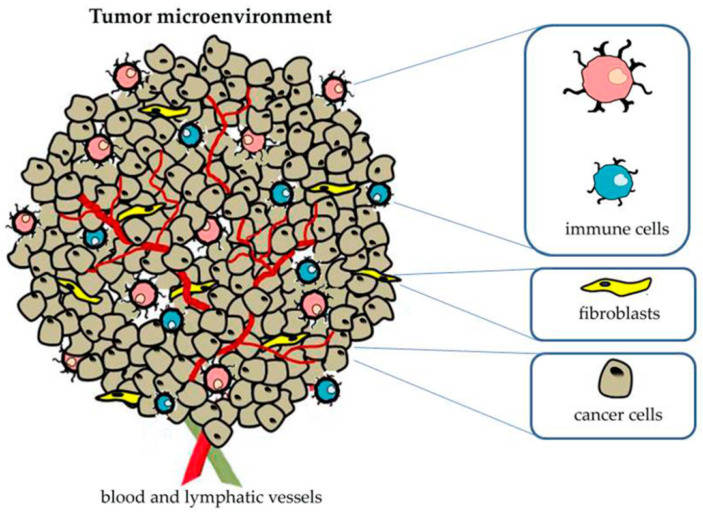
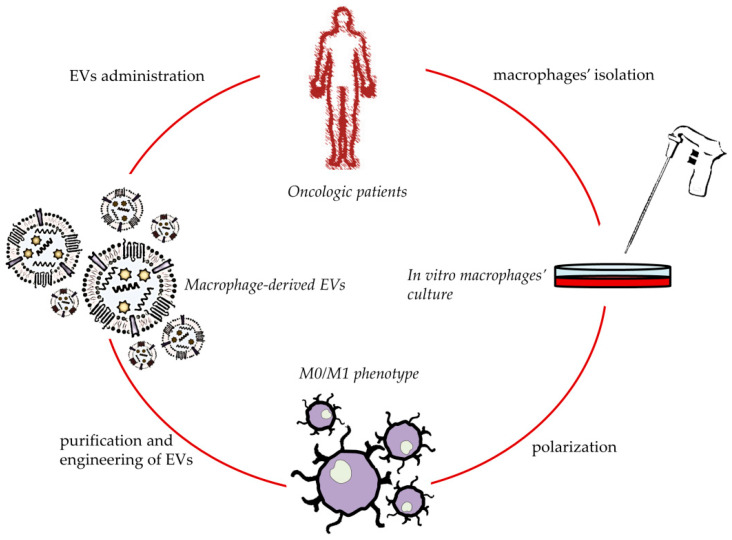
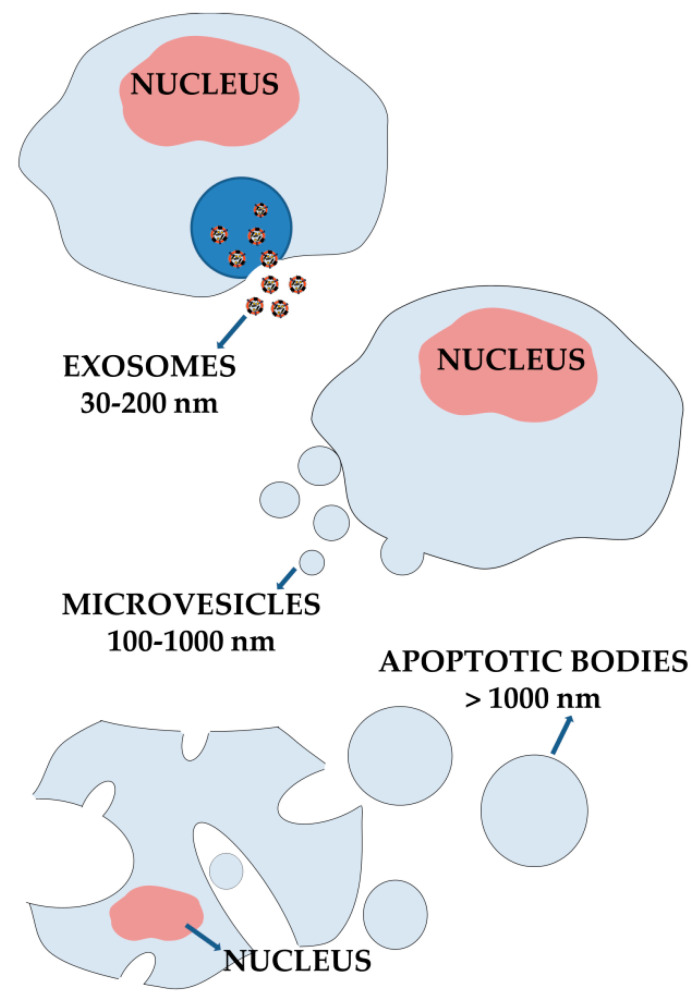
The incidence of cancer is increasing dramatically, affecting all ages of the population and reaching an ever higher worldwide mortality rate. The lack of therapies' efficacy is due to several factors such as a delay in diagnosis, tumor regrowth after surgical resection and the occurrence of multidrug resistance (MDR). Tumor-associated immune cells and the tumor microenvironment (TME) deeply affect the tumor's progression, leading to several physicochemical changes compared to physiological conditions. In this scenario, macrophages play a crucial role, participating both in tumor suppression or progression based on the polarization of onco-suppressive M1 or pro-oncogenic M2 phenotypes. Moreover, much evidence supports the pivotal role of macrophage-derived extracellular vesicles (EVs) as mediators in TME, because of their ability to shuttle the cell-cell and organ-cell communications, by delivering nucleic acids and proteins. EVs are lipid-based nanosystems with a broad size range distribution, which reflect a similar composition of native parent cells, thus providing a natural selectivity towards target sites. In this review, we discuss the impact of macrophage-derived EVs in the cancer's fate as well as their potential implications for the development of personalized anticancer nanomedicine.
癌症的发病率正在急剧上升,影响着所有年龄段的人群,且全球死亡率不断攀升。治疗效果欠佳是由多种因素导致的,比如诊断延迟、手术切除后肿瘤复发以及多药耐药(MDR)的出现。肿瘤相关免疫细胞和肿瘤微环境(TME)深刻影响着肿瘤的进展,与生理状态相比会导致一些物理化学变化。在这种情况下,巨噬细胞起着关键作用,根据抑癌M1或促癌M2表型的极化,既参与肿瘤抑制,也参与肿瘤进展。此外,大量证据支持巨噬细胞衍生的细胞外囊泡(EVs)作为TME中的介质的关键作用,因为它们能够通过传递核酸和蛋白质来穿梭细胞间和器官-细胞间的通讯。EVs是基于脂质的纳米系统,具有广泛的尺寸范围分布,这反映了天然亲本细胞的相似组成,从而对靶位点具有天然的选择性。在这篇综述中,我们讨论了巨噬细胞衍生的EVs对癌症命运的影响以及它们对个性化抗癌纳米医学发展的潜在意义。