Aromokeye Rukayat, Si Hongwei
Department of Human Sciences, Tennessee State University, Nashville, TN 37209, USA.
Cancers (Basel). 2022 Jun 18;14(12):3001. doi: 10.3390/cancers14123001.
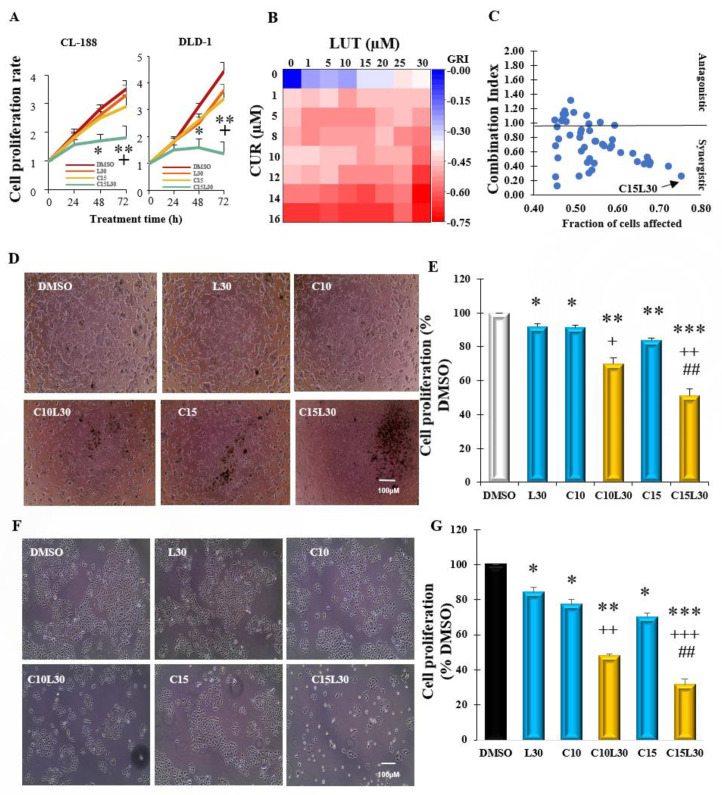
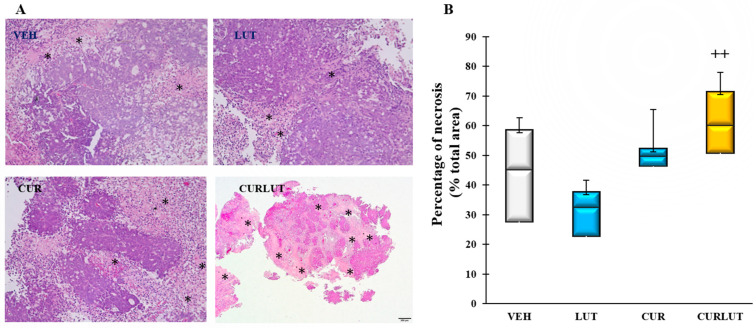
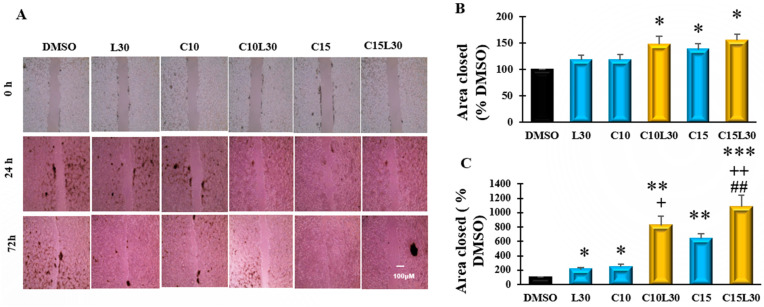
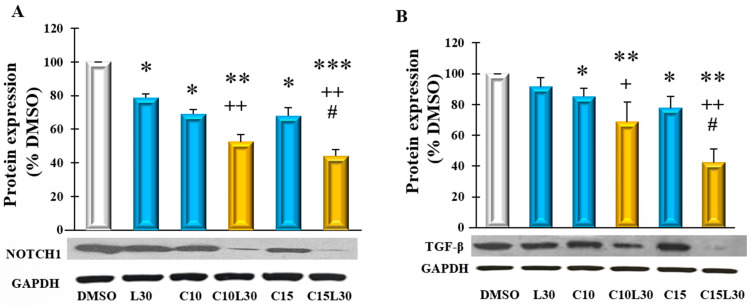
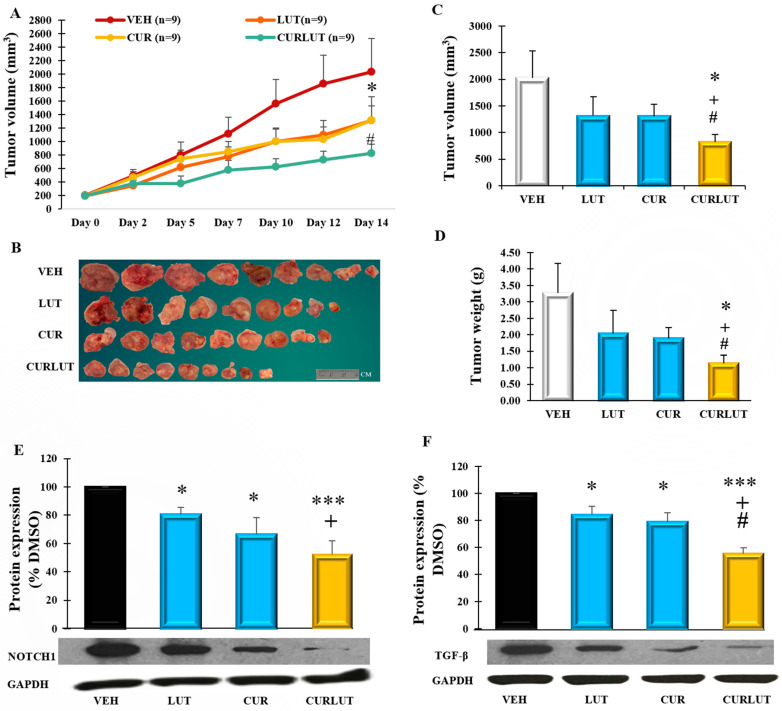
This study aimed to select a combination of curcumin and luteolin, two phytochemicals from food, at lower concentrations with a higher inhibitory effect on colon cancer growth and investigate possible molecular mechanisms of this anti-colon cancer effect. By pairwise combination screening, we identified that the combination of curcumin (CUR) at 15 μM and luteolin (LUT) at 30 μM (C15L30) synergistically suppressed the proliferation of human colon cancer CL-188 cells, but the individual chemicals had a little inhibitory effect at the selected concentrations. This result was also confirmed in other colon cancer DLD-1cells, suggesting that this synergistic inhibitory effect of C15L30 applies to different colon cancer cells. The combination C15L30 synergistically suppressed the wound closure (wound healing assay) in CL-188 cells. We also found that the combination of CUR and LUT (at 20 mg/kg/day and 10 mg/kg/day, respectively, IP injection, 5 days for 2 weeks) synergistically suppressed tumor growth in CL-188 cell-derived xenograft mice. Western blot results showed that protein levels of Notch1 and TGF-β were synergistically reduced by the combination, both in CL-188 cells and xenograft tumors. Tumor pathological analysis revealed that combined CUR and LUT synergistically increased necrosis, but the individual treatment with CUR and LUT had no significant effect on tumor necrosis. Therefore, combined curcumin and luteolin synergically inhibit colon cancer development by suppressing cell proliferation, necrosis, and migration associated with Notch1 and TGF-β pathways. This study provides evidence that colon cancer may be prevented/treated by consuming foods having high levels of luteolin and curcumin in humans.
本研究旨在选择两种食物中的植物化学物质姜黄素和木犀草素的组合,该组合在较低浓度下对结肠癌生长具有较高抑制作用,并探究这种抗结肠癌作用的可能分子机制。通过成对组合筛选,我们发现15 μM姜黄素(CUR)和30 μM木犀草素(LUT)的组合(C15L30)协同抑制人结肠癌CL-188细胞的增殖,但在所选浓度下,单独的化学物质抑制作用较小。在其他结肠癌DLD-1细胞中也证实了这一结果,表明C15L30的这种协同抑制作用适用于不同的结肠癌细胞。C15L30组合协同抑制CL-188细胞的伤口闭合(伤口愈合试验)。我们还发现,姜黄素和木犀草素的组合(分别以20 mg/kg/天和10 mg/kg/天,腹腔注射,共5天,持续2周)协同抑制CL-188细胞来源的异种移植小鼠的肿瘤生长。蛋白质印迹结果显示,在CL-188细胞和异种移植肿瘤中,该组合均能协同降低Notch1和TGF-β的蛋白质水平。肿瘤病理分析显示,姜黄素和木犀草素联合使用可协同增加坏死,但单独使用姜黄素和木犀草素对肿瘤坏死无显著影响。因此,姜黄素和木犀草素联合使用通过抑制与Notch1和TGF-β途径相关的细胞增殖、坏死和迁移,协同抑制结肠癌发展。本研究提供了证据,表明人类食用富含木犀草素和姜黄素的食物可能预防/治疗结肠癌。