Department of Nutrition, Gillings School of Global Public Health, University of North Carolina at Chapel Hill, Chapel Hill, NC, USA.
Department of Epidemiology, Rollins School of Public Health, Emory University, Atlanta, GA, USA.
Cancer Metastasis Rev. 2022 Sep;41(3):607-625. doi: 10.1007/s10555-022-10043-5. Epub 2022 Jun 25.
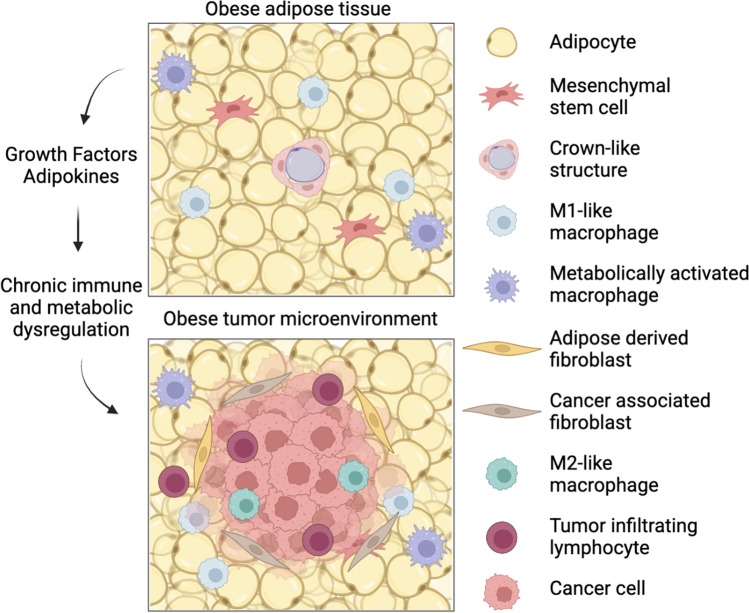
Obesity, exceptionally prevalent in the USA, promotes the incidence and progression of numerous cancer types including breast cancer. Complex, interacting metabolic and immune dysregulation marks the development of both breast cancer and obesity. Obesity promotes chronic low-grade inflammation, particularly in white adipose tissue, which drives immune dysfunction marked by increased pro-inflammatory cytokine production, alternative macrophage activation, and reduced T cell function. Breast tissue is predominantly composed of white adipose, and developing breast cancer readily and directly interacts with cells and signals from adipose remodeled by obesity. This review discusses the biological mechanisms through which obesity promotes breast cancer, the role of obesity in breast cancer health disparities, and dietary interventions to mitigate the adverse effects of obesity on breast cancer. We detail the intersection of obesity and breast cancer, with an emphasis on the shared and unique patterns of immune dysregulation in these disease processes. We have highlighted key areas of breast cancer biology exacerbated by obesity, including incidence, progression, and therapeutic response. We posit that interception of obesity-driven breast cancer will require interventions that limit protumor signaling from obese adipose tissue and that consider genetic, structural, and social determinants of the obesity-breast cancer link. Finally, we detail the evidence for various dietary interventions to offset obesity effects in clinical and preclinical studies of breast cancer. In light of the strong associations between obesity and breast cancer and the rising rates of obesity in many parts of the world, the development of effective, safe, well-tolerated, and equitable interventions to limit the burden of obesity on breast cancer are urgently needed.
肥胖症在美国极为普遍,它会增加多种癌症类型(包括乳腺癌)的发病率和发展速度。复杂的代谢和免疫失调相互作用标志着乳腺癌和肥胖症的发展。肥胖症会促进慢性低度炎症,尤其是在白色脂肪组织中,这会导致免疫功能障碍,表现为促炎细胞因子产生增加、巨噬细胞的替代激活和 T 细胞功能降低。乳腺组织主要由白色脂肪组成,并且正在发育的乳腺癌会直接与肥胖症引起的脂肪细胞和信号发生相互作用。这篇综述讨论了肥胖症促进乳腺癌的生物学机制、肥胖症在乳腺癌健康差异中的作用,以及饮食干预以减轻肥胖对乳腺癌的不良影响。我们详细讨论了肥胖症和乳腺癌之间的交集,重点介绍了这些疾病过程中免疫失调的共同和独特模式。我们强调了肥胖症加剧的乳腺癌生物学的关键领域,包括发病率、进展和治疗反应。我们假设,要阻断肥胖症驱动的乳腺癌,需要干预措施来限制来自肥胖脂肪组织的促肿瘤信号,并且需要考虑肥胖与乳腺癌关联的遗传、结构和社会决定因素。最后,我们详细介绍了各种饮食干预措施在乳腺癌临床和临床前研究中抵消肥胖影响的证据。鉴于肥胖症与乳腺癌之间的强烈关联,以及世界上许多地区肥胖症的发病率不断上升,迫切需要开发有效、安全、耐受良好且公平的干预措施来限制肥胖症对乳腺癌的负担。