Hidanah Sri, Sabdoningrum Emy Koestanti, Rachmawati Kadek, Soeharsono Soeharsono, Trika Gede Govinda Ananta, Huda Masy' Ariel, Widiati Tsania Putri
Animal Husbandry Division, Faculty of Veterinary Medicine, Airlangga University, 60115, Surabaya, Indonesia.
Basic Veterinary Medicine Division, Faculty of Veterinary Medicine, Airlangga University, 60115, Surabaya, Indonesia.
Vet World. 2022 May;15(5):1373-1382. doi: 10.14202/vetworld.2022.1373-1382. Epub 2022 May 31.
Pullorum is an acute and chronic disease caused by , often infecting chicken farms. Pullorum disease treatment using antibiotics that do not follow the control dose can cause bacteria to become antibiotic-resistant. Meniran contributes to inhibiting and antagonizing bacteria and can increase the efficiency of chicken feed because of its bioactive compounds, including alkaloids, flavonoids, tannins, and saponins. This study aimed to determine the activity of Meniran extract ( Linn.) in broilers infected with .
study that was conducted includes phytochemical test, diffusion, and dilution methods using Meniran extract at 5%, 10%, 20%, and 40% concentrations and tylosin at 2% concentration. The data of the dilution method (minimum inhibitory concentration [MIC] and minimum bactericidal concentration [MBC]) were processed using probit analysis to determine LC. study was conducted by randomly dividing 20 broilers into five treatment groups, four per group. The chickens (except in group P0-) were infected with aged 14 days. Then, the treatment was conducted according to the divided groups when the chickens were aged 21-34 days. The said treatments are P0- (uninfected and unadministered with Meniran extract), P0+ (infected with and unadministered with Meniran extract), and P1, P2, and P3 (infected with and administered with Meniran extract with 5%, 10%, and 20% concentrations, respectively). Data from the phytochemical test were analyzed as descriptive. The data from the diffusion method were analyzed using one-way analysis of variance (ANOVA) and Duncan's test. Then, the results of broilers' performance were analyzed using ANOVA and Duncan's test.
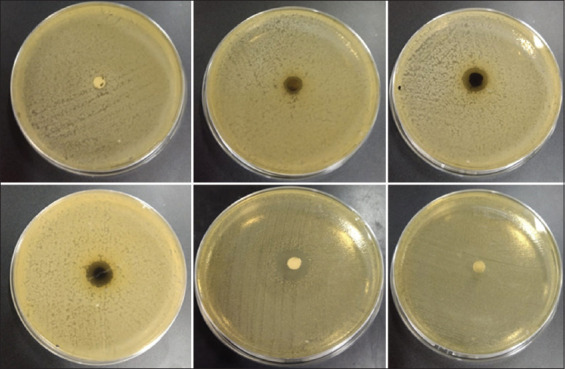
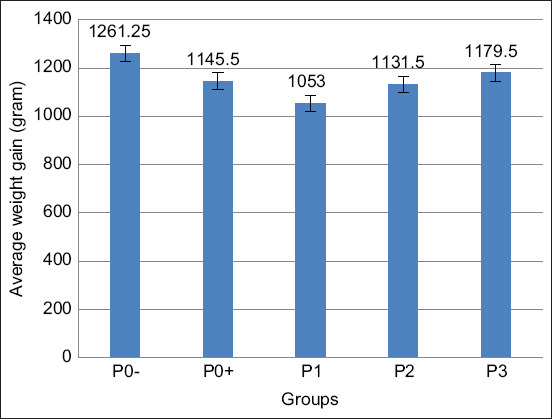
The phytochemical test showed positive for alkaloid, tannin, saponin, flavonoid, and steroid/triterpenoid. The diffusion method formed the largest zone at 40% concentration with 15.6 mm, while 20%, 10%, and 5% had average of 13.15 mm, 8.38 mm, and 5.8 mm, respectively. The dilution method (MIC and MBC) exhibited the antibacterial ability of Meniran extract against at 20% dose and LC 14.118% concentration. The Meniran extract administration in broilers exhibited improved performance of chickens infected with , with the administration of 20% dose of Meniran extract showing the best result.
About 20% concentration Meniran extract can serve as an antibacterial agent and showed the best results in broilers infected with .
鸡白痢是由[病原体名称缺失]引起的一种急性和慢性疾病,常感染养鸡场。使用未遵循控制剂量的抗生素治疗鸡白痢疾病会导致细菌产生抗生素耐药性。马缨丹有助于抑制和拮抗细菌,并且由于其生物活性化合物,包括生物碱、黄酮类化合物、单宁和皂苷,能够提高鸡饲料的效率。本研究旨在确定马缨丹提取物([植物学名缺失])对感染[病原体名称缺失]的肉鸡的活性。
所进行的研究包括植物化学测试、扩散法和稀释法,使用浓度为5%、10%、20%和40%的马缨丹提取物以及浓度为2%的泰乐菌素。稀释法(最低抑菌浓度[MIC]和最低杀菌浓度[MBC])的数据使用概率分析进行处理以确定LC。研究通过将20只肉鸡随机分为五个处理组,每组四只来进行。鸡(P0 -组除外)感染14日龄的[病原体名称缺失]。然后,在鸡21 - 34日龄时根据分组进行处理。所述处理为P0 -(未感染[病原体名称缺失]且未给予马缨丹提取物)、P0 +(感染[病原体名称缺失]且未给予马缨丹提取物)以及P1、P2和P3(感染[病原体名称缺失]且分别给予浓度为5%、10%和20%的马缨丹提取物)。植物化学测试的数据作为描述性数据进行分析。扩散法的数据使用单因素方差分析(ANOVA)和邓肯检验进行分析。然后,使用ANOVA和邓肯检验对肉鸡的生产性能结果进行分析。
植物化学测试显示生物碱、单宁、皂苷、黄酮类化合物和类固醇/三萜类化合物呈阳性。扩散法在40%浓度时形成的抑菌圈最大,为15.6毫米,而20%、10%和5%浓度时的抑菌圈平均分别为13.15毫米、8.38毫米和5.8毫米。稀释法(MIC和MBC)显示马缨丹提取物在20%剂量和LC 14.118%浓度下对[病原体名称缺失]具有抗菌能力。在感染[病原体名称缺失]的肉鸡中给予马缨丹提取物显示出鸡的生产性能有所改善,给予20%剂量的马缨丹提取物显示出最佳效果。
约20%浓度的马缨丹提取物可作为抗菌剂,并且在感染[病原体名称缺失]的肉鸡中显示出最佳效果。