Department of Intensive Care, Gelderse Vallei Hospital, Ede, The Netherlands.
Julius Center for Health Sciences and Primary Care, University Medical Center Utrecht, Utrecht, The Netherlands.
Palliat Med. 2022 Jul;36(7):1023-1046. doi: 10.1177/02692163221099116.
The surprise question is widely used to identify patients nearing the last phase of life. Potential differences in accuracy between timeframe, patient subgroups and type of healthcare professionals answering the surprise question have been suggested. Recent studies might give new insights.
To determine the accuracy of the surprise question in predicting death, differentiating by timeframe, patient subgroup and by type of healthcare professional.
Systematic review and meta-analysis.
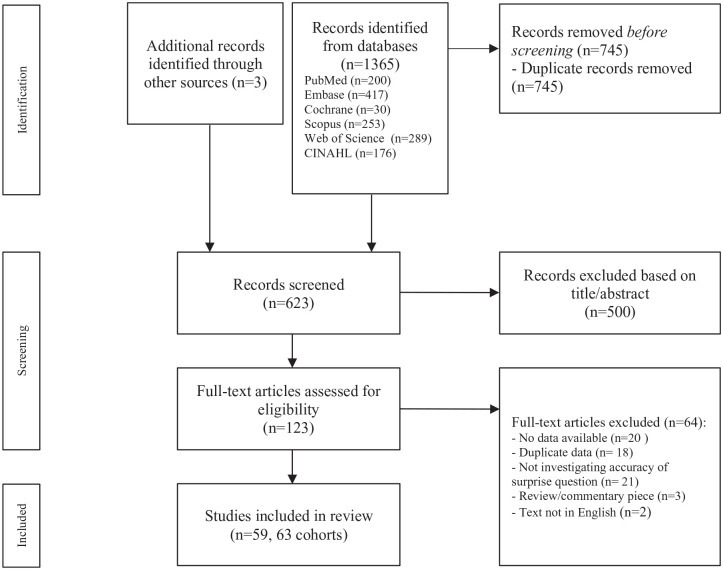
Electronic databases PubMed, Embase, Cochrane Library, Scopus, Web of Science and CINAHL were searched from inception till 22nd January 2021. Studies were eligible if they used the surprise question prospectively and assessed mortality. Sensitivity, specificity, negative predictive value, positive predictive value and c-statistic were calculated.
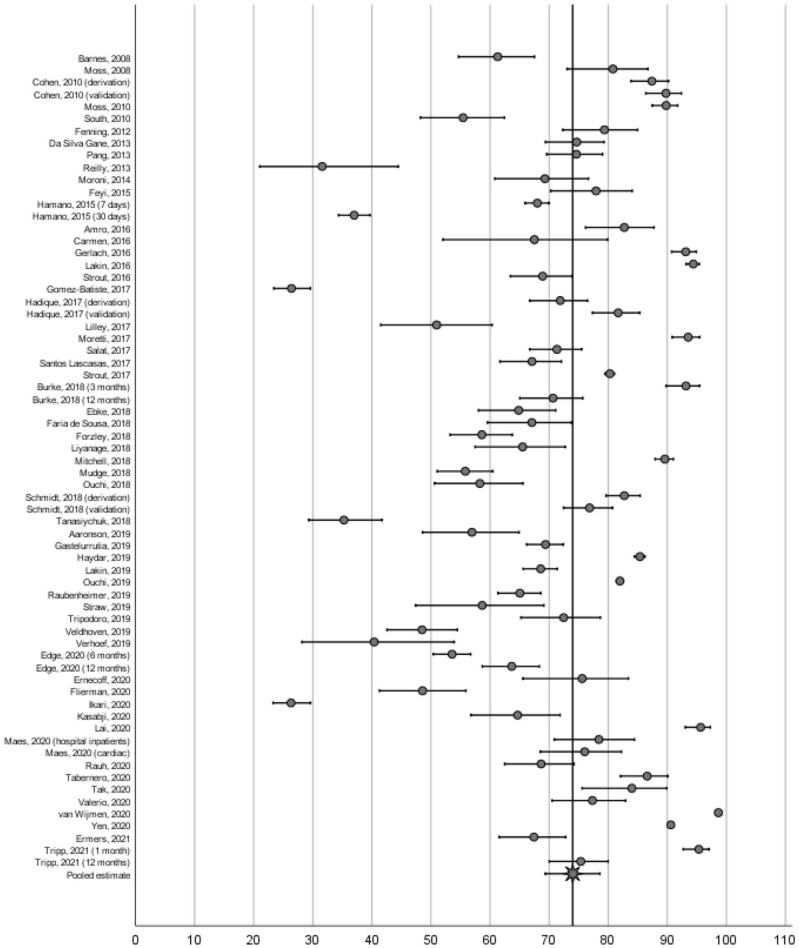
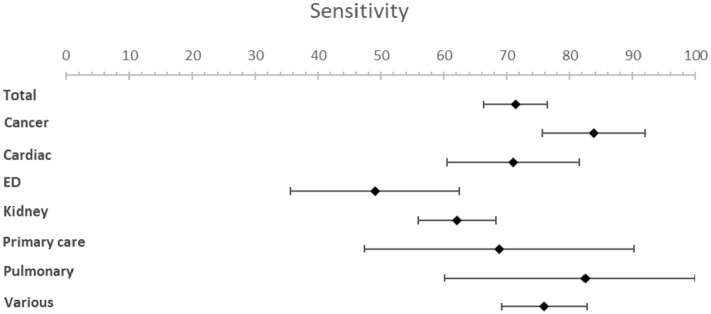
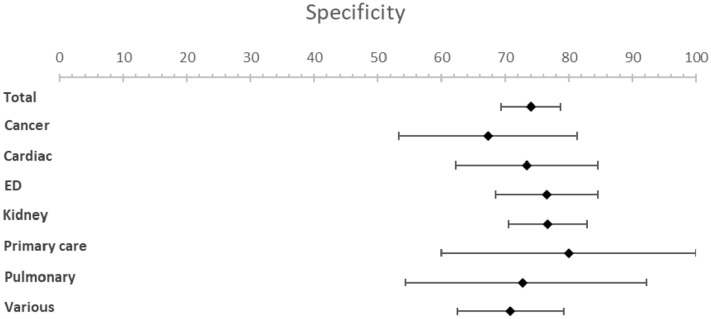
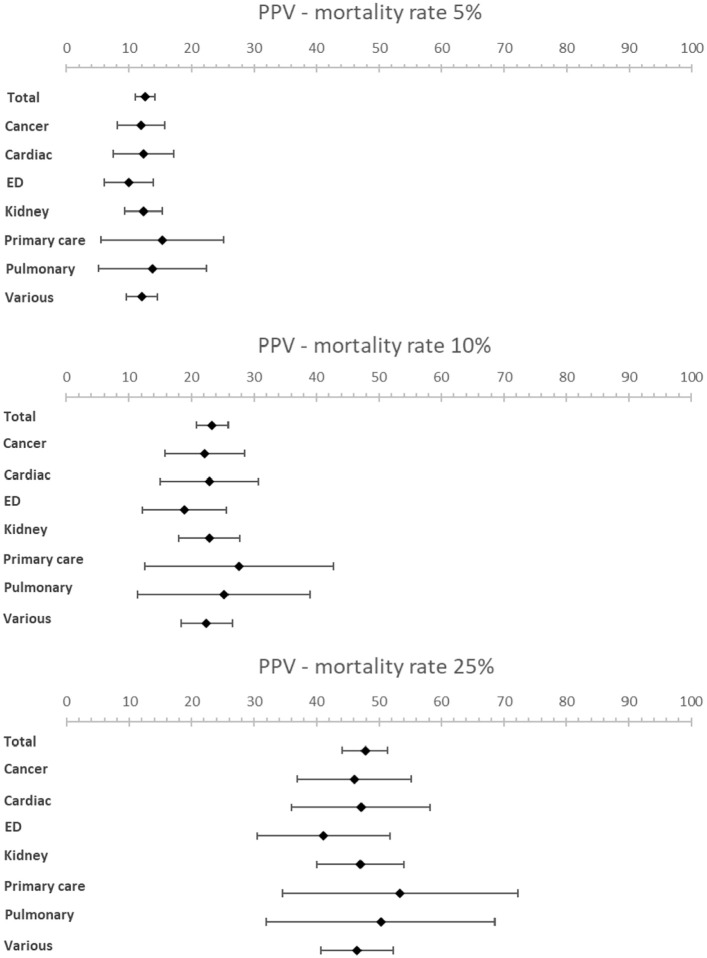
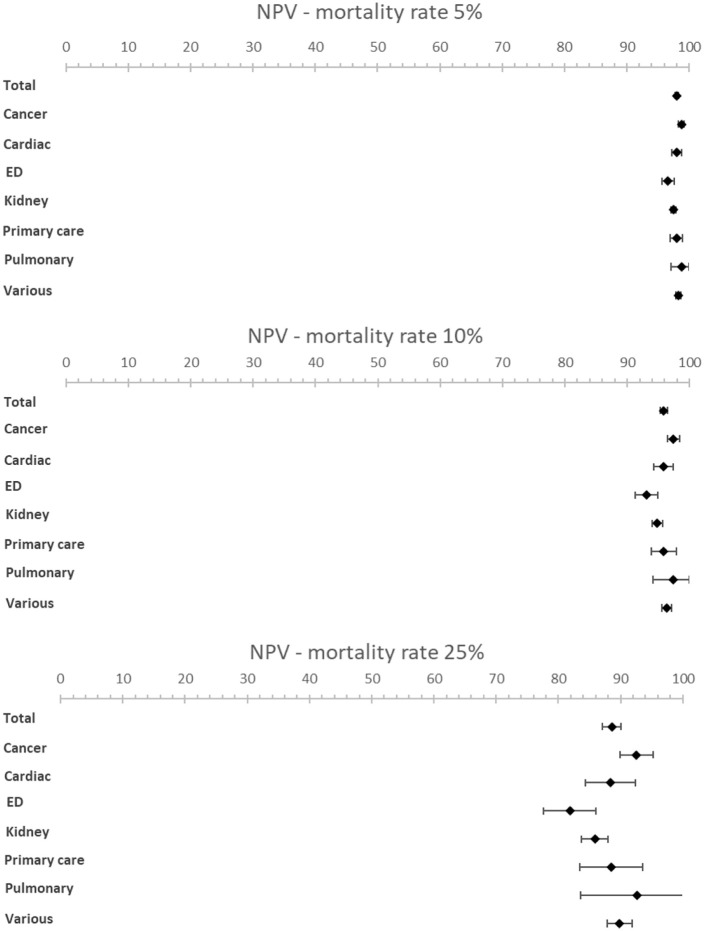
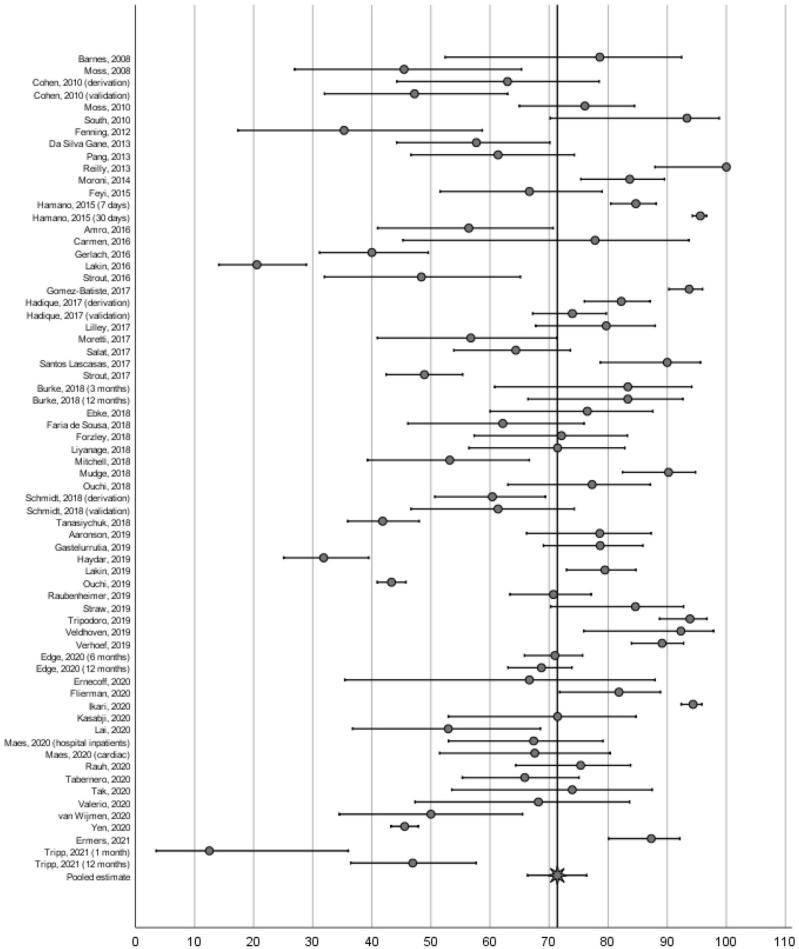
Fifty-nine studies met the inclusion criteria, including 88.268 assessments. The meta-analysis resulted in an estimated sensitivity of 71.4% (95% CI [66.3-76.4]) and specificity of 74.0% (95% CI [69.3-78.6]). The negative predictive value varied from 98.0% (95% CI [97.7-98.3]) to 88.6% (95% CI [87.1-90.0]) with a mortality rate of 5% and 25% respectively. The positive predictive value varied from 12.6% (95% CI [11.0-14.2]) with a mortality rate of 5% to 47.8% (95% CI [44.2-51.3]) with a mortality rate of 25%. Seven studies provided detailed information on different healthcare professionals answering the surprise question.
We found overall reasonable test characteristics for the surprise question. Additionally, this study showed notable differences in performance within patient subgroups. However, we did not find an indication of notable differences between timeframe and healthcare professionals.
惊讶问题被广泛用于识别生命末期临近的患者。有人提出,在时间框架、患者亚组和回答惊讶问题的医疗保健专业人员类型方面,准确性可能存在差异。最近的研究可能提供新的见解。
确定惊讶问题在预测死亡方面的准确性,区分时间框架、患者亚组和医疗保健专业人员类型。
系统评价和荟萃分析。
从建库到 2021 年 1 月 22 日,电子数据库 PubMed、Embase、Cochrane 图书馆、Scopus、Web of Science 和 CINAHL 进行了检索。前瞻性使用惊讶问题并评估死亡率的研究符合纳入标准。计算了敏感性、特异性、阴性预测值、阳性预测值和 c 统计量。
59 项研究符合纳入标准,包括 88.268 次评估。荟萃分析得出估计敏感性为 71.4%(95%CI [66.3-76.4]),特异性为 74.0%(95%CI [69.3-78.6])。阴性预测值从死亡率为 5%时的 98.0%(95%CI [97.7-98.3])到死亡率为 25%时的 88.6%(95%CI [87.1-90.0])不等。阳性预测值从死亡率为 5%时的 12.6%(95%CI [11.0-14.2])到死亡率为 25%时的 47.8%(95%CI [44.2-51.3])不等。有 7 项研究提供了详细信息,说明不同医疗保健专业人员回答惊讶问题的情况。
我们发现惊讶问题的总体测试特征合理。此外,本研究还显示了患者亚组内表现的显著差异。然而,我们没有发现时间框架和医疗保健专业人员之间存在显著差异的迹象。