Yang Guoqiang, Fan Xuehui, Mazhar Maryam, Yang Sijin, Xu Houping, Dechsupa Nathupakorn, Wang Li
Research Center for Integrated Chinese and Western Medicine, The Affiliated Traditional Chinese Medicine Hospital of Southwest Medical University, Luzhou, China.
Molecular Imaging and Therapy Research Unit, Department of Radiologic Technology, Faculty of Associated Medical Sciences, Chiang Mai University, Chiang Mai, Thailand.
Front Cell Neurosci. 2022 Jun 13;16:898497. doi: 10.3389/fncel.2022.898497. eCollection 2022.
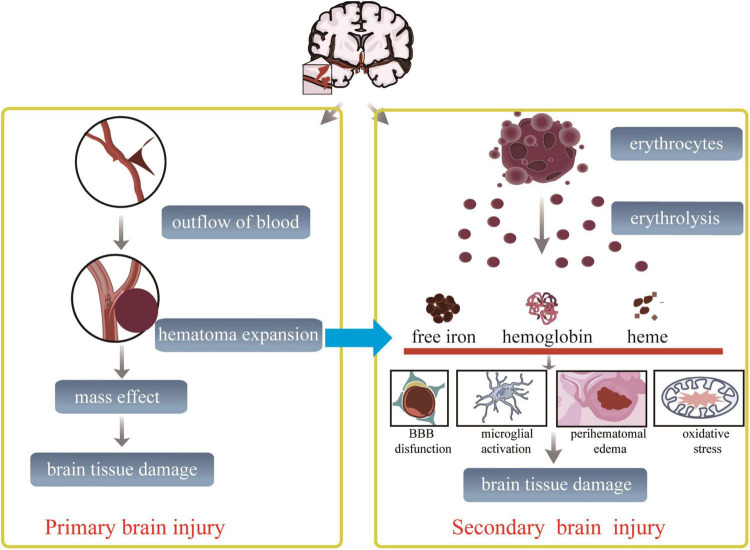
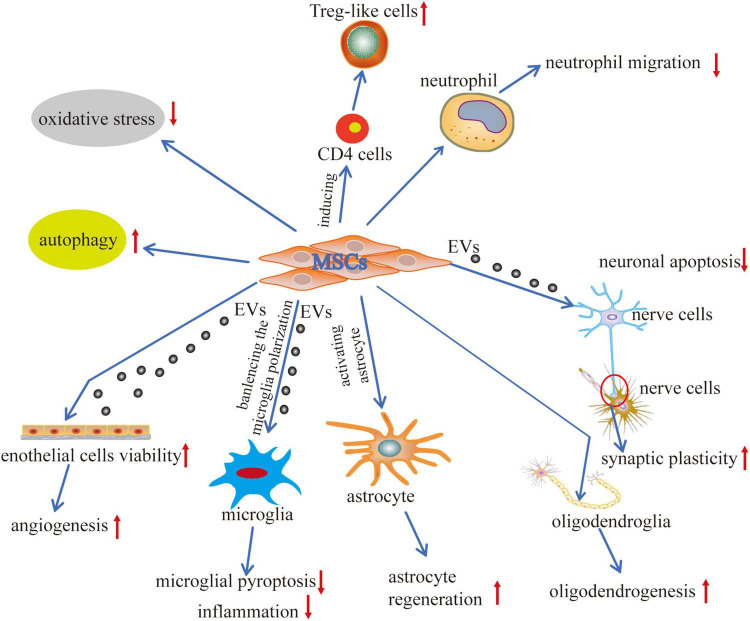
Intracerebral hemorrhage (ICH), a common lethal subtype of stroke accounting for nearly 10-15% of the total stroke disease and affecting two million people worldwide, has a high mortality and disability rate and, thus, a major socioeconomic burden. However, there is no effective treatment available currently. The role of mesenchymal stem cells (MSCs) in regenerative medicine is well known owing to the simplicity of acquisition from various sources, low immunogenicity, adaptation to the autogenic and allogeneic systems, immunomodulation, self-recovery by secreting extracellular vesicles (EVs), regenerative repair, and antioxidative stress. MSC therapy provides an increasingly attractive therapeutic approach for ICH. Recently, the functions of MSCs such as neuroprotection, anti-inflammation, and improvement in synaptic plasticity have been widely researched in human and rodent models of ICH. MSC transplantation has been proven to improve ICH-induced injury, including the damage of nerve cells and oligodendrocytes, the activation of microglia and astrocytes, and the destruction of blood vessels. The improvement and recovery of neurological functions in rodent ICH models were demonstrated the mechanisms such as neurogenesis, angiogenesis, anti-inflammation, anti-apoptosis, and synaptic plasticity. Here, we discuss the pathological mechanisms following ICH and the therapeutic mechanisms of MSC-based therapy to unravel new cues for future therapeutic strategies. Furthermore, some potential strategies for enhancing the therapeutic function of MSC transplantation have also been suggested.
脑出血(ICH)是一种常见的致死性中风亚型,占中风疾病总数的近10%-15%,全球有200万人受其影响,具有高死亡率和致残率,因此带来了重大的社会经济负担。然而,目前尚无有效的治疗方法。间充质干细胞(MSCs)在再生医学中的作用是众所周知的,这是由于其从各种来源获取的简便性、低免疫原性、对自体和异体系统的适应性、免疫调节、通过分泌细胞外囊泡(EVs)进行自我修复、再生修复以及抗氧化应激。间充质干细胞疗法为脑出血提供了一种越来越有吸引力的治疗方法。最近,间充质干细胞的功能,如神经保护、抗炎和改善突触可塑性,已在脑出血的人类和啮齿动物模型中得到广泛研究。间充质干细胞移植已被证明可改善脑出血引起的损伤,包括神经细胞和少突胶质细胞的损伤、小胶质细胞和星形胶质细胞的激活以及血管的破坏。在啮齿动物脑出血模型中,神经功能的改善和恢复通过神经发生、血管生成、抗炎、抗凋亡和突触可塑性等机制得到了证实。在此,我们讨论脑出血后的病理机制以及基于间充质干细胞疗法的治疗机制,以揭示未来治疗策略的新线索。此外,还提出了一些增强间充质干细胞移植治疗功能的潜在策略。