Tsang Kevin C H, Pinnock Hilary, Wilson Andrew M, Shah Syed Ahmar
Asthma UK Centre for Applied Research, Usher Institute, University of Edinburgh, Edinburgh, UK.
Asthma UK Centre for Applied Research, and Norwich Medical School, University of East Anglia, Norwich, UK.
J Asthma Allergy. 2022 Jun 29;15:855-873. doi: 10.2147/JAA.S285742. eCollection 2022.
Asthma is a variable long-term condition. Currently, there is no cure for asthma and the focus is, therefore, on long-term management. Mobile health (mHealth) is promising for chronic disease management but to be able to realize its potential, it needs to go beyond simply monitoring. mHealth therefore needs to leverage machine learning to provide tailored feedback with personalized algorithms. There is a need to understand the extent of machine learning that has been leveraged in the context of mHealth for asthma management. This review aims to fill this gap.
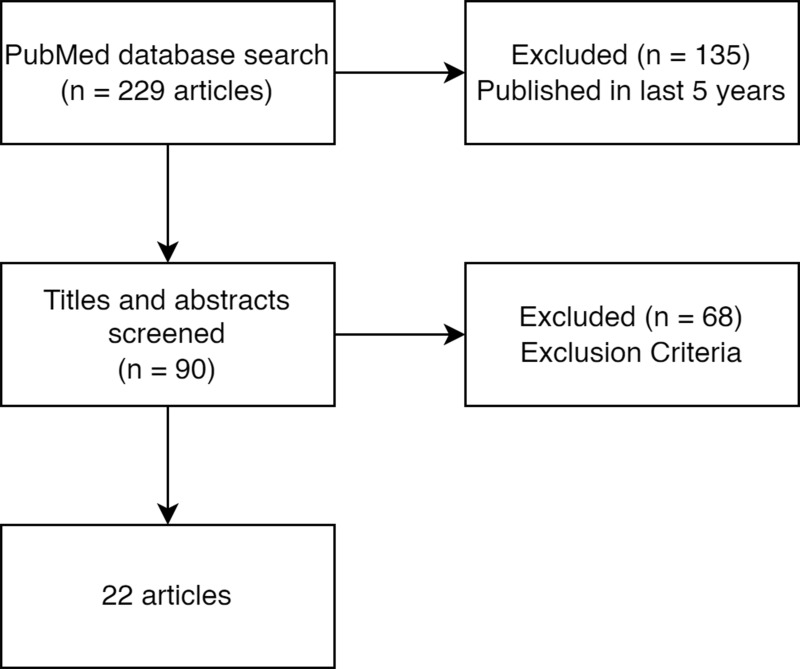
We searched PubMed for peer-reviewed studies that applied machine learning to data derived from mHealth for asthma management in the last five years. We selected studies that included some human data other than routinely collected in primary care and used at least one machine learning algorithm.
Out of 90 studies, we identified 22 relevant studies that were then further reviewed. Broadly, existing research efforts can be categorized into three types: 1) technology development, 2) attack prediction, 3) patient clustering. Using data from a variety of devices (smartphones, smartwatches, peak flow meters, electronic noses, smart inhalers, and pulse oximeters), most applications used supervised learning algorithms (logistic regression, decision trees, and related algorithms) while a few used unsupervised learning algorithms. The vast majority used traditional machine learning techniques, but a few studies investigated the use of deep learning algorithms.
In the past five years, many studies have successfully applied machine learning to asthma mHealth data. However, most have been developed on small datasets with internal validation at best. Small sample sizes and lack of external validation limit the generalizability of these studies. Future research should collect data that are more representative of the wider asthma population and focus on validating the derived algorithms and technologies in a real-world setting.
哮喘是一种多变的长期病症。目前,哮喘无法治愈,因此重点在于长期管理。移动健康(mHealth)在慢性病管理方面前景广阔,但要发挥其潜力,就需要超越简单的监测。因此,移动健康需要利用机器学习,通过个性化算法提供量身定制的反馈。有必要了解在移动健康用于哮喘管理的背景下所利用的机器学习程度。本综述旨在填补这一空白。
我们在PubMed上搜索了过去五年中应用机器学习处理源自移动健康用于哮喘管理数据的同行评审研究。我们选择了包含除初级保健常规收集之外的一些人类数据且使用至少一种机器学习算法的研究。
在90项研究中,我们确定了22项相关研究,然后对其进行了进一步审查。总体而言,现有研究工作可分为三类:1)技术开发,2)发作预测,3)患者聚类。利用来自各种设备(智能手机、智能手表、峰值流量计、电子鼻、智能吸入器和脉搏血氧仪)的数据,大多数应用使用监督学习算法(逻辑回归、决策树及相关算法),而少数使用无监督学习算法。绝大多数使用传统机器学习技术,但有少数研究探讨了深度学习算法的使用。
在过去五年中,许多研究已成功将机器学习应用于哮喘移动健康数据。然而,大多数研究是在小数据集上开发的,充其量进行了内部验证。小样本量和缺乏外部验证限制了这些研究的可推广性。未来的研究应收集更能代表更广泛哮喘人群的数据,并专注于在现实环境中验证所推导的算法和技术。