Key Laboratory of Gas and Fire Control for Coal Mines (China University of Mining and Technology), Ministry of Education, Xuzhou, Jiangsu, China; National Professional Laboratory for Fundamental Research of Mine Gas and Dust Control Technology, School of Safety Engineering, China University of Mining and Technology, Xuzhou, Jiangsu, China; School of Safety Engineering, China University of Mining and Technology, Xuzhou, Jiangsu, China.
Key Laboratory of Gas and Fire Control for Coal Mines (China University of Mining and Technology), Ministry of Education, Xuzhou, Jiangsu, China; National Professional Laboratory for Fundamental Research of Mine Gas and Dust Control Technology, School of Safety Engineering, China University of Mining and Technology, Xuzhou, Jiangsu, China; School of Safety Engineering, China University of Mining and Technology, Xuzhou, Jiangsu, China.
J Hosp Infect. 2022 Sep;127:91-100. doi: 10.1016/j.jhin.2022.06.016. Epub 2022 Jul 2.
Aerosol-borne diseases such as COVID-19 may outbreak occasionally in various regions of the world, inevitably resulting in short-term shortage and corresponding reuse of disposable respirators.
To investigate the effective disinfection methods, reusable duration and frequency of N95 respirators.
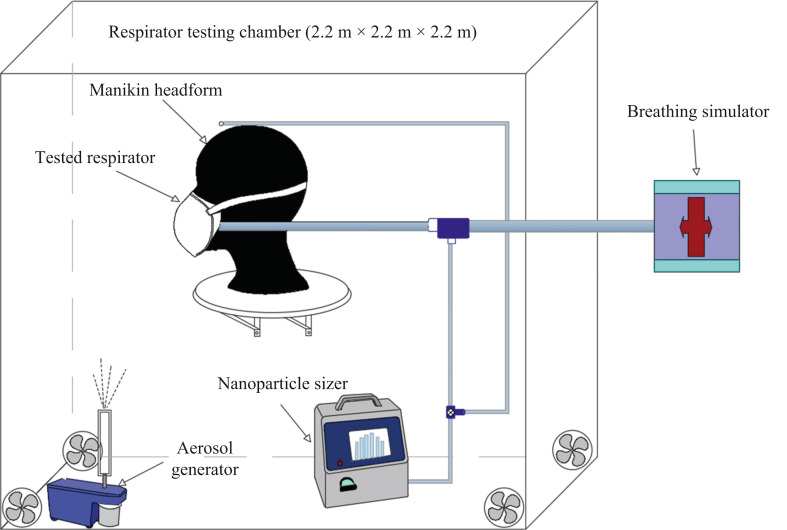
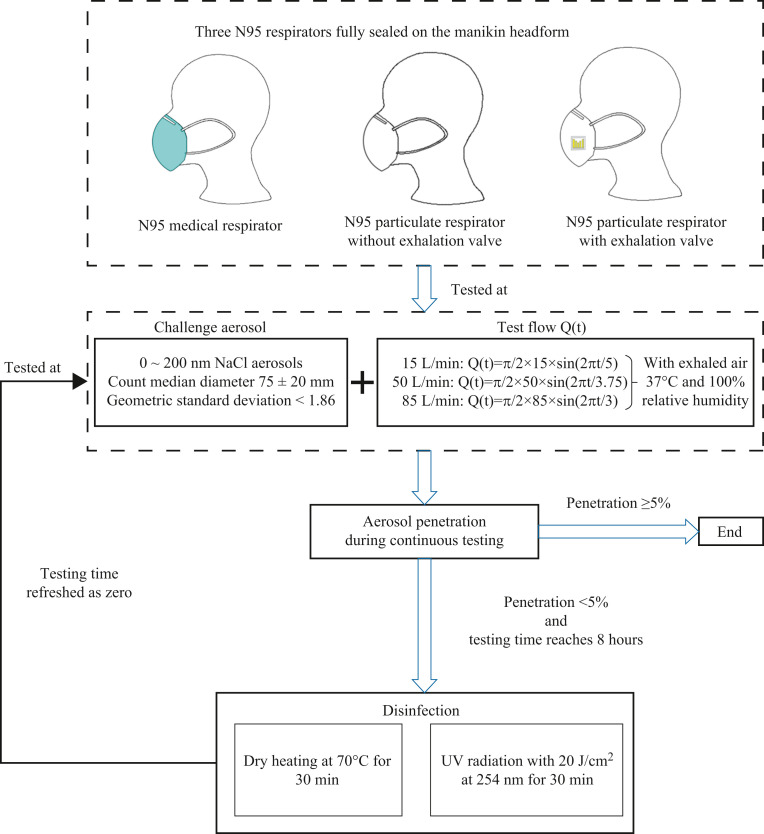
Based on the self-built respirator simulation test system, and under combinations of experimental conditions of three N95 respirators × 0-200 nm NaCl aerosols × three simulated breathing flow rates (15, 50 and 85 L/min) × two disinfection methods (dry heating and ultraviolet (UV) radiation), this study continuously measured the changes in filtration efficiency of all respirators during multi-cycles of '8-h simulated donning + disinfection' until the penetration reached ≥5%.
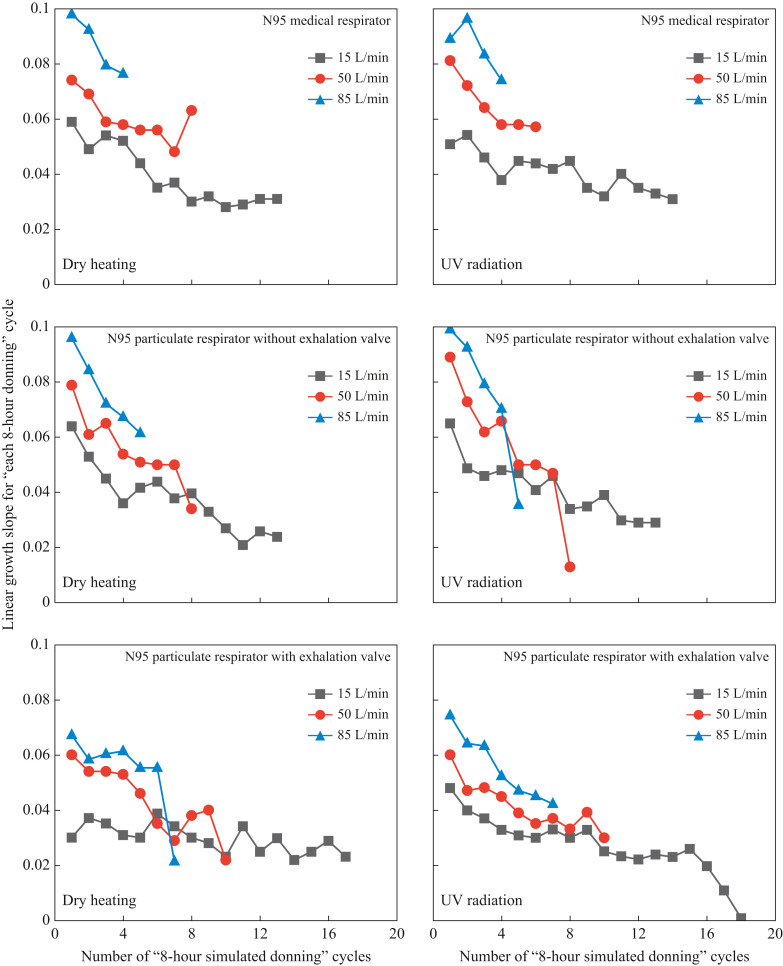
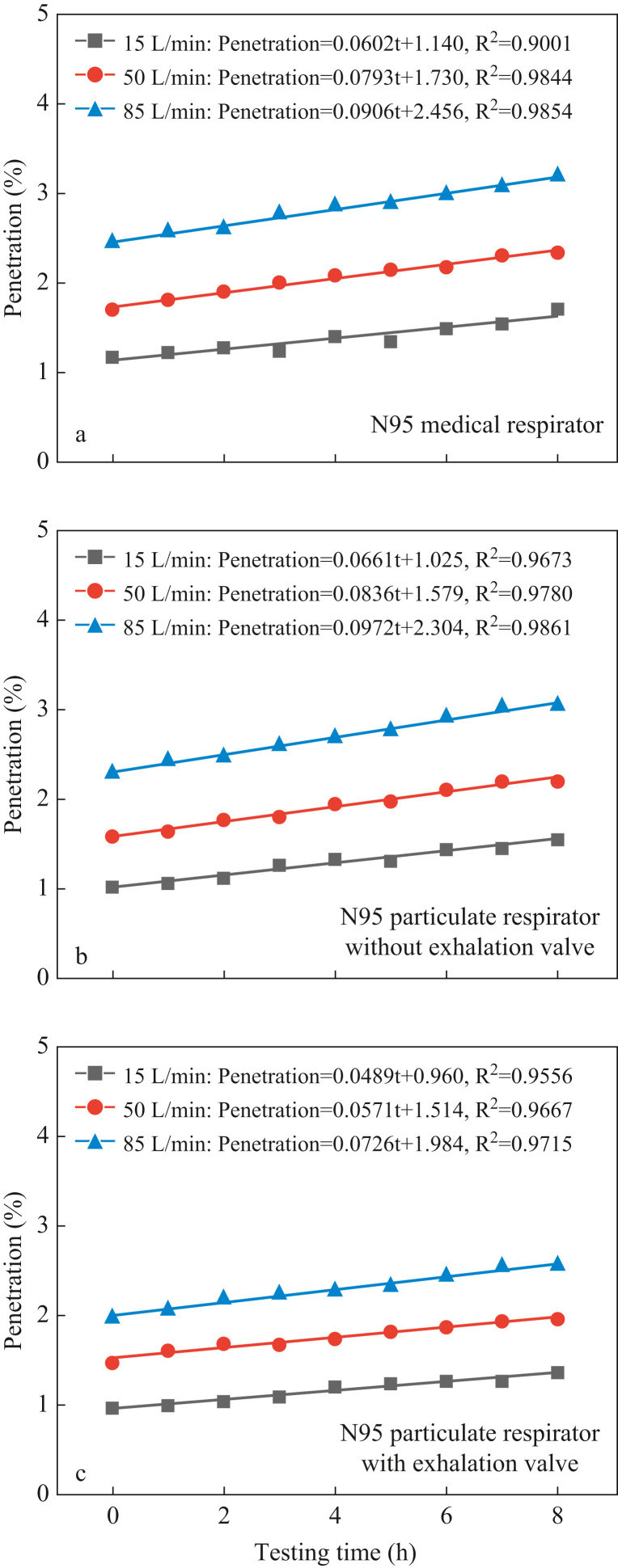
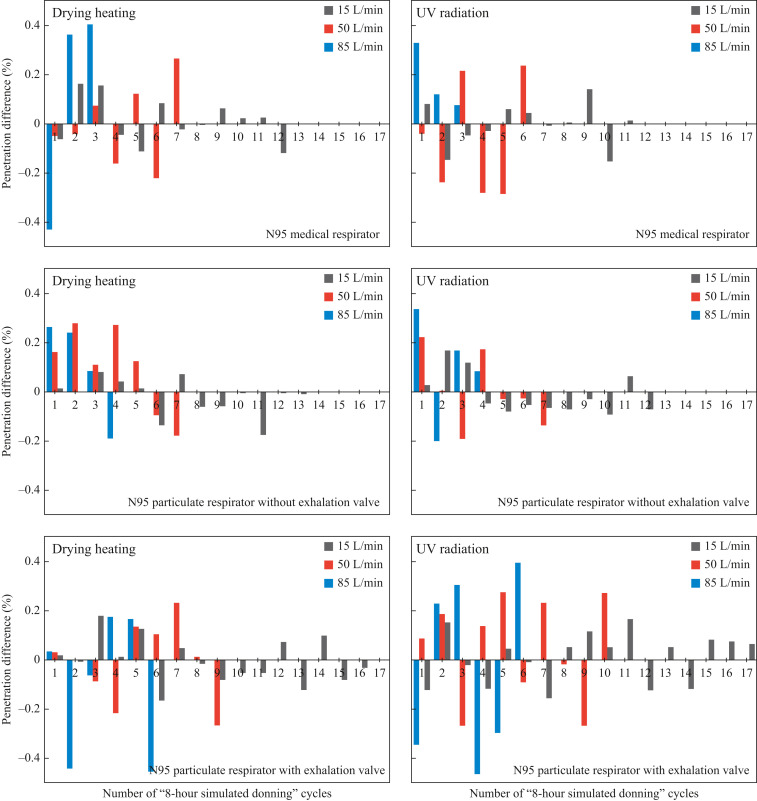
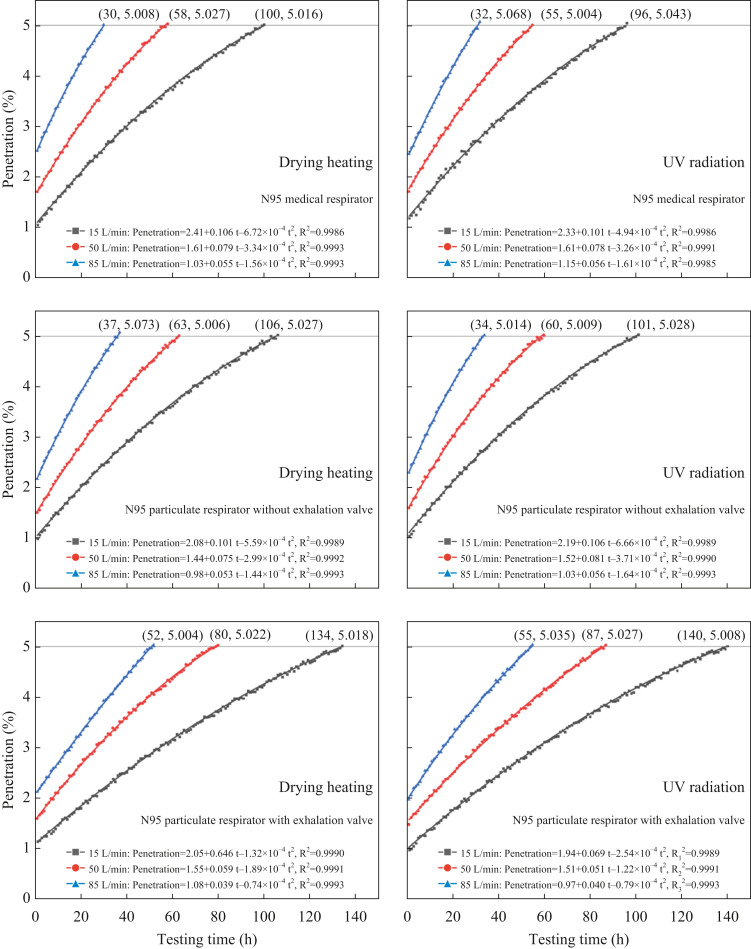
Multi-cycles of dry heating and UV radiation treatments on the reused (i.e., multiple 8-h donning) N95 respirators had a minimal effect (<0.5%) on the respirator filtration efficiency, and even at 85 L/min, all tested N95 respirators were able to maintain filtration efficiencies ≥95% for at least 30 h or four reuse cycles of '8-h donning + disinfection', while a lower breathing flow rate (15 L/min) plus the exhalation valve could further extend the N95 respirator's usability duration up to 140 h or 18 reuse cycles of '8-h donning + disinfection'. As the respirator wearing time extended, aerosol penetration slowly increased in a quadratic function with a negative second-order coefficient, and the penetration increment during each cycle of 8-h donning was less than 0.9%.
Multi-cycles of N95 respirator reuse in combination with dry heating or UV irradiation disinfection are feasible.
飞沫传播疾病(如 COVID-19)可能在世界各个地区偶尔爆发,不可避免地导致一次性呼吸器的短期短缺和相应的重复使用。
研究 N95 呼吸器的有效消毒方法、重复使用期限和频率。
基于自建的呼吸器模拟测试系统,并在三种 N95 呼吸器×0-200nmNaCl 气溶胶×三种模拟呼吸流速(15、50 和 85L/min)×两种消毒方法(干热和紫外线(UV)辐射)的实验条件组合下,本研究连续测量了所有呼吸器在多周期“8 小时模拟佩戴+消毒”过程中的过滤效率变化,直到穿透率达到≥5%。
对重复使用(即多次 8 小时佩戴)的 N95 呼吸器进行多次干热和 UV 辐射处理对呼吸器过滤效率的影响很小(<0.5%),即使在 85L/min 下,所有测试的 N95 呼吸器都能够至少保持 30 小时或四个“8 小时佩戴+消毒”的重复使用周期的过滤效率≥95%,而较低的呼吸流速(15L/min)加呼气阀可将 N95 呼吸器的使用时间延长至 140 小时或 18 个“8 小时佩戴+消毒”的重复使用周期。随着呼吸器佩戴时间的延长,气溶胶穿透率以二次函数的形式缓慢增加,负二次系数,并且每次 8 小时佩戴周期的穿透增加量小于 0.9%。
N95 呼吸器重复使用与干热或 UV 照射消毒相结合是可行的。