Department of Genetics, Cell Biology and Development, University of Minnesota, Minneapolis, MN, USA.
Sci Rep. 2022 Jul 7;12(1):11489. doi: 10.1038/s41598-022-15624-6.
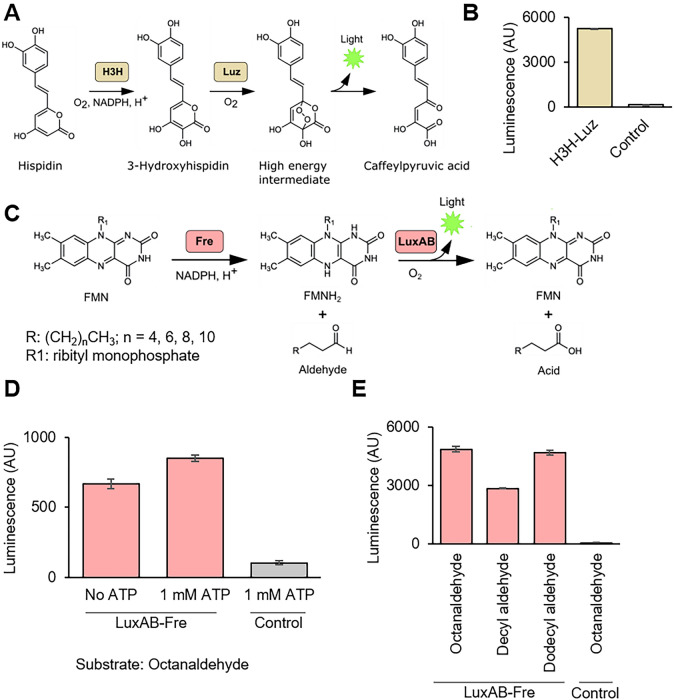
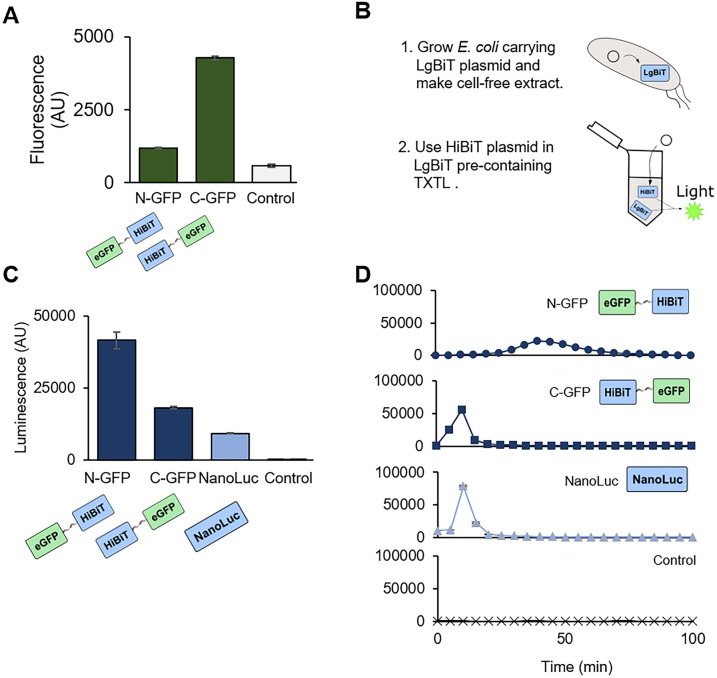
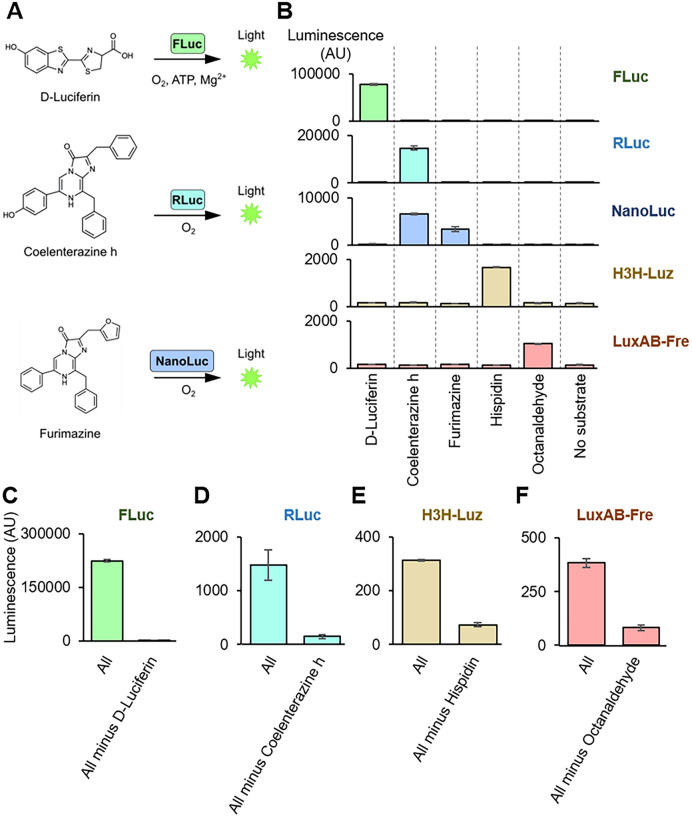
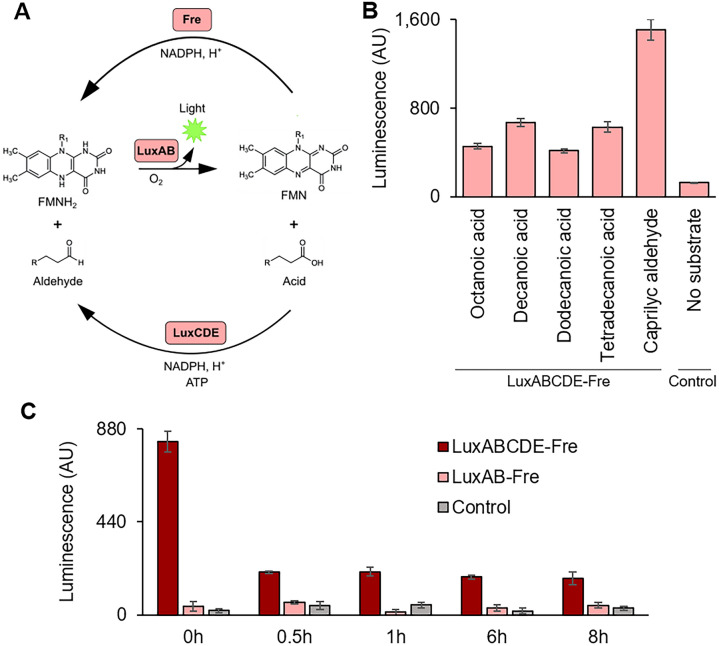
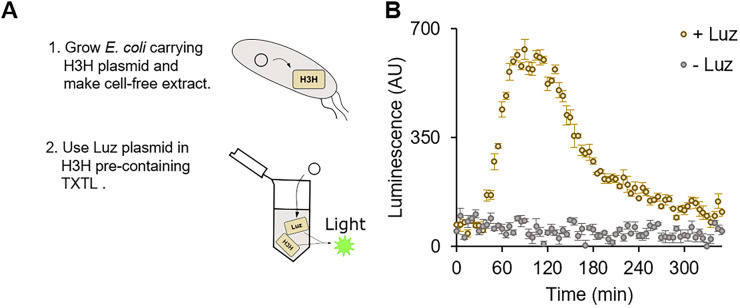
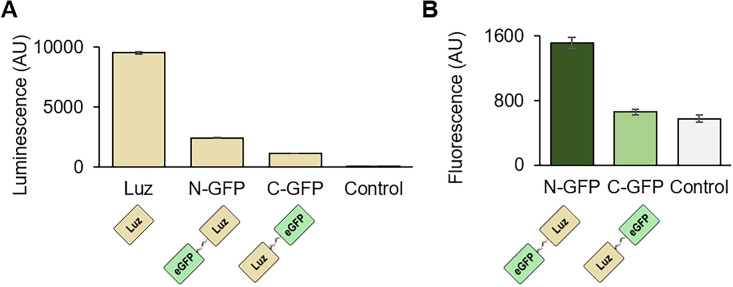
Luciferases are often used as a sensitive, versatile reporter in cell-free transcription-translation (TXTL) systems, for research and practical applications such as engineering genetic parts, validating genetic circuits, and biosensor outputs. Currently, only two luciferases (Firefly and Renilla) are commonly used without substrate cross-talk. Here we demonstrate the expansion of the cell-free luciferase reporter system, with two orthogonal luciferase reporters: N. nambi luciferase (Luz) and LuxAB. These luciferases do not have cross-reactivity with the Firefly and Renilla substrates. We also demonstrate a substrate regeneration pathway for one of the new luciferases, enabling long-term time courses of protein expression monitoring in the cell-free system. Furthermore, we reduced the number of genes required in TXTL expression, by engineering a cell extract containing part of the luciferase enzymes. Our findings lead to an expanded platform with multiple orthogonal luminescence translation readouts for in vitro protein expression.
荧光素酶常被用作无细胞转录-翻译(TXTL)系统中的灵敏、通用报告基因,用于研究和实际应用,如工程遗传元件、验证遗传回路和生物传感器输出。目前,仅有两种荧光素酶(萤火虫和海肾)常用,且没有底物交叉反应。在这里,我们展示了无细胞荧光素酶报告基因系统的扩展,其中包括两种正交的荧光素酶报告基因:N. nambi 荧光素酶(Luz)和 LuxAB。这些荧光素酶与萤火虫和海肾荧光素酶的底物没有交叉反应。我们还展示了其中一种新的荧光素酶的底物再生途径,使无细胞系统中的蛋白质表达监测能够进行长时间的时程研究。此外,我们通过工程化含有部分荧光素酶的细胞提取物,减少了 TXTL 表达所需的基因数量。我们的发现为体外蛋白质表达提供了一个具有多个正交发光翻译读出的扩展平台。