Centre for Motor Neuron Disease Research, Macquarie Medical School, Faculty of Medicine, Health and Human Sciences, Macquarie University, Sydney, 2121 NSW, Australia.
College of Pharmacy, Yeungnam University, 280 Daehak Avenue, Gyeongsan, Gyeongbuk, 38541, Republic of Korea.
Mol Neurobiol. 2022 Sep;59(9):5874-5890. doi: 10.1007/s12035-022-02943-y. Epub 2022 Jul 8.
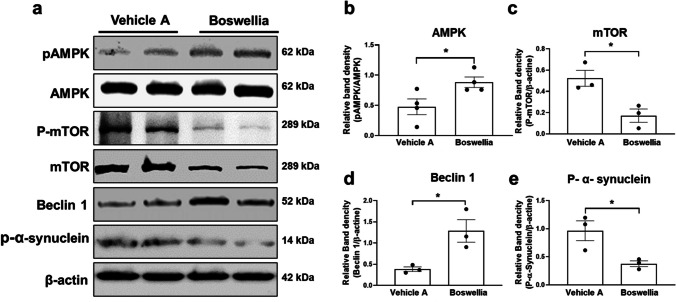
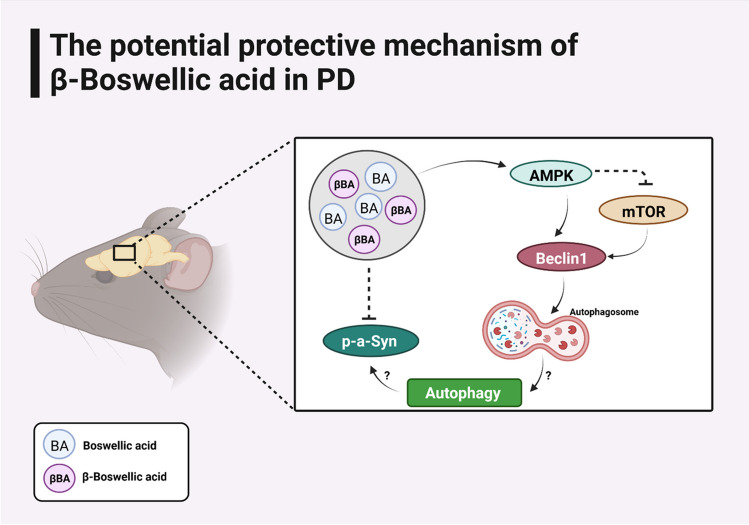
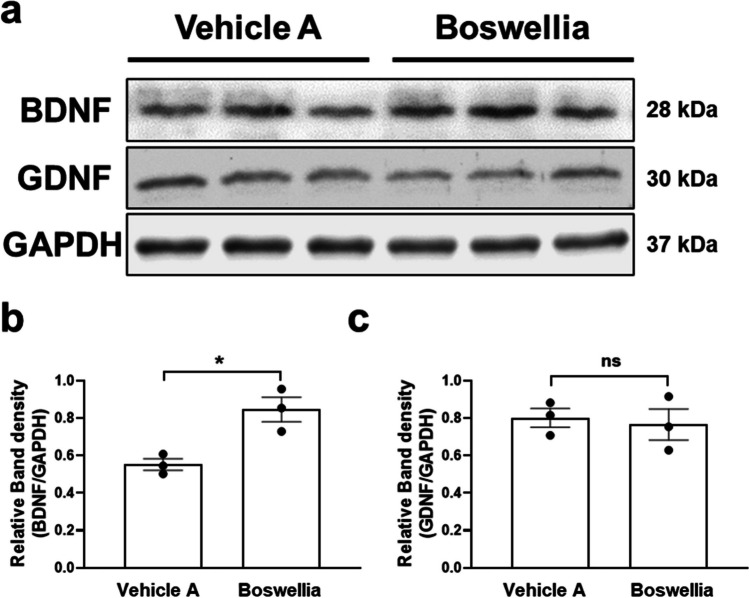
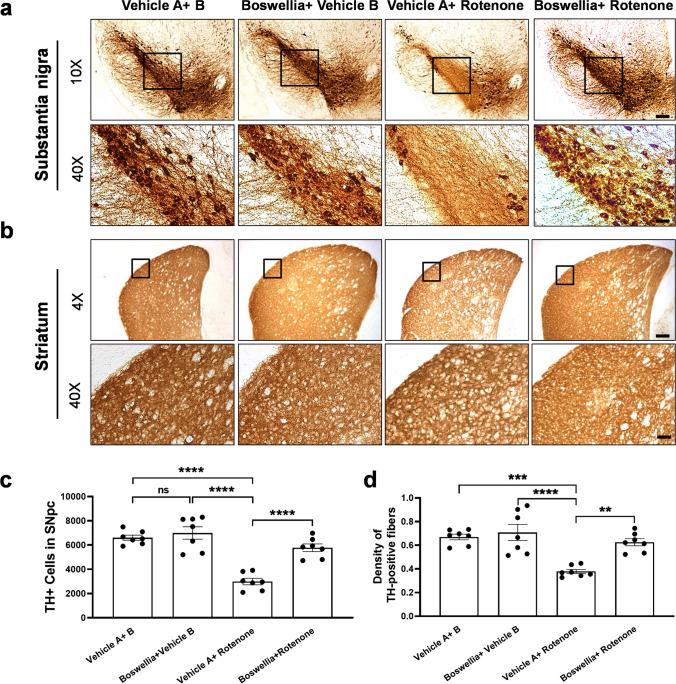
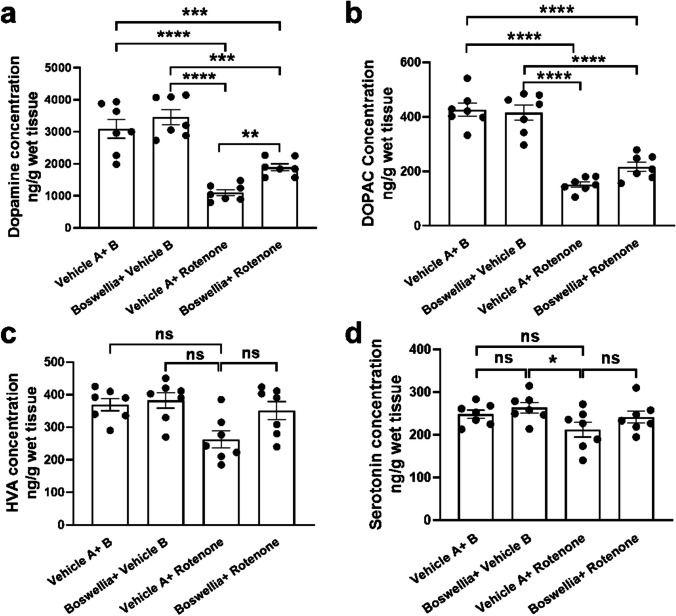
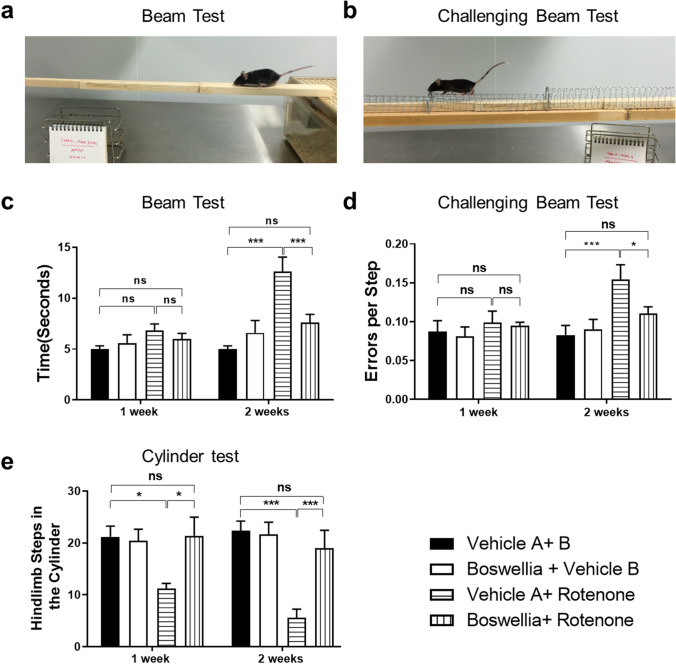
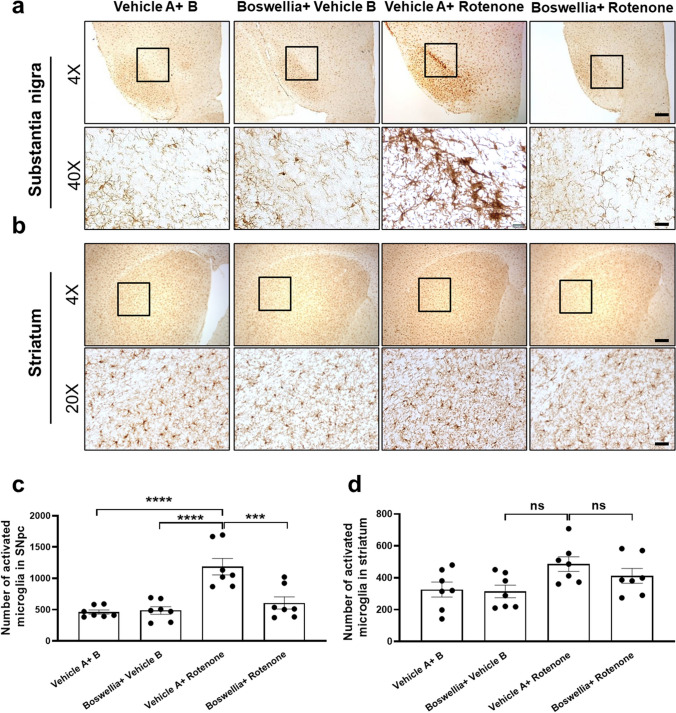
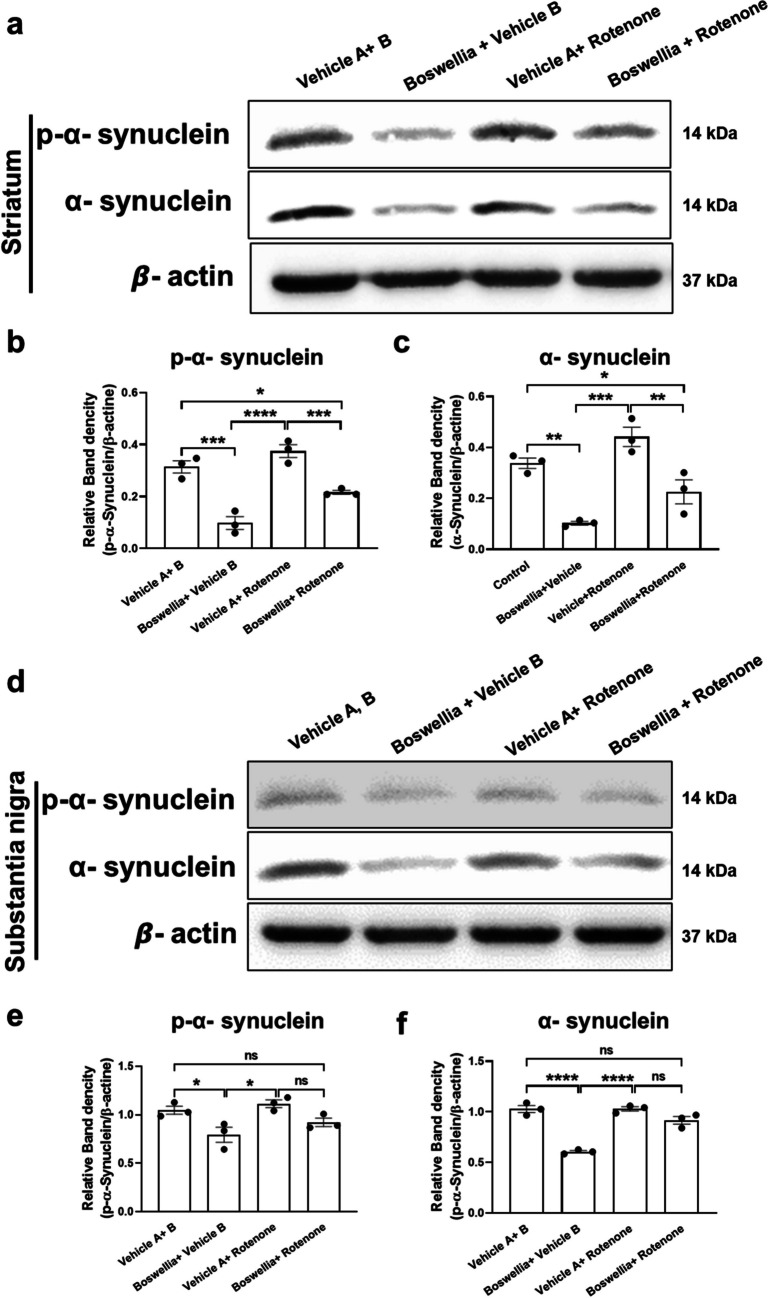
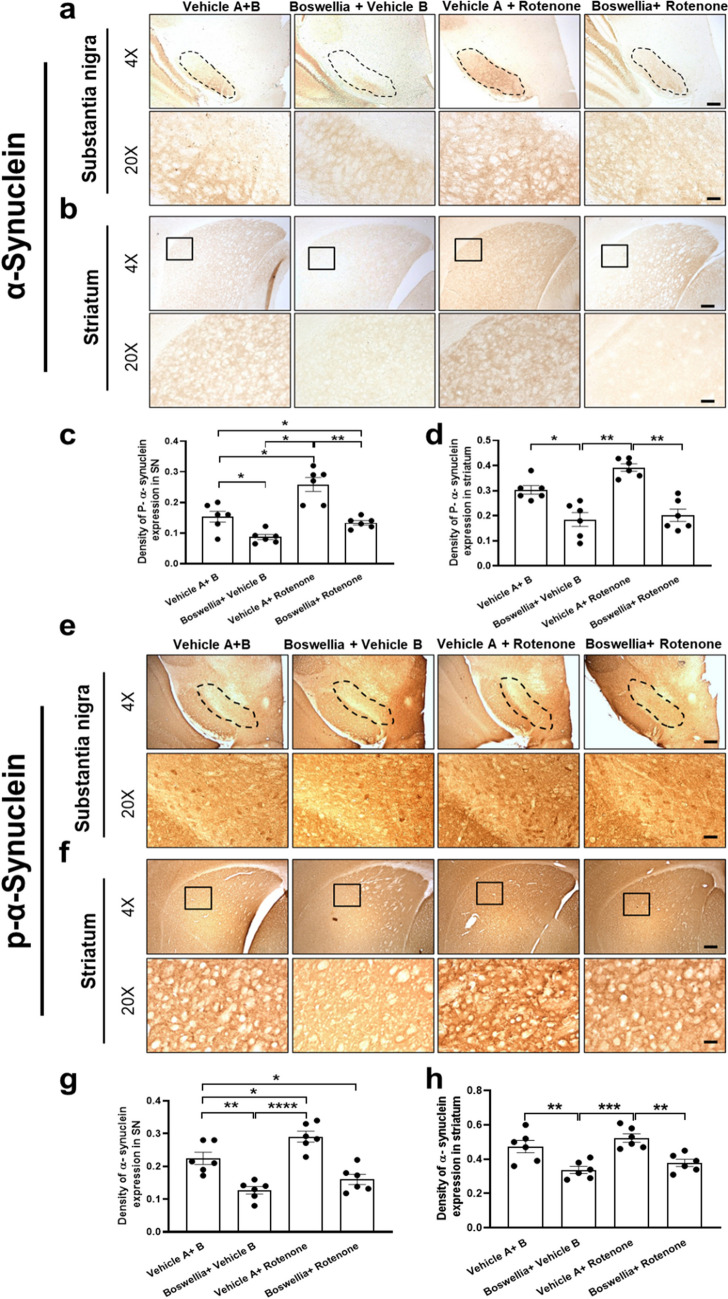
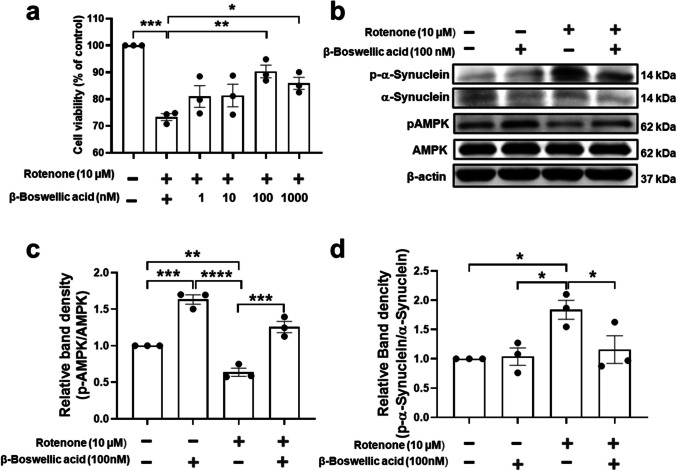
Boswellia serrata gum is a natural product that showed beneficial effects on neurodegenerative diseases in recent studies. In this study, we investigated the effects of Boswellia serrata resin on rotenone-induced dopaminergic neurotoxicity. Firstly, we attempted to see if the resin can induce AMP-activated protein kinase (AMPK) signaling pathway which has been known to have broad neuroprotective effects. Boswellia increased AMPK phosphorylation and reduced phosphorylation of mammalian target of rapamycin (p-mTOR) and α-synuclein (p-α-synuclein) in the striatum while increased the expression level of Beclin1, a marker for autophagy and brain-derived neurotrophic factor. Next, we examined the neuroprotective effects of the Boswellia extract in the rotenone-injected mice. The results showed that Boswellia evidently attenuated the loss of the nigrostriatal dopaminergic neurons and microglial activation caused by rotenone. Moreover, Boswellia ameliorated rotenone-induced decrease in the striatal dopamine and impairment in motor function. Accumulation of α-synuclein meditated by rotenone was significantly ameliorated by Boswellia. Also, we showed that β-boswellic acid, the active constituents of Boswellia serrata gum, induced AMPK phosphorylation and attenuated α-synuclein phosphorylation in SHSY5 cells. These results suggest that Boswellia protected the dopaminergic neurons from rotenone neurotoxicity via activation of the AMPK pathway which might be associated with attenuation of α-synuclein aggregation and neuroinflammation. Further investigations are warranted to identify specific molecules in Boswellia which are responsible for the neuroprotection.
没药树脂是一种天然产物,最近的研究表明它对神经退行性疾病有有益的影响。在这项研究中,我们研究了没药树脂对鱼藤酮诱导的多巴胺能神经毒性的影响。首先,我们试图观察树脂是否可以诱导 AMP 激活的蛋白激酶 (AMPK) 信号通路,该通路已被证明具有广泛的神经保护作用。没药增加了纹状体中的 AMPK 磷酸化,降低了哺乳动物雷帕霉素靶蛋白 (mTOR) 和 α-突触核蛋白 (p-α-突触核蛋白) 的磷酸化,同时增加了自噬和脑源性神经营养因子的标志物 Beclin1 的表达水平。接下来,我们检查了没药提取物在鱼藤酮注射小鼠中的神经保护作用。结果表明,没药明显减轻了鱼藤酮引起的黑质纹状体多巴胺能神经元丢失和小胶质细胞激活。此外,没药改善了鱼藤酮引起的纹状多巴胺减少和运动功能障碍。鱼藤酮介导的α-突触核蛋白积累被没药明显改善。此外,我们表明β-乳香酸,没药树脂的活性成分,诱导了 SHSY5 细胞中 AMPK 的磷酸化,并减轻了α-突触核蛋白的磷酸化。这些结果表明,没药通过激活 AMPK 通路保护多巴胺能神经元免受鱼藤酮神经毒性的影响,这可能与减轻α-突触核蛋白聚集和神经炎症有关。需要进一步的研究来确定没药中负责神经保护的特定分子。