Hosoe Naoki, Horie Tomofumi, Tojo Anna, Sakurai Hinako, Hayashi Yukie, Limpias Kamiya Kenji Jose-Luis, Sujino Tomohisa, Takabayashi Kaoru, Ogata Haruhiko, Kanai Takanori
Center for Diagnostic and Therapeutic Endoscopy, Keio University School of Medicine, 35 Shinanomachi, Shinjuku, Tokyo 160-8582, Japan.
Division of Gastroenterology and Hepatology, Department of Internal Medicine, Keio University School of Medicine, Tokyo 160-8582, Japan.
J Clin Med. 2022 Jun 26;11(13):3682. doi: 10.3390/jcm11133682.
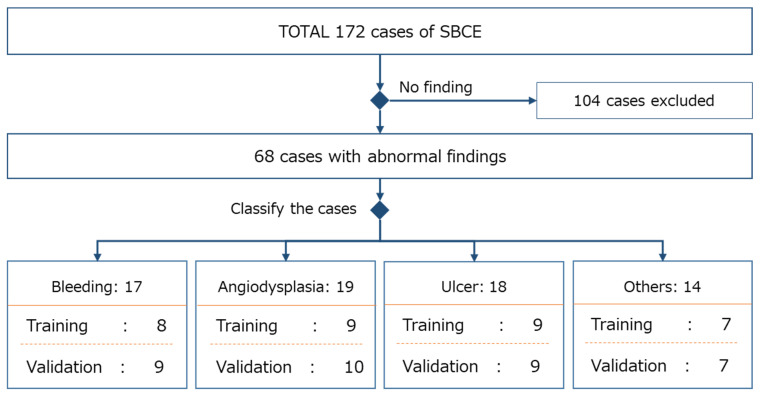
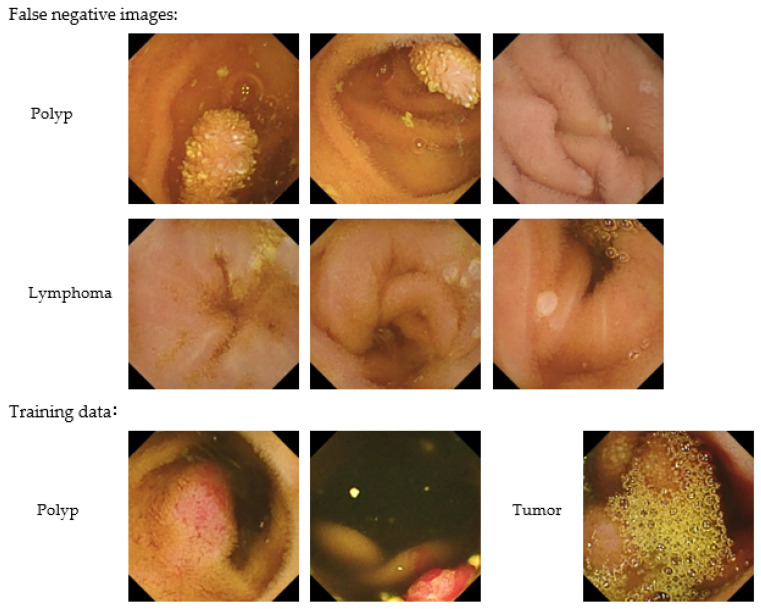
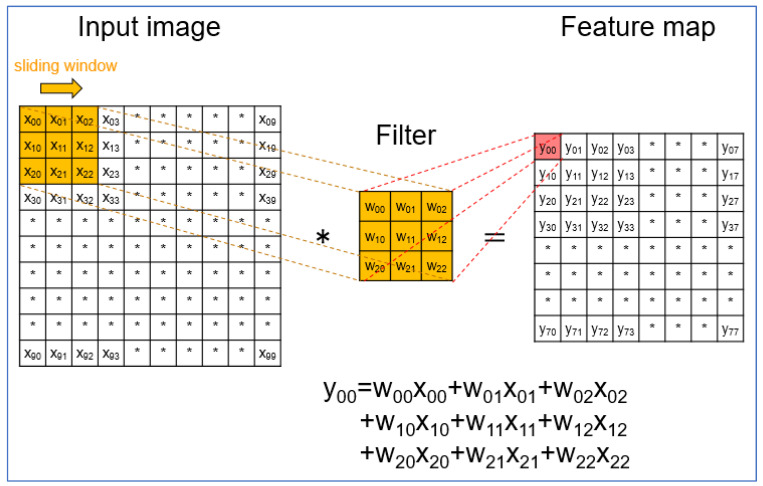
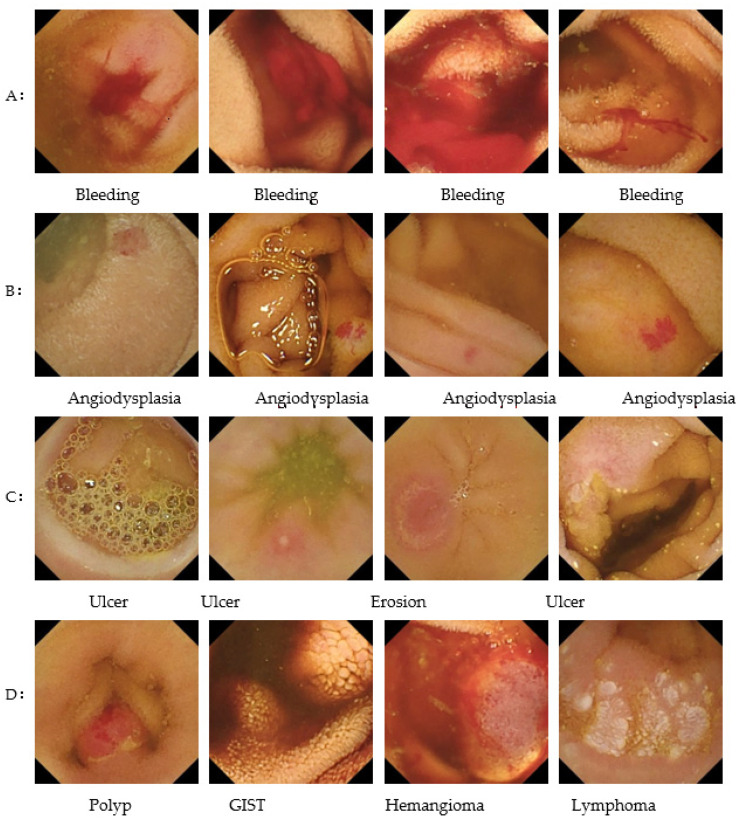
Deep learning has recently been gaining attention as a promising technology to improve the identification of lesions, and deep-learning algorithms for lesion detection have been actively developed in small-bowel capsule endoscopy (SBCE). We developed a detection algorithm for abnormal findings by deep learning (convolutional neural network) the SBCE imaging data of 30 cases with abnormal findings. To enable the detection of a wide variety of abnormal findings, the training data were balanced to include all major findings identified in SBCE (bleeding, angiodysplasia, ulceration, and neoplastic lesions). To reduce the false-positive rate, "findings that may be responsible for hemorrhage" and "findings that may require therapeutic intervention" were extracted from the images of abnormal findings and added to the training dataset. For the performance evaluation, the sensitivity and the specificity were calculated using 271 detectable findings in 35 cases. The sensitivity was calculated using 68,494 images of non-abnormal findings. The sensitivity and specificity were 93.4% and 97.8%, respectively. The average number of images detected by the algorithm as having abnormal findings was 7514. We developed an image-reading support system using deep learning for SBCE and obtained a good detection performance.
深度学习作为一种有望改善病变识别的技术,近来备受关注,并且针对小肠胶囊内镜检查(SBCE)的病变检测深度学习算法也在积极研发中。我们利用深度学习(卷积神经网络)对30例有异常发现的SBCE成像数据开发了一种异常发现检测算法。为了能够检测出各种各样的异常发现,对训练数据进行了平衡处理,使其包含SBCE中识别出的所有主要发现(出血、血管发育异常、溃疡和肿瘤性病变)。为了降低假阳性率,从异常发现的图像中提取了“可能导致出血的发现”和“可能需要治疗干预的发现”,并将其添加到训练数据集中。对于性能评估,使用35例中的271个可检测发现计算敏感性和特异性。使用68494张无异常发现的图像计算敏感性。敏感性和特异性分别为93.4%和97.8%。该算法检测为有异常发现的图像平均数量为7514张。我们开发了一种用于SBCE的基于深度学习的图像解读支持系统,并获得了良好的检测性能。