Department of Internal Medicine, Digestive Disease Center, Institute for Digestive Research, Soonchunhyang University College of Medicine, Seoul, Republic of Korea.
Department of Electronics Engineering, Chungbuk National University, Cheongju, Republic of Korea.
PLoS One. 2020 Oct 29;15(10):e0241474. doi: 10.1371/journal.pone.0241474. eCollection 2020.
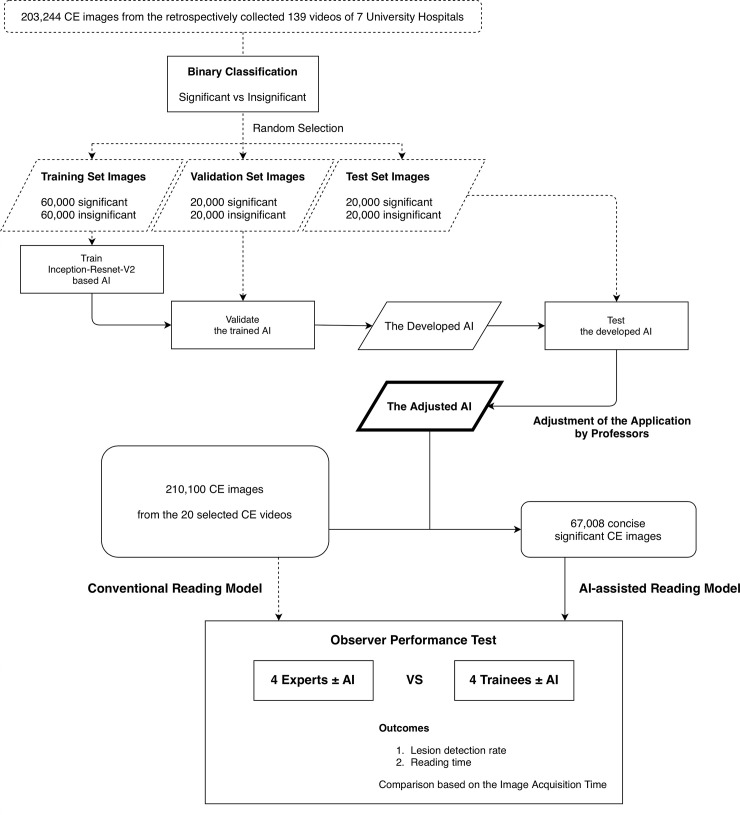
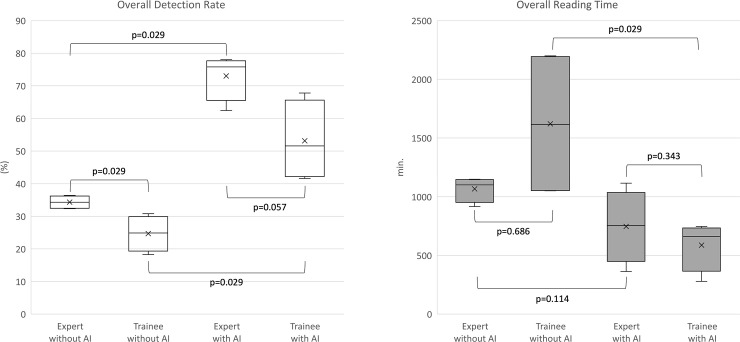
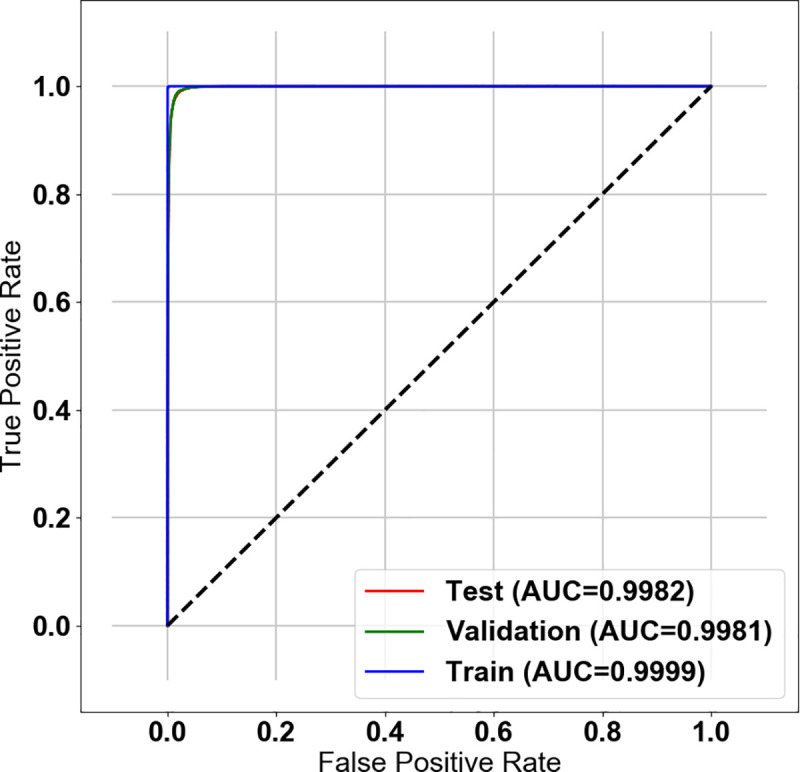
Artificial intelligence (AI), which has demonstrated outstanding achievements in image recognition, can be useful for the tedious capsule endoscopy (CE) reading. We aimed to develop a practical AI-based method that can identify various types of lesions and tried to evaluate the effectiveness of the method under clinical settings. A total of 203,244 CE images were collected from multiple centers selected considering the regional distribution. The AI based on the Inception-Resnet-V2 model was trained with images that were classified into two categories according to their clinical significance. The performance of AI was evaluated with a comparative test involving two groups of reviewers with different experiences. The AI summarized 67,008 (31.89%) images with a probability of more than 0.8 for containing lesions in 210,100 frames of 20 selected CE videos. Using the AI-assisted reading model, reviewers in both the groups exhibited increased lesion detection rates compared to those achieved using the conventional reading model (experts; 34.3%-73.0%; p = 0.029, trainees; 24.7%-53.1%; p = 0.029). The improved result for trainees was comparable to that for the experts (p = 0.057). Further, the AI-assisted reading model significantly shortened the reading time for trainees (1621.0-746.8 min; p = 0.029). Thus, we have developed an AI-assisted reading model that can detect various lesions and can successfully summarize CE images according to clinical significance. The assistance rendered by AI can increase the lesion detection rates of reviewers. Especially, trainees could improve their efficiency of reading as a result of reduced reading time using the AI-assisted model.
人工智能(AI)在图像识别方面取得了卓越的成就,可用于繁琐的胶囊内镜(CE)读片。我们旨在开发一种实用的基于 AI 的方法,能够识别各种类型的病变,并尝试在临床环境下评估该方法的有效性。从多个中心采集了总共 203244 张 CE 图像,这些中心是根据区域分布选择的。基于 Inception-Resnet-V2 模型的 AI 是使用根据其临床意义分类的图像进行训练的。通过涉及两组具有不同经验的审阅者的对比测试评估了 AI 的性能。AI 对 20 个选定的 CE 视频的 210100 个帧中的 67008(31.89%)张图像进行了总结,这些图像包含病变的概率超过 0.8。使用 AI 辅助阅读模型,与使用传统阅读模型相比,两组审阅者的病变检测率均有所提高(专家:34.3%-73.0%;p=0.029,学员:24.7%-53.1%;p=0.029)。学员的改进结果与专家相当(p=0.057)。此外,AI 辅助阅读模型显著缩短了学员的阅读时间(1621.0-746.8 分钟;p=0.029)。因此,我们开发了一种能够检测各种病变并根据临床意义成功总结 CE 图像的 AI 辅助阅读模型。AI 的辅助作用可以提高审阅者的病变检测率。特别是,学员可以通过使用 AI 辅助模型来减少阅读时间,从而提高阅读效率。