Department of Perfume and Aroma Technology, Shanghai Institute of Technology, Shanghai 201418, China.
School of Chemical and Environmental Engineering, Shanghai Institute of Technology, Shanghai 201418, China.
Molecules. 2022 Jun 24;27(13):4059. doi: 10.3390/molecules27134059.
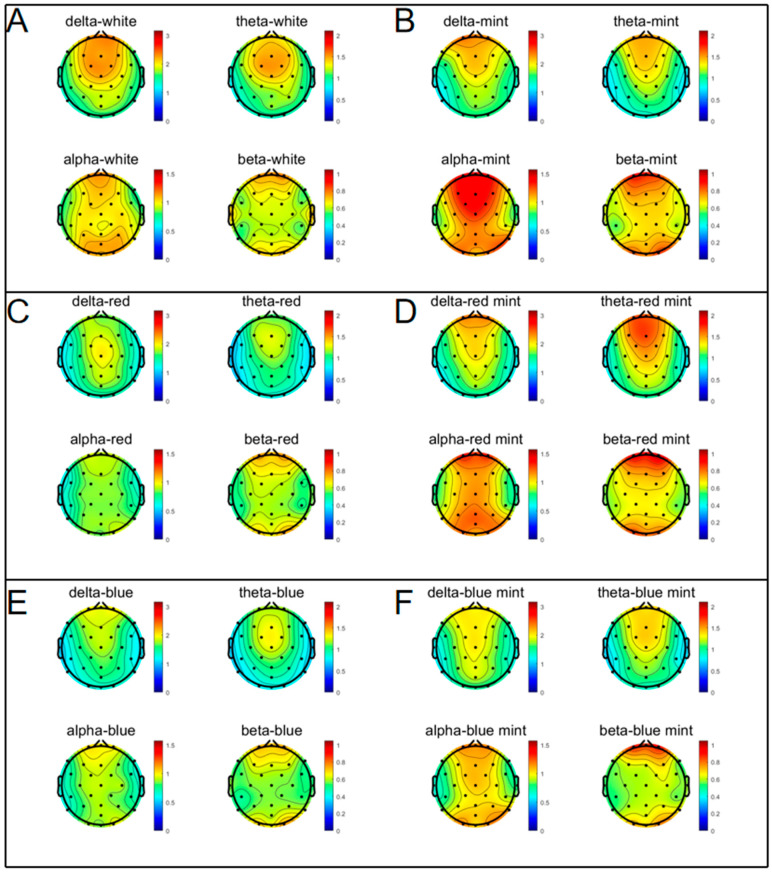
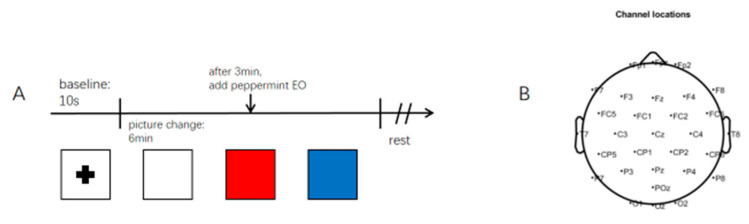
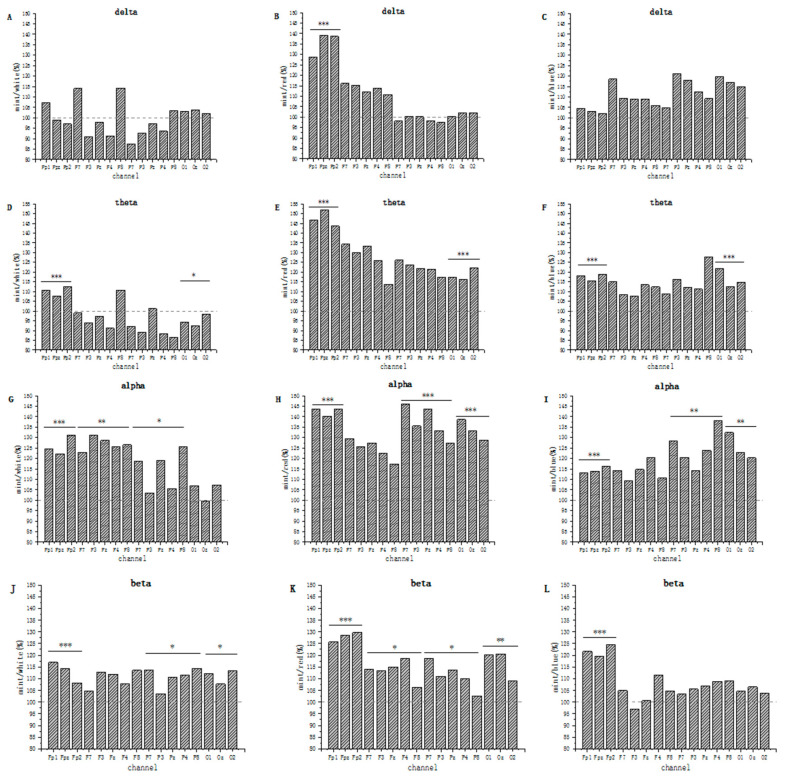
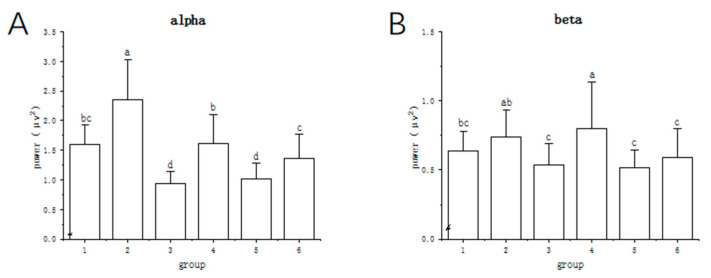
Essential oils have long been used to fight infections and treat various diseases. Peppermint ( L.) is an herbal medicine that has been widely used in daily life since ancient times, and it has a wide range of applications in food, cosmetics, and medicine. Mint oil is refreshing because of its cool and comfortable smell; therefore, it is often used in ethnopharmacological studies. The present study investigated the effects of peppermint essential oil in electroencephalographic activity response to various visual stimuli. The electroencephalographic changes of participants during peppermint essential oil inhalation under white, red, and blue colour stimulations were recorded. A rapid Fourier transform analysis was used to examine the electroencephalograph power spectra of the various microstates induced by inhaling the oils. Peppermint essential oil had various effects on the brain when subjected to different visual stimuli. Alpha waves increased in the prefrontal area in the white-sniffing group, which facilitated learning and thinking. In the blue-sniffing group, the changes were less pronounced than those in the red group, and the increased alpha wave activity in the occipital area was more controlled, indicating that the participants' visual function increased in this state. Based on EEG investigations, this is the first study to indicate that vision influences the effects of peppermint essential oils. Hence, the results of this study support the use of essential oils in a broader context to serve as a resource for future studies on the effects of different types of essential oils.
薄荷精油在抗感染和治疗各种疾病方面一直有应用。薄荷(L.)作为一种草药,自古就被广泛应用于日常生活中,在食品、化妆品和医药领域有广泛应用。薄荷油气味清凉舒适,因此经常用于民族药理学研究。本研究探讨了薄荷精油对各种视觉刺激下脑电图活动反应的影响。记录了参与者在吸入白色、红色和蓝色刺激物时吸入薄荷精油时的脑电图变化。使用快速傅里叶变换分析来检查吸入油后诱导的各种微状态的脑电图功率谱。薄荷精油在受到不同视觉刺激时对大脑有不同的影响。在白色嗅探组中,前额叶区域的阿尔法波增加,这有助于学习和思考。在蓝色嗅探组中,变化不如红色组明显,枕叶区域增加的阿尔法波活动受到更多控制,表明参与者在这种状态下的视觉功能增强。基于脑电图研究,这是第一项表明视觉会影响薄荷精油效果的研究。因此,这项研究的结果支持在更广泛的背景下使用精油,为未来研究不同类型精油的效果提供资源。