Department of Minimal Invasive Hepatic Surgery, The First Affiliated Hospital of Harbin Medical University, Harbin, China.
Key Laboratory of Hepatosplenic Surgery, Ministry of Education, The First Affiliated Hospital of Harbin Medical University, Harbin, China.
Front Immunol. 2022 Jun 22;13:892750. doi: 10.3389/fimmu.2022.892750. eCollection 2022.
Complement factor H-related 4 (CFHR4) is a protein-coding gene that plays an essential role in multiple diseases. However, the prognostic value of CFHR4 in hepatocellular carcinoma (HCC) is unknown.
Using multiple databases, we investigated CFHR4 expression levels in HCC and multiple cancers. The relationship between CFHR4 expression levels and clinicopathological variables was further analyzed. Various potential biological functions and regulatory pathways of CFHR4 in HCC were identified by performing a Gene Ontology (GO) analysis, Kyoto Encyclopedia of Genes and Genomes (KEGG) analysis and Gene Set Enrichment Analysis (GSEA). Single-sample gene set enrichment analysis (ssGSEA) was performed to confirm the correlation between CFHR4 expression and immune cell infiltration. The correlations between CFHR4 expression levels in HCC and N6-methyladenosine (m6A) modifications and the competing endogenous RNA (ceRNA) regulatory networks were confirmed in TCGA cohort.
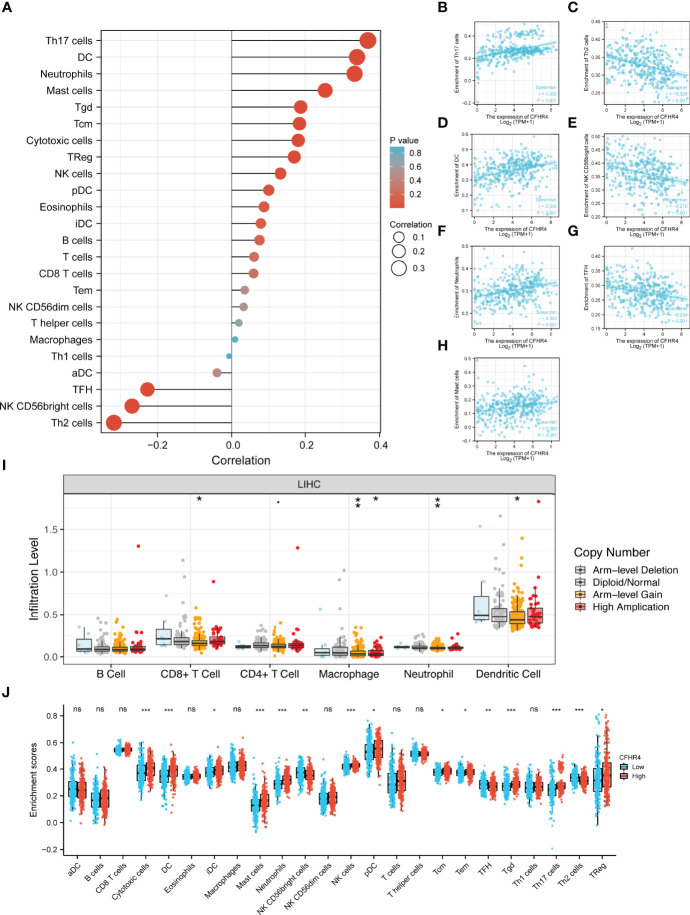
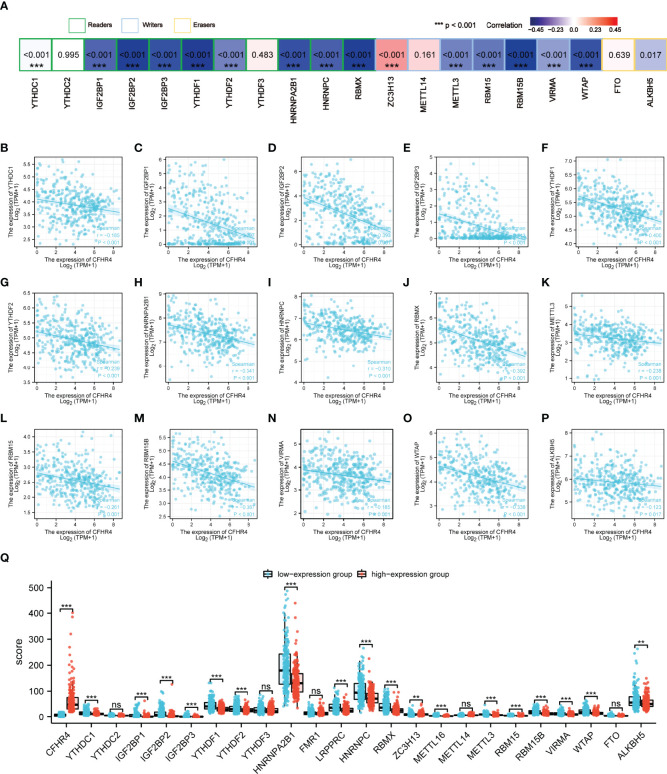
CFHR4 expression levels were significantly decreased in HCC tissues. Low CFHR4 expression in HCC tissues was significantly correlated with the patients' sex, race, age, TNM stage, pathological stage, tumor status, residual tumor, histologic grade and alpha fetal protein (AFP) level. GO and KEGG analyses revealed that differentially expressed genes related to CFHR4 may be involved in the synaptic membrane, transmembrane transporter complex, gated channel activity, chemical carcinogenesis, retinol metabolism, calcium signaling pathway, PPAR signaling pathway, insulin and gastric acid secretion. GSEA revealed that the FCGR-activated reaction, PLK1 pathway, ATR pathway, MCM pathway, cascade reactions of PI3K and FGFR1, reactant-mediated MAPK activation and FOXM1 pathway were significantly enriched in HCC with low CFHR4 expression. Moreover, CFHR4 expression was inversely correlated the levels of infiltrating Th2 cells, NK CD56bright cells and Tfh cells. In contrast, we observed positive correlations with the levels of infiltrating DCs, neutrophils, Th17 cells and mast cells. CFHR4 expression showed a strong correlation with various immunomarker groups in HCC. In addition, high CFHR4 expression significantly prolonged the overall survival (OS), disease-specific survival (DSS) and progression-free interval (PFI). We observed a substantial correlation between the expression of CFHR4 and multiple N6-methyladenosine genes in HCC and constructed potential CFHR4-related ceRNA regulatory networks.
CFHR4 might be a potential therapeutic target for improving the HCC prognosis and is closely related to immune cell infiltration.
补体因子 H 相关蛋白 4(CFHR4)是一种编码蛋白质的基因,在多种疾病中发挥着重要作用。然而,CFHR4 在肝细胞癌(HCC)中的预后价值尚不清楚。
利用多个数据库,我们研究了 HCC 和多种癌症中 CFHR4 的表达水平。进一步分析 CFHR4 表达水平与临床病理变量之间的关系。通过进行基因本体论(GO)分析、京都基因与基因组百科全书(KEGG)分析和基因集富集分析(GSEA),确定 CFHR4 在 HCC 中的各种潜在生物学功能和调控途径。通过单样本基因集富集分析(ssGSEA)来验证 CFHR4 表达与免疫细胞浸润之间的相关性。在 TCGA 队列中验证了 HCC 中 CFHR4 表达水平与 N6-甲基腺苷(m6A)修饰和竞争内源 RNA(ceRNA)调控网络的相关性。
CFHR4 的表达水平在 HCC 组织中明显降低。HCC 组织中 CFHR4 表达水平较低与患者的性别、种族、年龄、TNM 分期、病理分期、肿瘤状态、残余肿瘤、组织学分级和甲胎蛋白(AFP)水平显著相关。GO 和 KEGG 分析表明,与 CFHR4 相关的差异表达基因可能参与突触膜、跨膜转运体复合物、门控通道活性、化学致癌作用、视黄醇代谢、钙信号通路、PPAR 信号通路、胰岛素和胃酸分泌。GSEA 显示,在 CFHR4 低表达的 HCC 中,FCGR 激活反应、PLK1 通路、ATR 通路、MCM 通路、PI3K 和 FGFR1 级联反应、反应介导的 MAPK 激活和 FOXM1 通路显著富集。此外,CFHR4 的表达与浸润性 Th2 细胞、NK CD56bright 细胞和 Tfh 细胞的水平呈负相关。相反,我们观察到与浸润性树突细胞、中性粒细胞、Th17 细胞和肥大细胞的水平呈正相关。CFHR4 的表达与 HCC 中的各种免疫标志物组具有很强的相关性。此外,CFHR4 高表达显著延长了总生存期(OS)、疾病特异性生存期(DSS)和无进展生存期(PFI)。我们观察到 CFHR4 在 HCC 中与多个 N6-甲基腺苷基因的表达之间存在显著相关性,并构建了潜在的 CFHR4 相关 ceRNA 调控网络。
CFHR4 可能是改善 HCC 预后的潜在治疗靶点,与免疫细胞浸润密切相关。