Levitz Talya S, Weckener Miriam, Fong Ivan, Naismith James H, Drennan Catherine L, Brignole Edward J, Clare Daniel K, Darrow Michele C
Department of Biology, Massachusetts Institute of Technology, Cambridge, MA, United States.
Structural Biology, The Rosalind Franklin Institute, Harwell Science Campus, Didcot, United Kingdom.
Front Mol Biosci. 2022 Jun 23;9:903148. doi: 10.3389/fmolb.2022.903148. eCollection 2022.
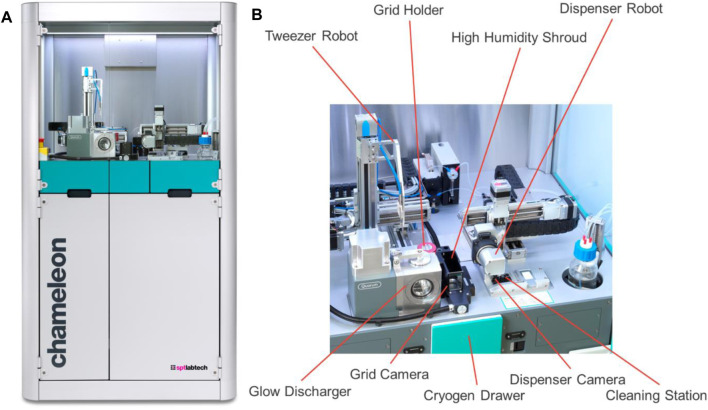
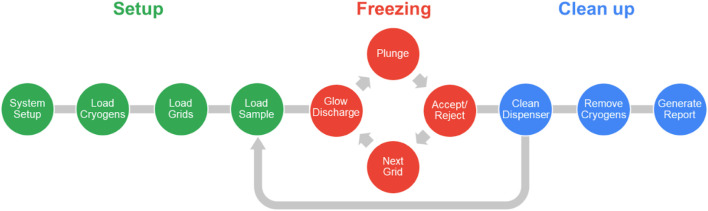
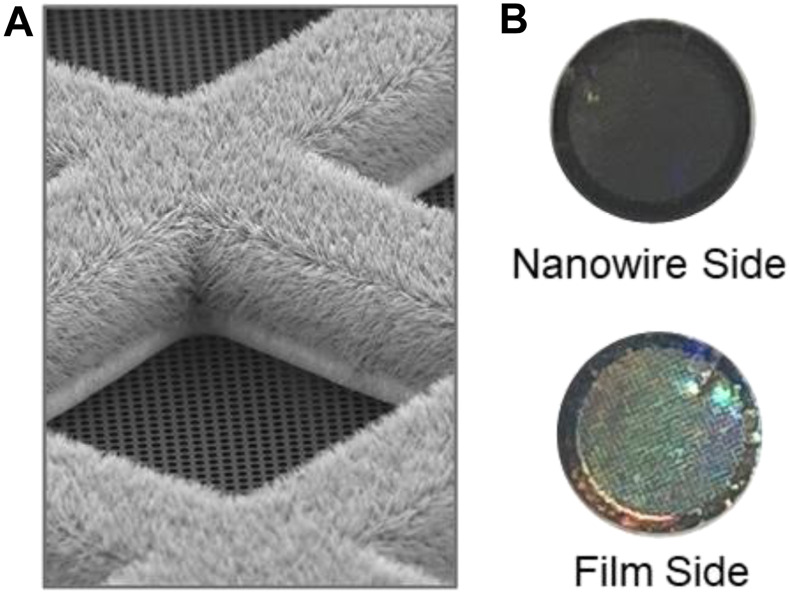
The specimen preparation process is a key determinant in the success of any cryo electron microscopy (cryoEM) structural study and until recently had remained largely unchanged from the initial designs of Jacques Dubochet and others in the 1980s. The process has transformed structural biology, but it is largely manual and can require extensive optimisation for each protein sample. The chameleon instrument with its self-wicking grids and fast-plunge freezing represents a shift towards a robust, automated, and highly controllable future for specimen preparation. However, these new technologies require new workflows and an understanding of their limitations and strengths. As early adopters of the chameleon technology, we report on our experiences and lessons learned through case studies. We use these to make recommendations for the benefit of future users of the chameleon system and the field of cryoEM specimen preparation generally.
样品制备过程是任何冷冻电子显微镜(cryoEM)结构研究成功的关键决定因素,直到最近,它在很大程度上仍与20世纪80年代雅克·杜博歇等人的最初设计没有变化。这个过程已经改变了结构生物学,但它在很大程度上是手工操作的,并且每个蛋白质样品都可能需要进行大量优化。具有自吸液网格和快速浸入式冷冻功能的变色龙仪器代表了样品制备朝着稳健、自动化和高度可控的未来发展的转变。然而,这些新技术需要新的工作流程,并需要了解它们的局限性和优势。作为变色龙技术的早期采用者,我们通过案例研究报告我们的经验和教训。我们利用这些经验教训为变色龙系统的未来用户以及一般冷冻电镜样品制备领域提供建议。