John A. Paulson School of Engineering and Applied Sciences, Harvard University, Cambridge, MA, 02138, USA.
Wyss Institute for Biologically Inspired Engineering, Harvard University, Cambridge, MA, 02138, USA.
Sci Rep. 2022 Jul 12;12(1):11799. doi: 10.1038/s41598-022-15553-4.
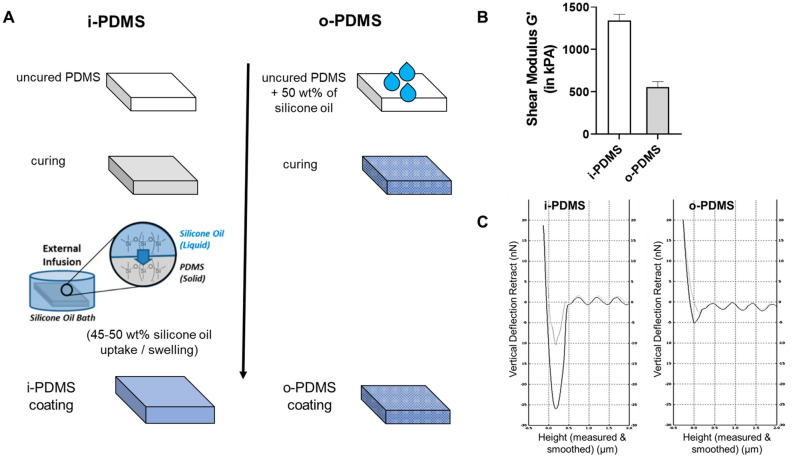
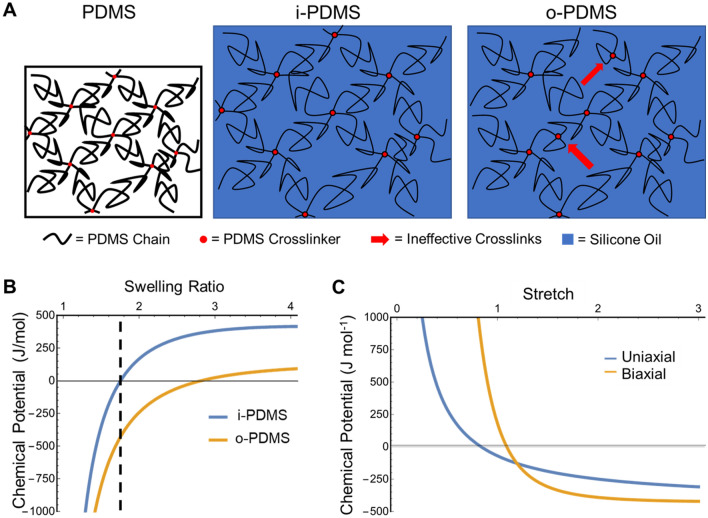
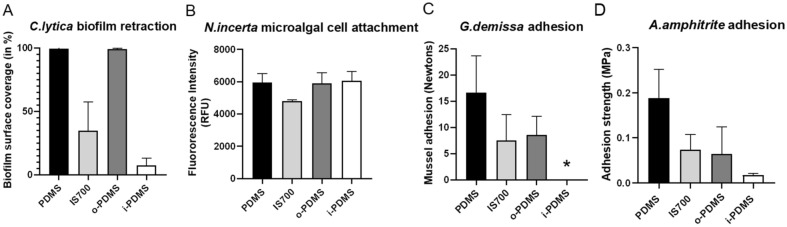
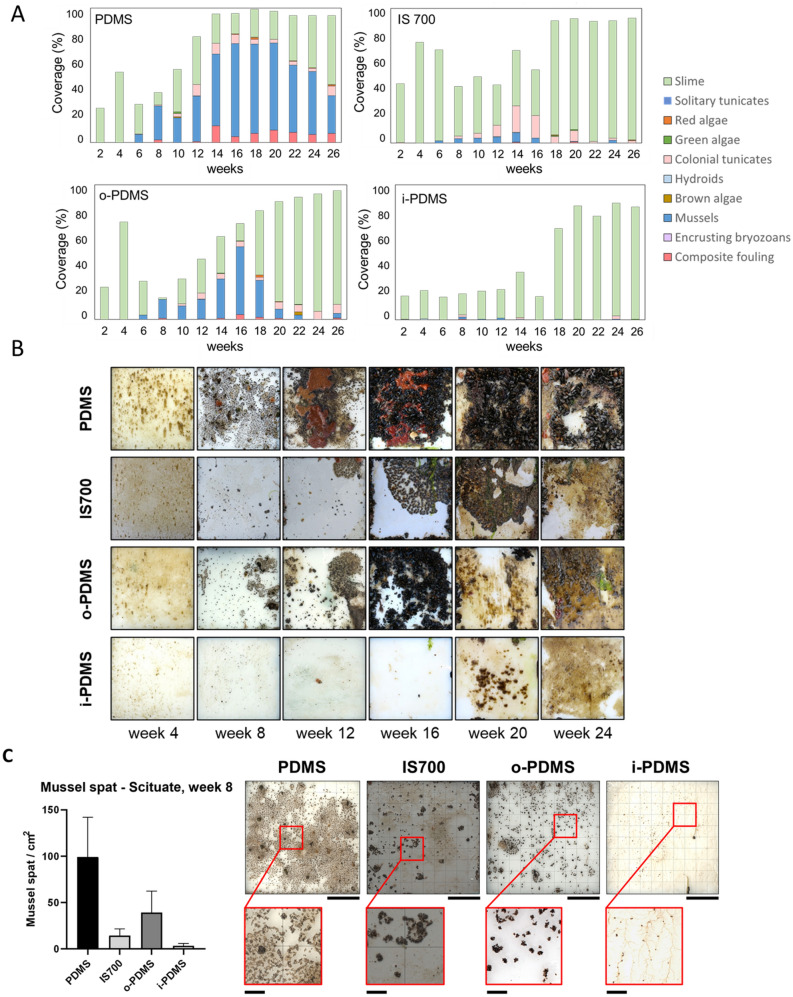
For many decades, silicone elastomers with oil incorporated have served as fouling-release coating for marine applications. In a comprehensive study involving a series of laboratory-based marine fouling assays and extensive global field studies of up to 2-year duration, we compare polydimethylsiloxane (PDMS) coatings of the same composition loaded with oil via two different methods. One method used a traditional, one-pot pre-cure oil addition approach (o-PDMS) and another method used a newer post-cure infusion approach (i-PDMS). The latter displays a substantial improvement in biofouling prevention performance that exceeds established commercial silicone-based fouling-release coating standards. We interpret the differences in performance between one-pot and infused PDMS by developing a mechanistic model based on the Flory-Rehner theory of swollen polymer networks. Using this model, we propose that the chemical potential of the incorporated oil is a key consideration for the design of future fouling-release coatings, as the improved performance is driven by the formation and stabilization of an anti-adhesion oil overlayer on the polymer surface.
几十年来,含有油的硅酮弹性体一直被用作海洋应用的防污涂层。在一项涉及一系列基于实验室的海洋生物附着试验和长达 2 年的广泛全球现场研究的综合研究中,我们比较了通过两种不同方法负载油的相同组成的聚二甲基硅氧烷(PDMS)涂层。一种方法使用传统的一锅预固化加油方法(o-PDMS),另一种方法使用较新的后固化注入方法(i-PDMS)。后一种方法在生物污垢预防性能方面有了显著提高,超过了既定的商业硅基防污释放涂层标准。我们通过基于溶胀聚合物网络的 Flory-Rehner 理论开发一个机械模型来解释一锅法和注入 PDMS 之间的性能差异。使用该模型,我们提出所包含油的化学势是未来防污释放涂层设计的关键考虑因素,因为改进的性能是由聚合物表面上抗粘连油覆盖层的形成和稳定化所驱动的。