Mostafa Hany K K
Department of Histology and Cell Biology, Faculty of Medicine, Ain Shams University, Cairo, Egypt.
Department of Physiological Sciences, Fakeeh College for Medical Sciences, Jeddah, Saudi Arabia.
J Microsc Ultrastruct. 2021 Feb 16;10(2):40-46. doi: 10.4103/jmau.jmau_74_20. eCollection 2022 Apr-Jun.
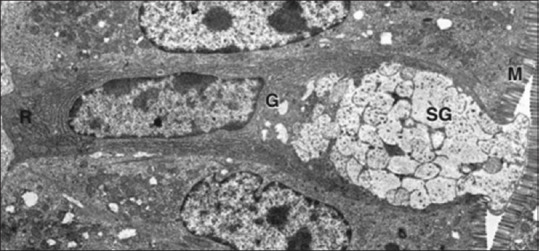
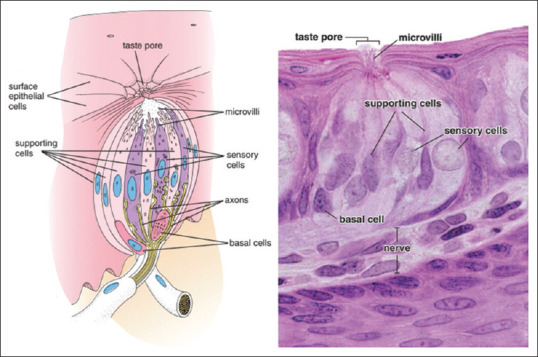
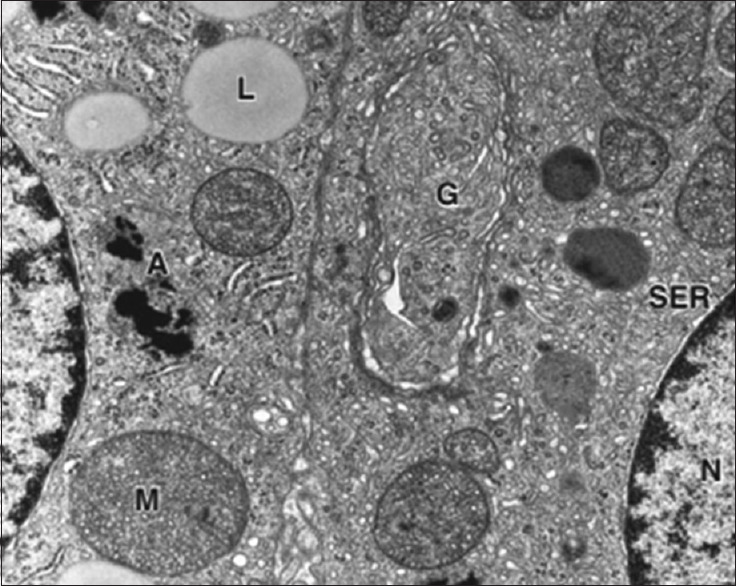
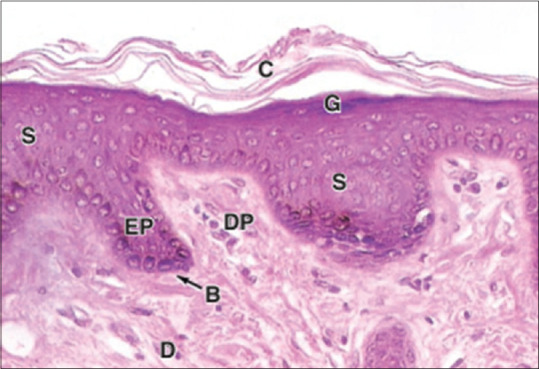
The cell is the basic structural unit of all living organisms. Most of the cells forming the human body share the basic components, but there are many categories that have specific light and electron microscopic characteristics. This review shed a light on these cell categories and their morphologies. Stem cell category is the cells responsible for the regeneration of damaged or lost cells, whereas protein-secreting cells are those responsible for the production and secretion of proteins. Protein-secreting cells have specific characters such as basophilic cytoplasm and vesicular nucleus by light microscope; these are confirmed by an electron microscope that shows rough endoplasmic reticulum, Golgi apparatus, secretory granules, and mitochondria. Steroid secreting, ion transporting, and contracting categories have specific morphology. Phagocytic cells such as macrophages and neutrophils are characterized by the presence of many lysosomes and phagosomes. Supporting cells are very important category as they not only support but also usually have another function such as myelin formation in Schwann, blood-brain barrier in astrocytes, or modification of response as in Pacinian corpuscle. Many cells showed interrelated characters between different categories, for example, phagocytic cells are able to contract to perform their function in fighting microorganism. Although we have trillions of cells, yet they only fall in some categories. Each cell category has specific morphological characters confirmed by ultrastructural characters. They all adapted to perform the desired functions.
细胞是所有生物体的基本结构单位。构成人体的大多数细胞都具有基本组成部分,但也有许多类别具有特定的光学和电子显微镜特征。本综述揭示了这些细胞类别及其形态。干细胞类别是负责受损或丢失细胞再生的细胞,而蛋白质分泌细胞则负责蛋白质的产生和分泌。蛋白质分泌细胞具有特定特征,如光学显微镜下嗜碱性细胞质和泡状核;电子显微镜证实这些特征,显示有粗面内质网、高尔基体、分泌颗粒和线粒体。类固醇分泌细胞、离子转运细胞和收缩细胞类别具有特定形态。吞噬细胞如巨噬细胞和中性粒细胞的特征是存在许多溶酶体和吞噬体。支持细胞是非常重要的类别,因为它们不仅提供支持,而且通常还具有其他功能,如施万细胞形成髓鞘、星形胶质细胞形成血脑屏障或在环层小体中调节反应。许多细胞在不同类别之间表现出相互关联的特征,例如,吞噬细胞能够收缩以履行其对抗微生物的功能。尽管我们有万亿计的细胞,但它们仅属于某些类别。每个细胞类别都具有通过超微结构特征证实的特定形态特征。它们都经过适应性改变以执行所需功能。