Walker Angelica M, Cliff Ashley, Romero Jonathon, Shah Manesh B, Jones Piet, Felipe Machado Gazolla Joao Gabriel, Jacobson Daniel A, Kainer David
The Bredesen Center for Interdisciplinary Research and Graduate Education, University of Tennessee Knoxville, 821 Volunteer Blvd, Knoxville 37996, TN, USA.
Computational and Predictive Biology, Oak Ridge National Laboratory, 1 Bethel Valley Rd, Oak Ridge 37830, TN, USA.
Comput Struct Biotechnol J. 2022 Jun 22;20:3372-3386. doi: 10.1016/j.csbj.2022.06.037. eCollection 2022.
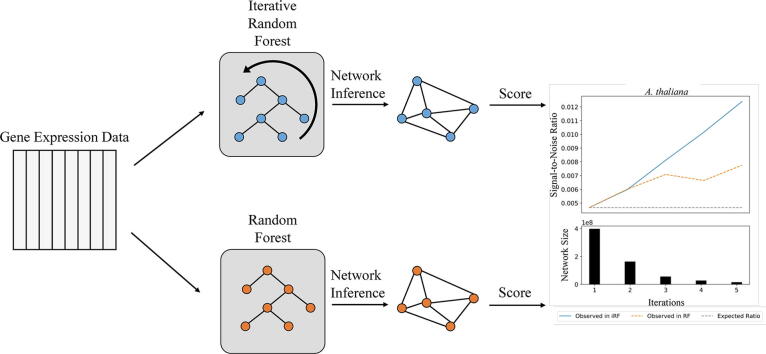
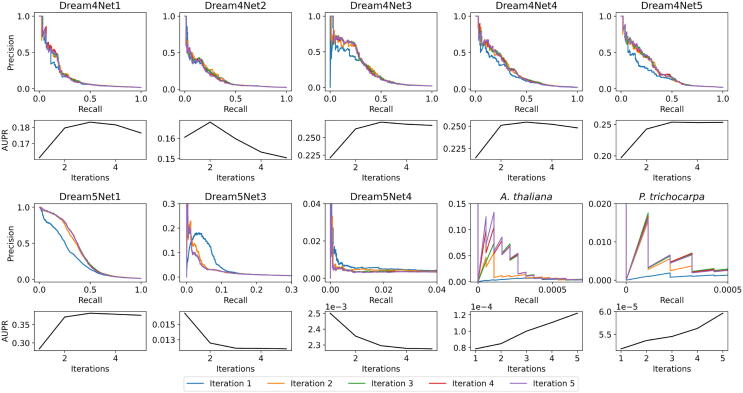
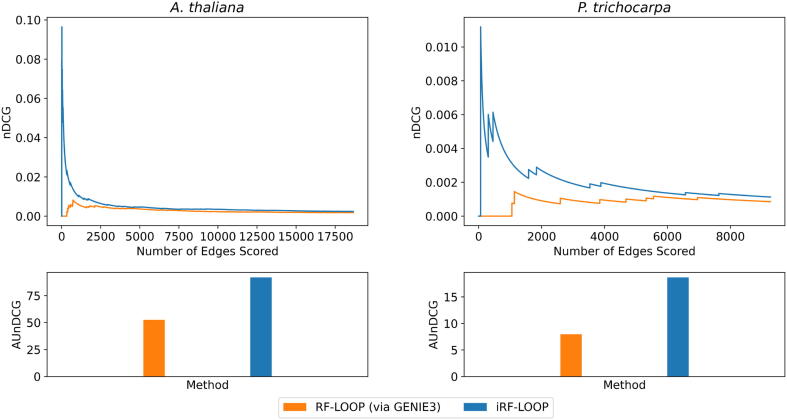
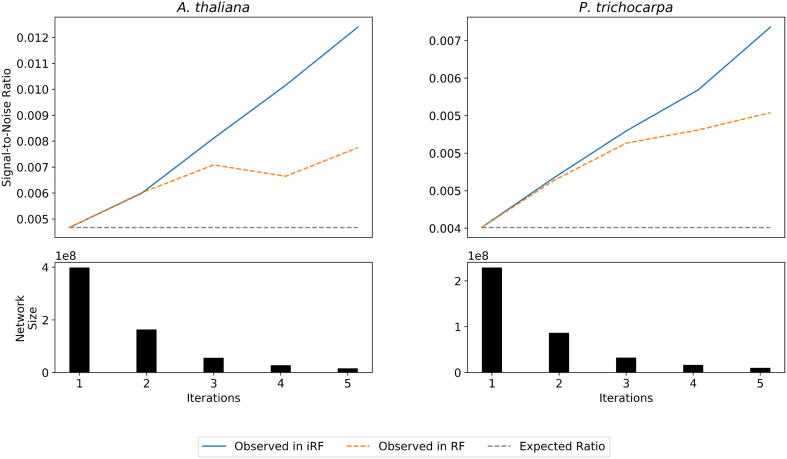
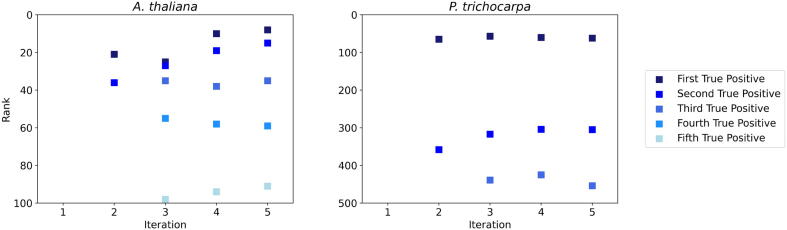
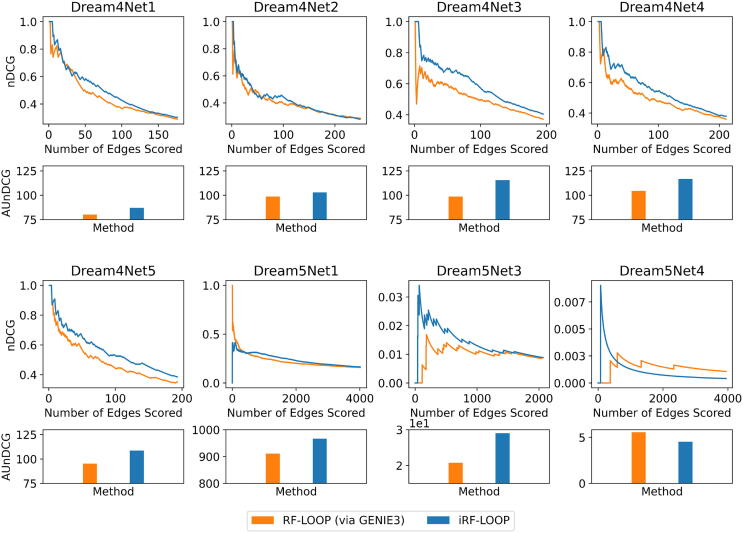
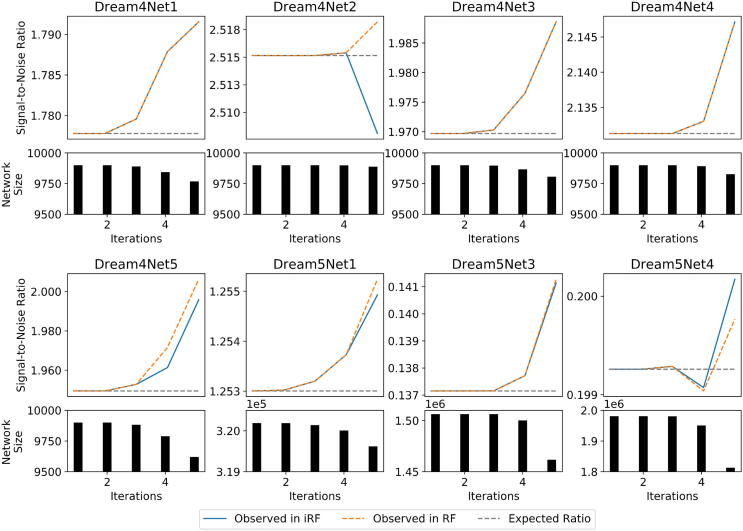
Gene-to-gene networks, such as Gene Regulatory Networks (GRN) and Predictive Expression Networks (PEN) capture relationships between genes and are beneficial for use in downstream biological analyses. There exists multiple network inference tools to produce these gene-to-gene networks from matrices of gene expression data. Random Forest-Leave One Out Prediction (RF-LOOP) is a method that has been shown to be efficient at producing these gene-to-gene networks, frequently known as GEne Network Inference with Ensemble of trees (GENIE3). Random Forest can be replaced in this process by iterative Random Forest (iRF), which performs variable selection and boosting. Here we validate that iterative Random Forest-Leave One Out Prediction (iRF-LOOP) produces higher quality networks than GENIE3 (RF-LOOP). We use both synthetic and empirical networks from the Dialogue for Reverse Engineering Assessment and Methods (DREAM) Challenges by Sage Bionetworks, as well as two additional empirical networks created from and expression data.
基因到基因网络,如基因调控网络(GRN)和预测性表达网络(PEN),捕捉基因之间的关系,有利于用于下游生物学分析。存在多种网络推理工具可从基因表达数据矩阵生成这些基因到基因网络。随机森林留一法预测(RF-LOOP)是一种已被证明在生成这些基因到基因网络方面效率很高的方法,通常称为基于树集成的基因网络推理(GENIE3)。在此过程中,随机森林可以被迭代随机森林(iRF)取代,iRF可进行变量选择和增强。在这里,我们验证了迭代随机森林留一法预测(iRF-LOOP)生成的网络质量高于GENIE3(RF-LOOP)。我们使用了来自Sage生物网络公司逆向工程评估与方法对话(DREAM)挑战的合成网络和实证网络,以及从[具体内容1]和[具体内容2]表达数据创建的另外两个实证网络。