Heart Center & Beijing Key Laboratory of Hypertension, Beijing Chaoyang Hospital, Capital Medical University, Beijing 100020, China.
Int J Biol Sci. 2022 Jun 27;18(10):4219-4232. doi: 10.7150/ijbs.70644. eCollection 2022.
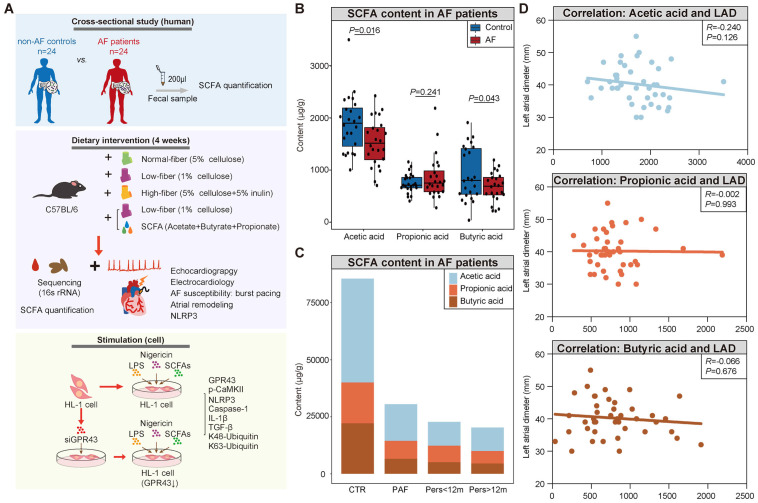
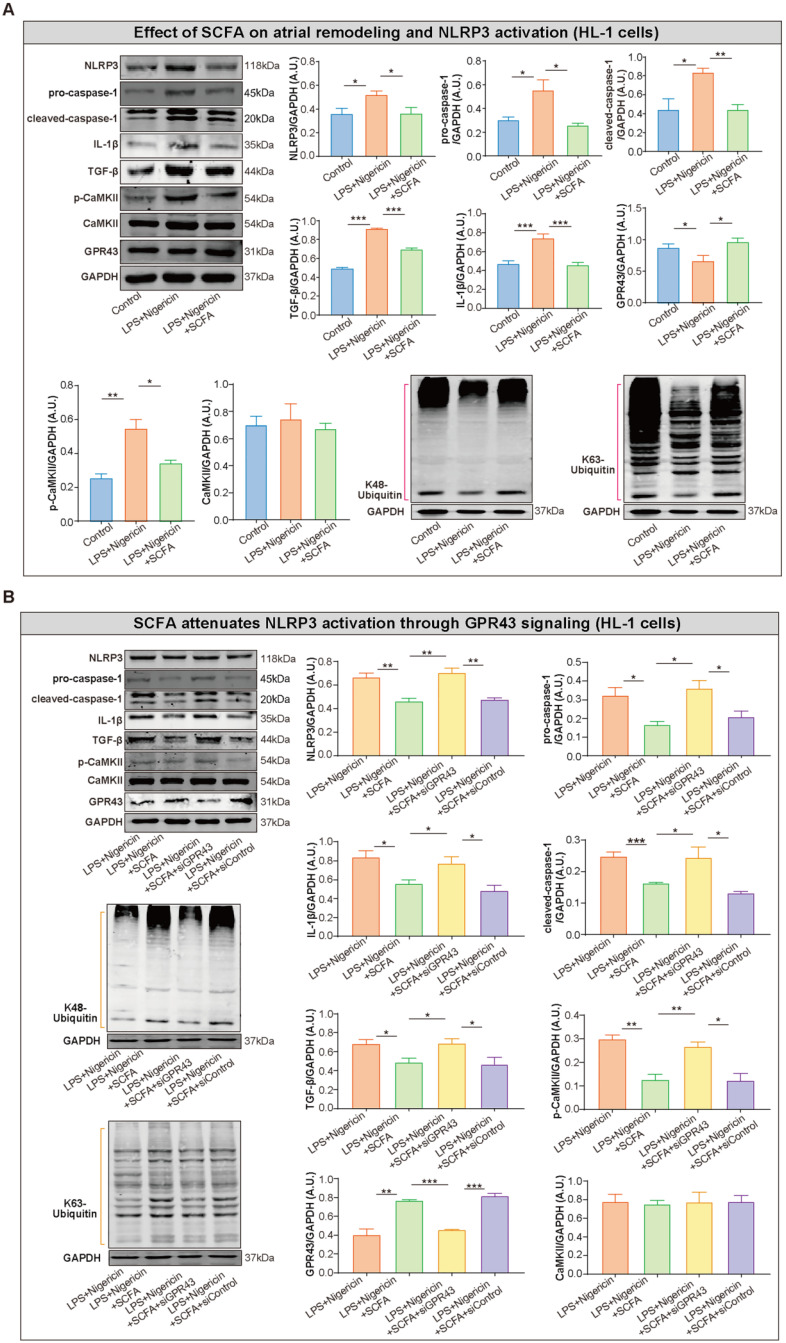
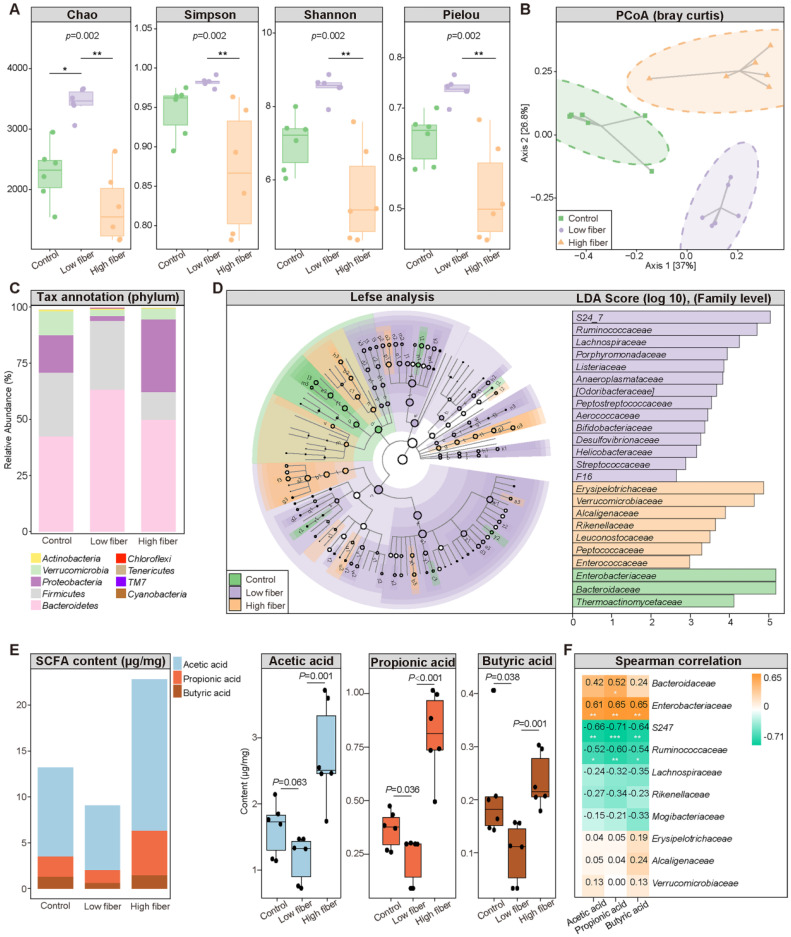
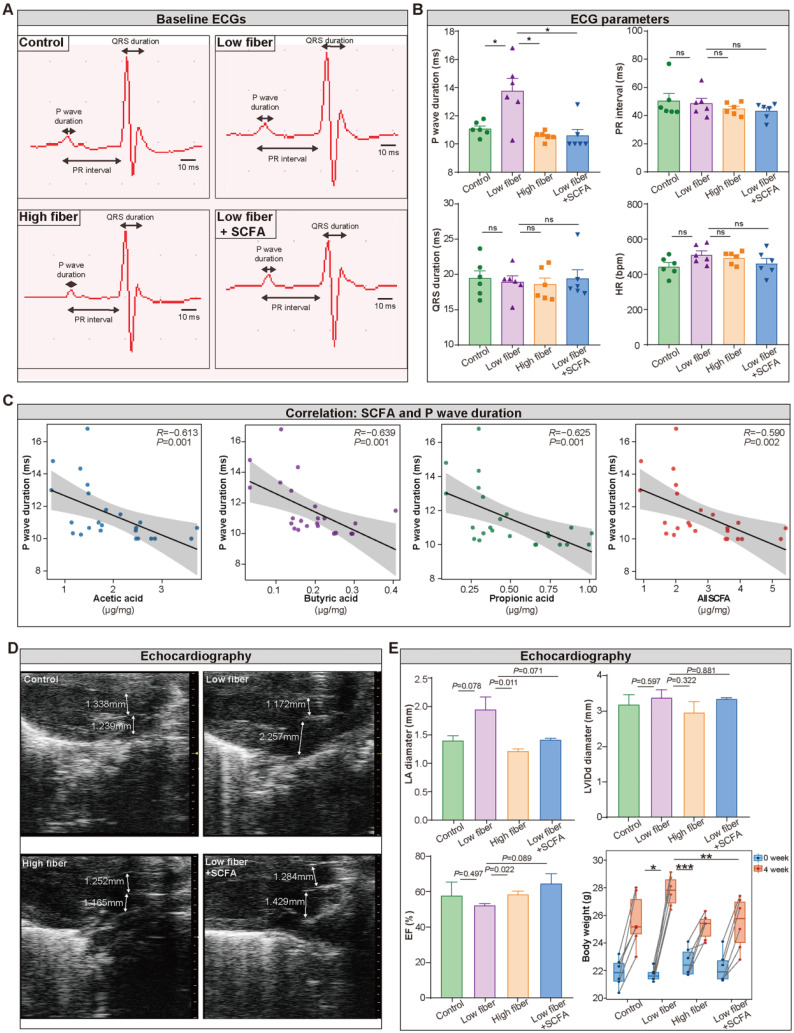
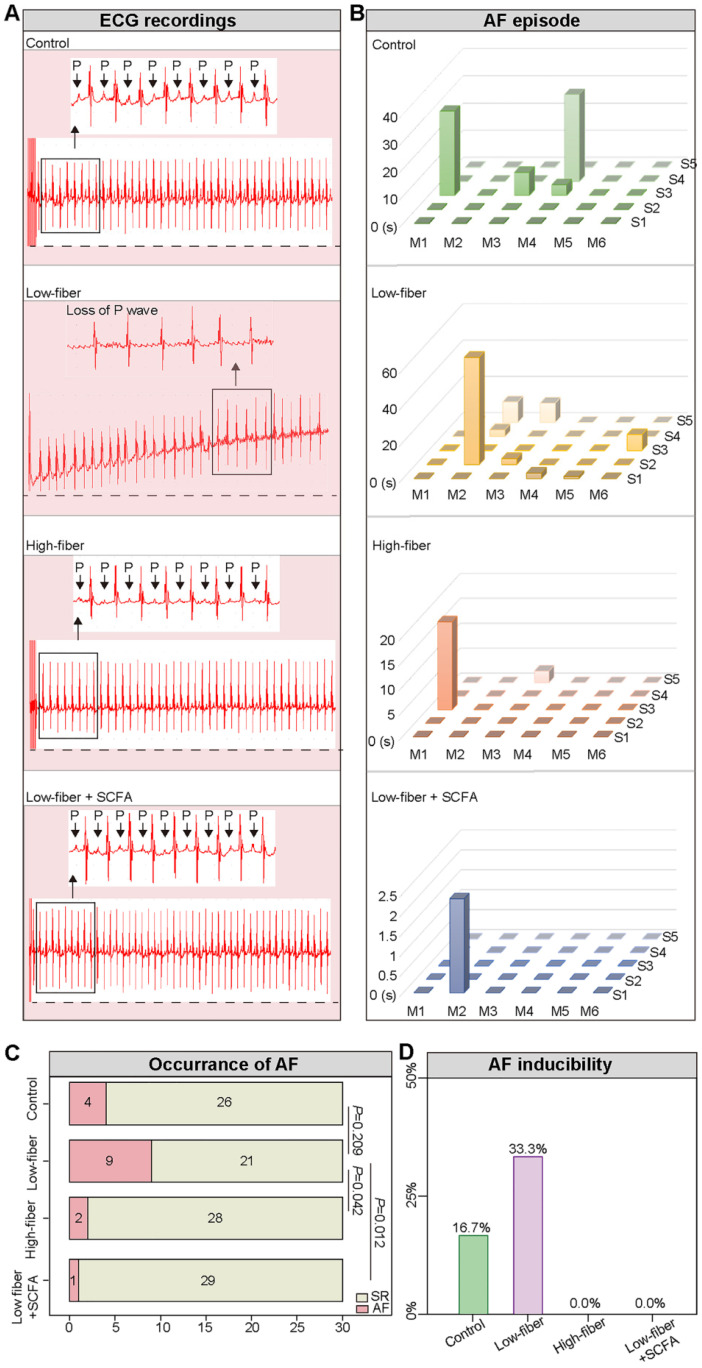
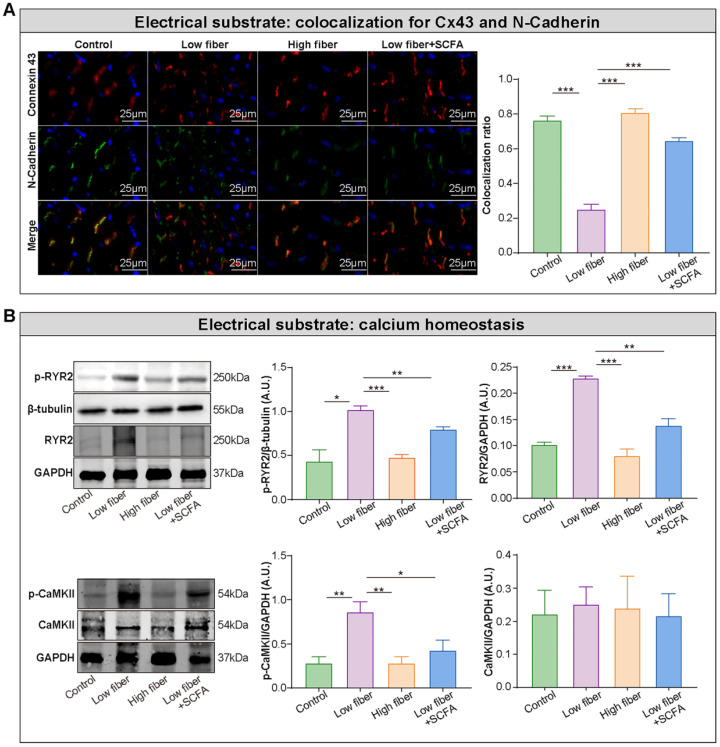
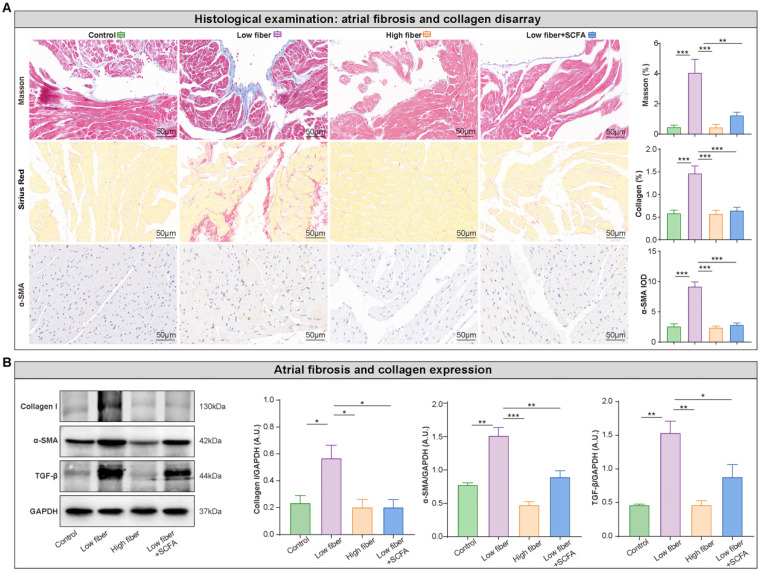
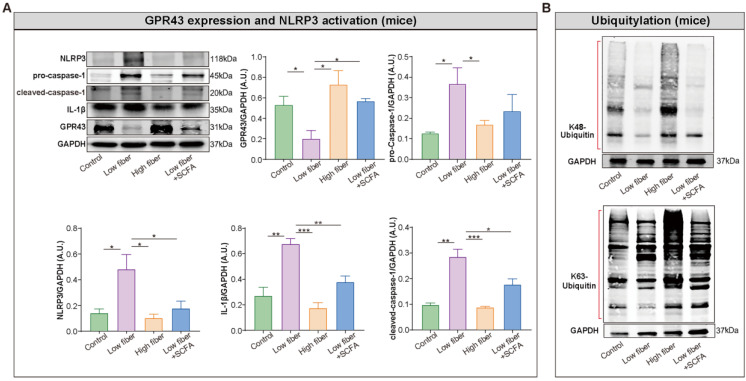
Dysbiotic gut microbiota (GM) and NLRP3 inflammasome are proarrhythmic factors in atrial fibrillation (AF). Herein, whether short-chain fatty acid (SCFA) produced from GM fermentation of dietary fiber serving as invisible mediators is yet unclear. Thus, the current study aimed to determine whether SCFA alleviated from NLRP3 signaling-mediated atrial remodeling protects AF development. First, a cross-sectional study based on the GC-MS metabolomics was performed to explore the association between fecal SCFA levels and AF traits in a cohort consisted of 48 individuals. Then, a well-established mice model fed diet deficient or enriched in dietary fiber was established to elucidate the pathophysiological role of SCFA involved in AF susceptibility, atrial remodeling, and G-protein-coupled receptor 43 (GPR43)/NLRP3 signaling. Finally, the effects of SCFA were verified on HL-1 cells. Fecal SCFA levels were remarkably reduced in AF patients with a declining trend from paroxysmal to persistent AF. Prolonged P wave duration based on surface ECG and increased left atrial diameter gained from echocardiography was identified in low-fiber diet mice but lost in SCFA-supplemented group. Lack of dietary fiber enhanced susceptibility to AF under burst pacing, whereas SCFA might exert a protective effect. The supplementation of SCFA prevented dietary fiber deficiency-upregulated phosphorylation of calmodulin-dependent protein kinase II and ryanodine receptor 2, the disarray fibrosis, collagen expression, and NLRP3 inflammasome activation in atrial tissue. Finally, the AF protective roles of SCFA were identified through GPR43 mediated deactivation of NLRP3 by GPR43 knockdown in HL-1 cells. SCFA derived from dietary fiber fermentation by gut commensals alleviates AF development via GPR43/NLRP3 signaling.
肠道微生物群落失调(GM)和 NLRP3 炎性小体是心房颤动(AF)的致心律失常因素。然而,GM 发酵膳食纤维产生的短链脂肪酸(SCFA)是否作为无形介质尚不清楚。因此,本研究旨在确定 NLRP3 信号介导的GM 发酵缓解是否通过调节心房重构来保护 AF 发生。首先,进行了一项基于 GC-MS 代谢组学的横断面研究,以探讨粪便 SCFA 水平与包含 48 名个体的队列中 AF 特征之间的关系。然后,建立了一种经证实的缺乏或富含膳食纤维的饮食喂养的小鼠模型,以阐明涉及 AF 易感性、心房重构和 G 蛋白偶联受体 43(GPR43)/NLRP3 信号的 SCFA 参与的病理生理作用。最后,在 HL-1 细胞上验证了 SCFA 的作用。AF 患者的粪便 SCFA 水平明显降低,且从阵发性到持续性 AF 呈下降趋势。心电图显示体表 P 波持续时间延长,超声心动图显示左心房直径增大,这些改变在低纤维饮食的小鼠中可见,但在 SCFA 补充组中则消失。缺乏膳食纤维会增加在爆发性起搏下发生 AF 的易感性,而 SCFA 可能发挥保护作用。SCFA 的补充防止了膳食纤维缺乏引起的心房组织中钙调蛋白依赖性蛋白激酶 II 和兰尼碱受体 2 的磷酸化、纤维排列紊乱、胶原表达和 NLRP3 炎性小体激活的增加。最后,通过 HL-1 细胞中 GPR43 敲低使 NLRP3 失活,证实了 SCFA 的 AF 保护作用。肠道共生菌发酵膳食纤维产生的 SCFA 通过 GPR43/NLRP3 信号缓解 AF 发生。