Zio Souleymane, Lamien Bernard, Tiemounou Sibiri, Adaman Yoda, Tougri Inoussa, Beidari Mohamed, Boris Ouedraogo W Y S
Institut du Génie Informatique et Telecom, École Polytechnique de Ouagadougou, Ouaga, 2000, Burkina Faso.
Institut du Génie Industriel et Textile, École Polytechnique de Ouagadougou, Ouaga, 2000, Burkina Faso.
Infect Dis Model. 2022 Sep;7(3):448-462. doi: 10.1016/j.idm.2022.06.006. Epub 2022 Jul 9.
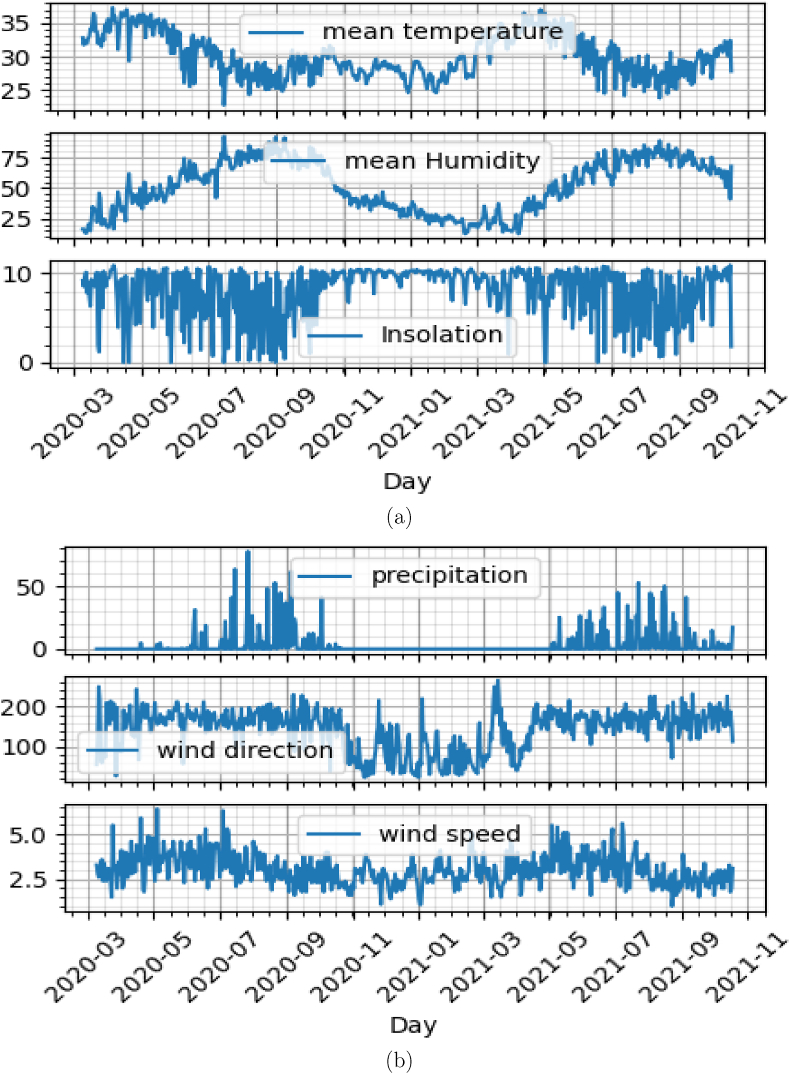
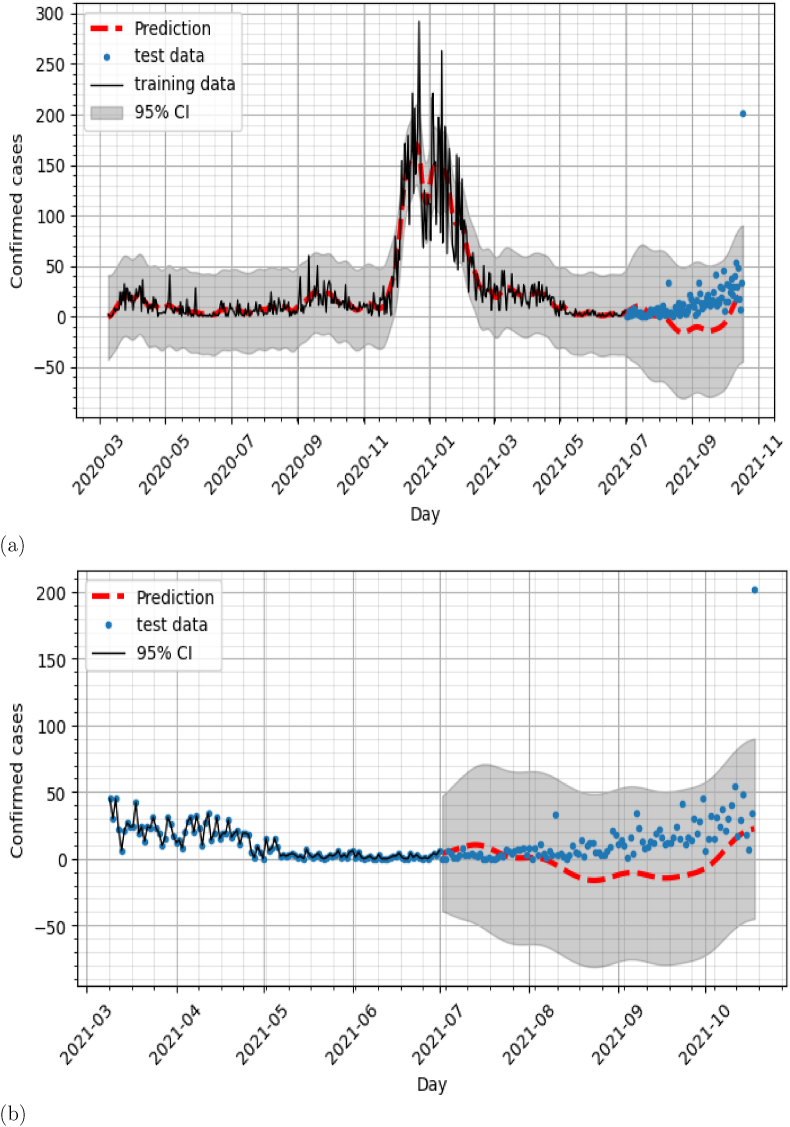
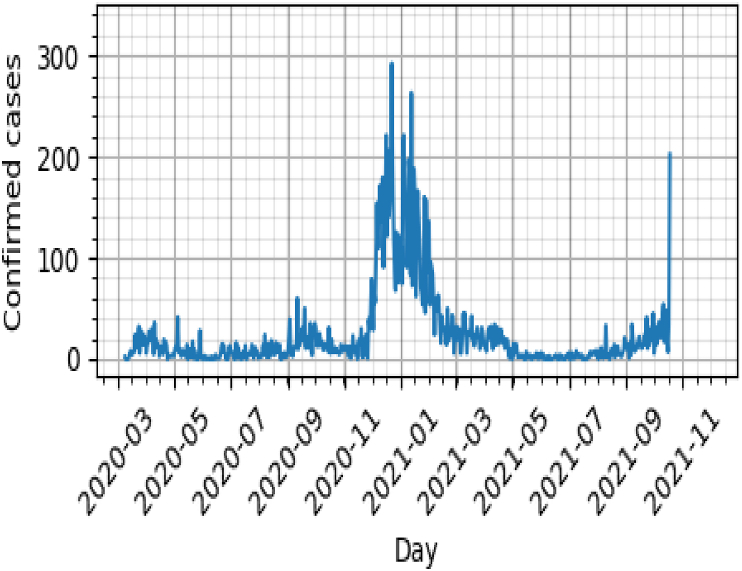
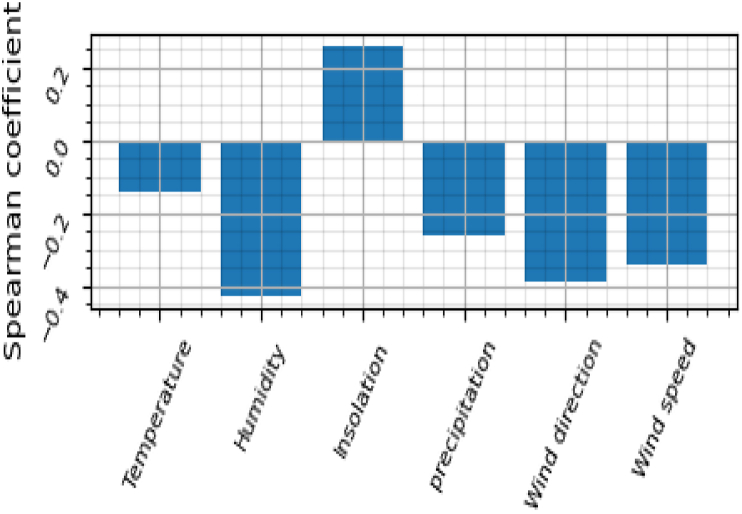
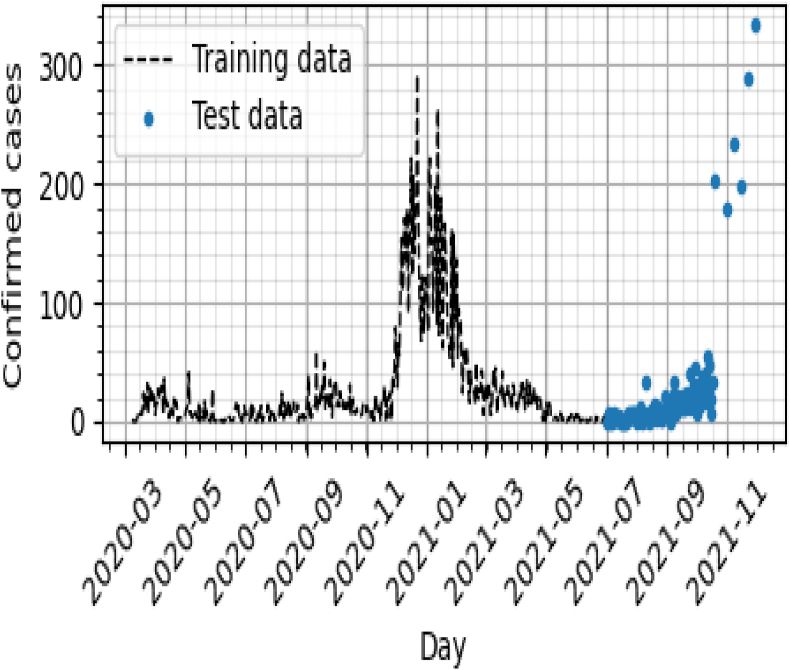
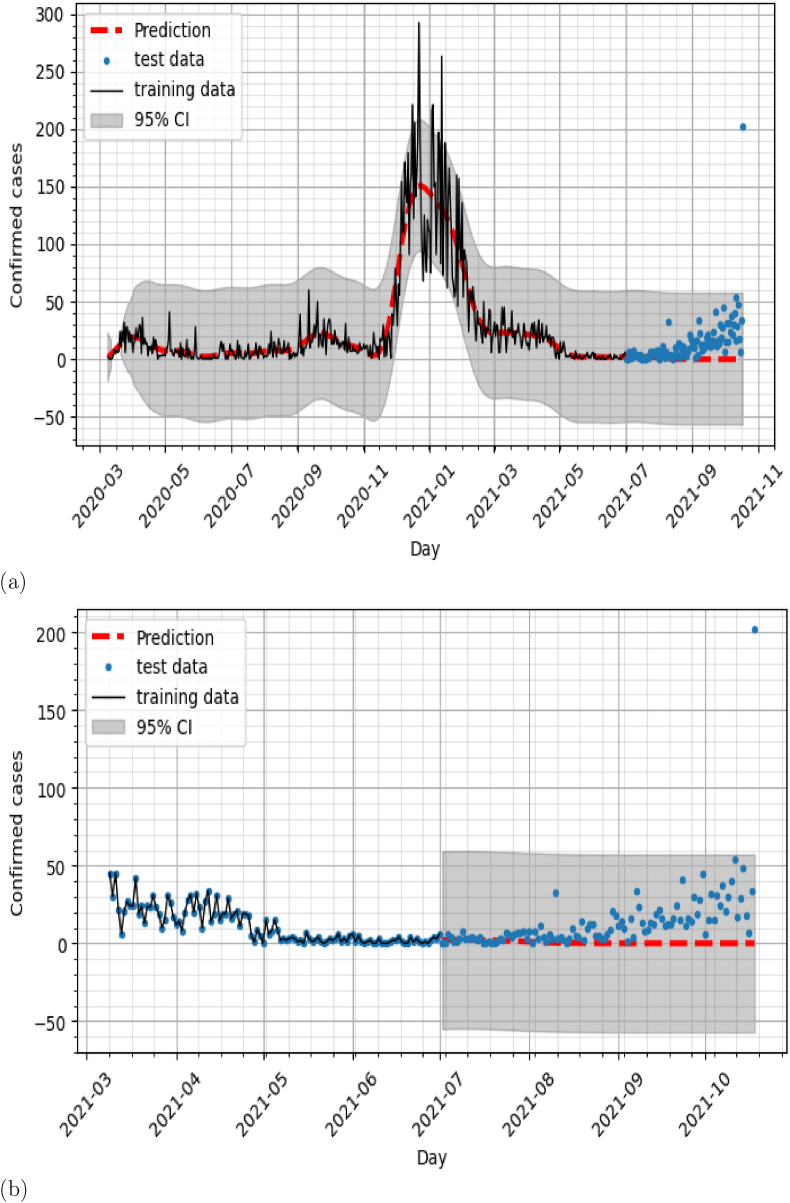
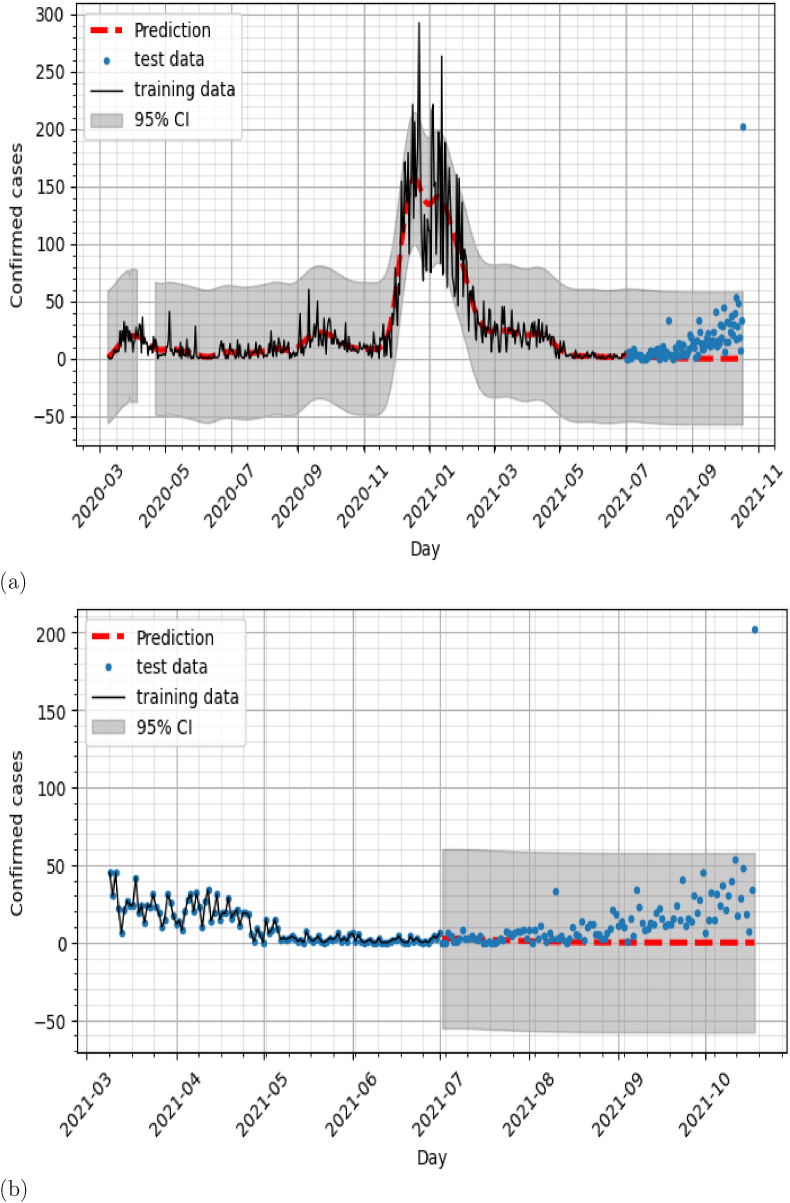
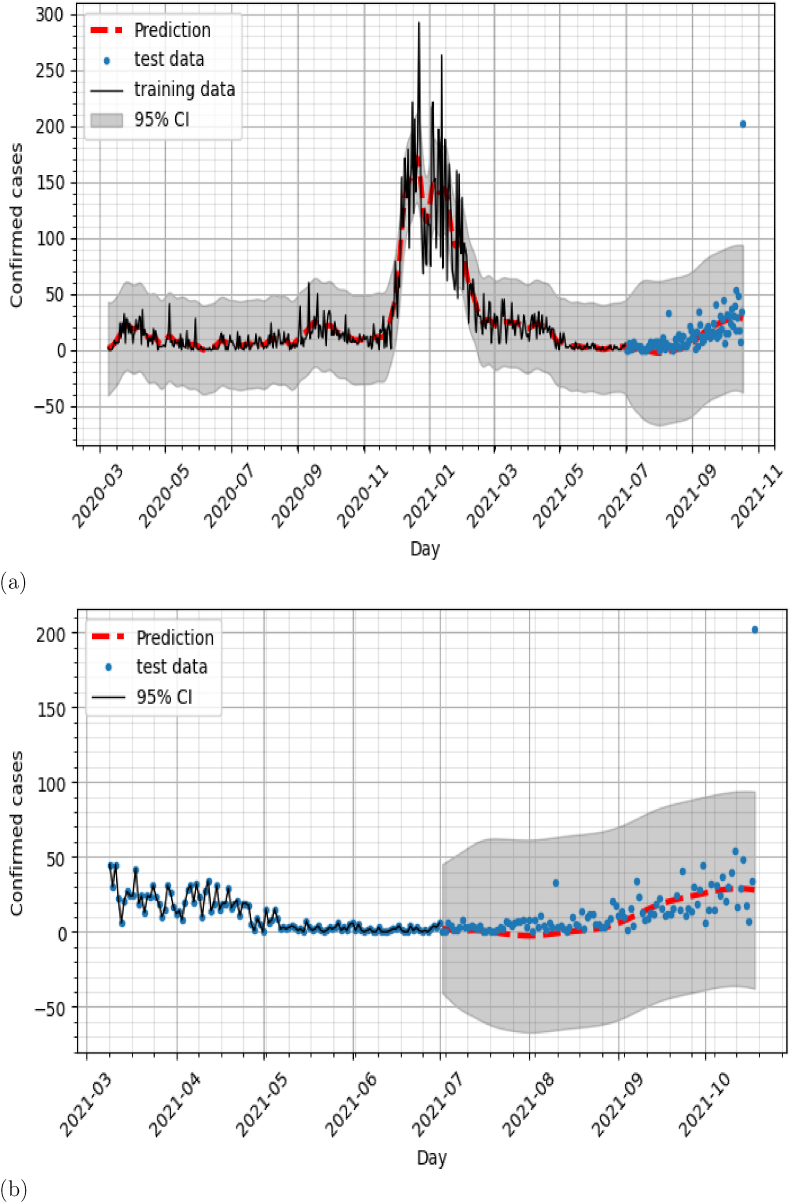
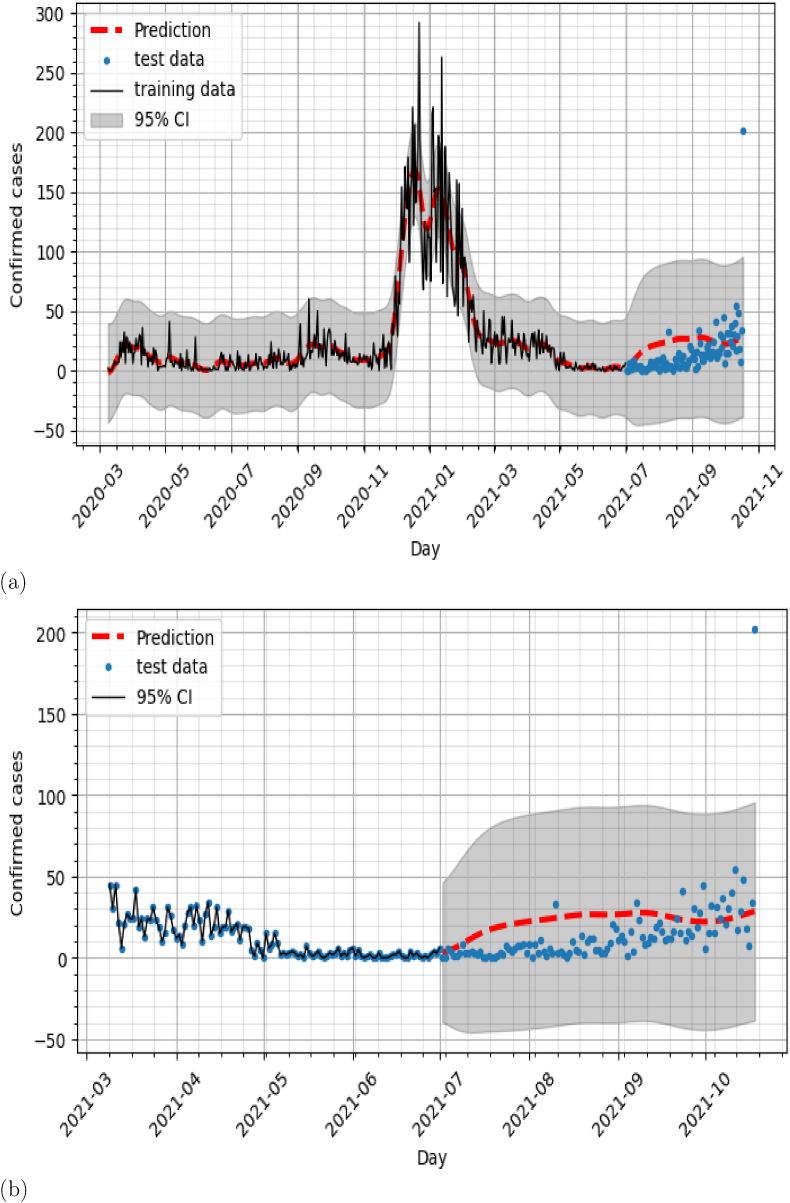
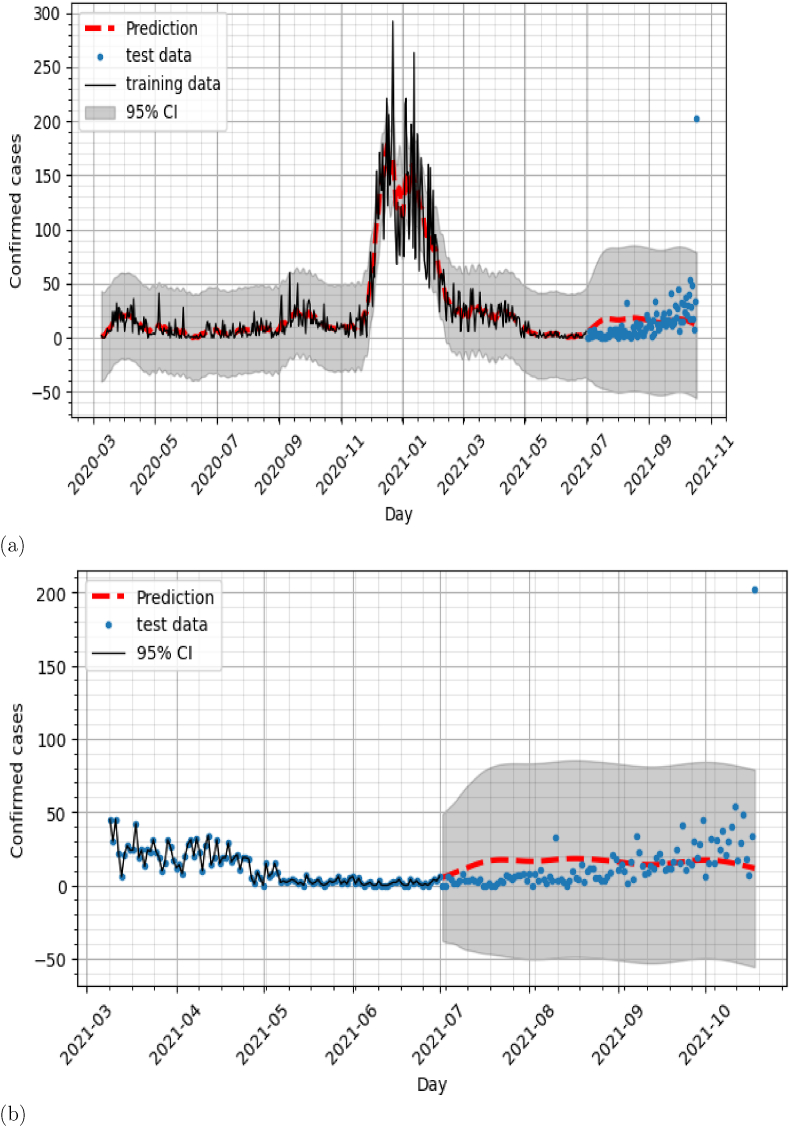
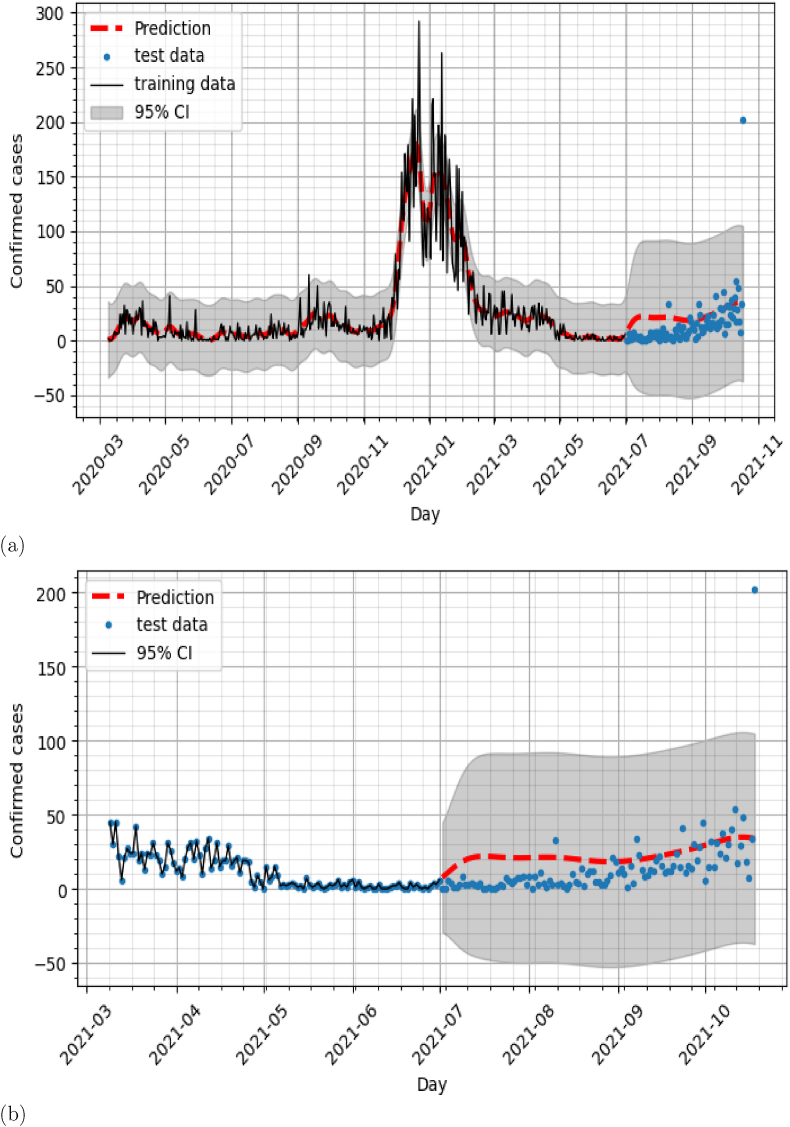
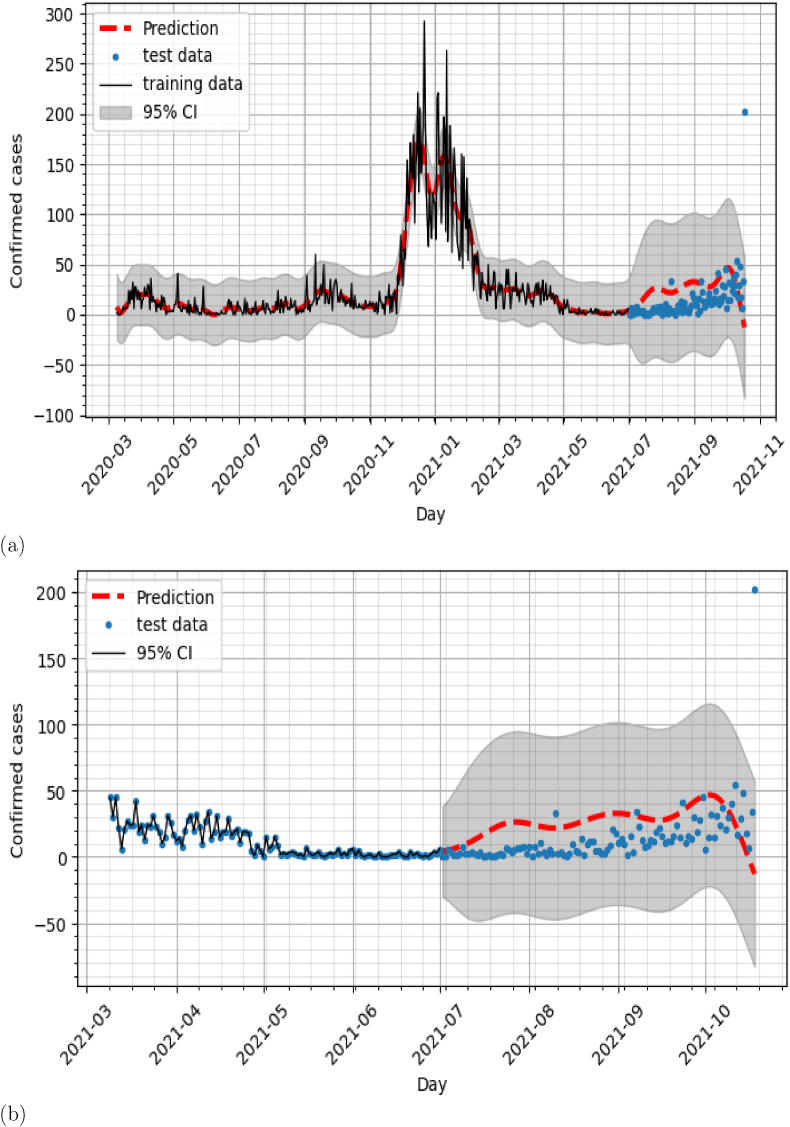
The novel coronavirus has affected all regions of the world, but each country has experienced different rates of infection. In West Africa, in particular, infection rates remain low as compared to other parts of the world. This heterogeneity in the spread of COVID-19 raises a lot of questions that are still unanswered. However, some studies point out that people's mobility, size of gatherings, rate of testing, and weather have a great impact on the COVID-19 spread. In this work, we first evaluate the correlation between meteorological parameters and COVID-19 cases using Spearman's rank correlation. Secondly, multi-output Gaussian processes (MOGP) are used to predict the daily confirmed COVID-19 cases by exploring its relationships with meteorological parameters. The number of daily reported COVID-19 cases, as well as, weather variables collected from March 9, 2020, to October 18, 2021, were used in the analysis. The weather variables considered in the analysis are the mean temperature, relative humidity, wind direction, insolation, precipitation, and wind speed. The predicting model was constructed exploiting the correlation between the data of the daily confirmed COVID-19 cases and data of the weather variables. The results show that a significant correlation between the daily confirmed COVID-19 cases was found with humidity, wind direction, wind speed, and insolation. These parameters are used to construct the predictive model using the Multi-Output Gaussian process (MOGP). Different combinations of the data of meteorological parameters together with the data of daily reported COVID-19 cases were used to derive different models. We found that the best predictor is obtained using the combination of Humidity and insolation. This model is then used to predict the daily confirmed COVID-19 cases knowing the humidity and Insolation.
新型冠状病毒已经影响到世界所有地区,但每个国家的感染率各不相同。特别是在西非,与世界其他地区相比,感染率仍然较低。新冠病毒传播的这种异质性引发了许多尚未得到解答的问题。然而,一些研究指出,人们的流动性、聚集规模、检测率和天气对新冠病毒的传播有很大影响。在这项工作中,我们首先使用斯皮尔曼等级相关性评估气象参数与新冠病例之间的相关性。其次,通过探索多输出高斯过程(MOGP)与气象参数之间的关系来预测每日确诊的新冠病例。分析中使用了2020年3月9日至2021年10月18日期间每日报告的新冠病例数量以及收集的天气变量。分析中考虑的天气变量包括平均温度、相对湿度、风向、日照、降水量和风速。利用每日确诊新冠病例数据与天气变量数据之间的相关性构建预测模型。结果表明,每日确诊的新冠病例与湿度、风向、风速和日照之间存在显著相关性。这些参数用于使用多输出高斯过程(MOGP)构建预测模型。气象参数数据与每日报告的新冠病例数据的不同组合被用于推导不同的模型。我们发现,使用湿度和日照的组合可获得最佳预测器。然后,在已知湿度和日照的情况下,使用该模型预测每日确诊的新冠病例。