Long Yun, Yang Yun, Pan Guangtang, Shen Yaou
Key Laboratory of Southwest China Wildlife Resources Conservation (Ministry of Education), College of Life Science, China West Normal University, Nanchong, China.
Nanchong Academy of Agricultural Sciences, Nanchong, China.
Front Plant Sci. 2022 Jun 30;13:926752. doi: 10.3389/fpls.2022.926752. eCollection 2022.
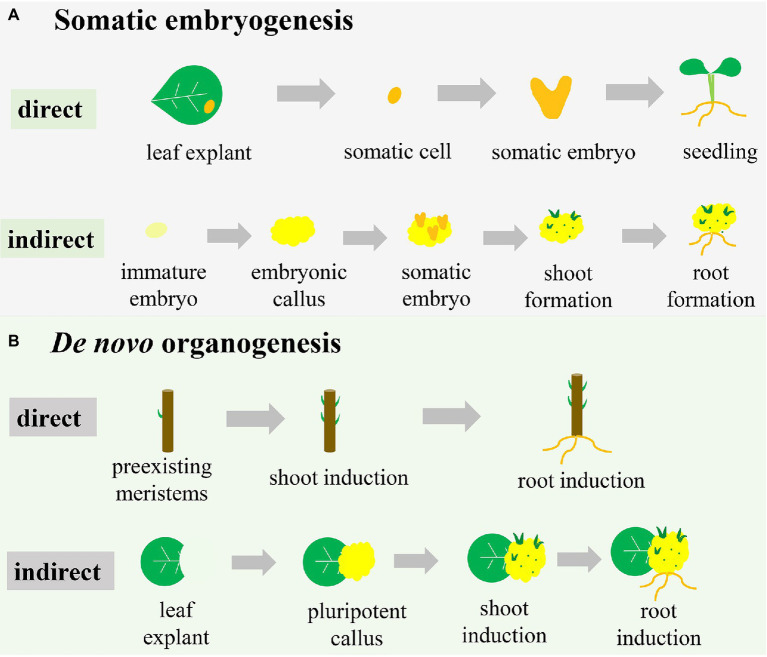
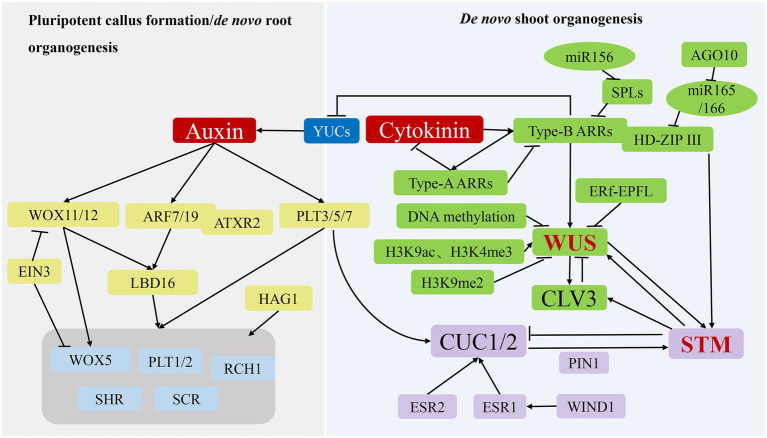
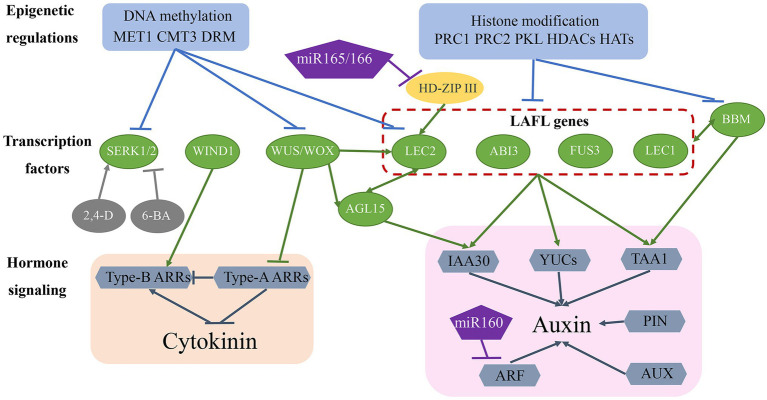
Plant regeneration occurs when plants repair or replace damaged structures based on the totipotency and pluripotency of their cells. Tissue culture is one of the most widely used regenerative technologies. Recently, a series of breakthroughs were made in the study of plant regeneration. This review summarizes two regenerative pathways in tissue culture: somatic embryogenesis and organogenesis. Furthermore, we review the environmental factors influencing plant regeneration from explant sources, basal culture medium, plant growth regulators, and light/dark treatment. Additionally, we analyse the molecular mechanisms underlying two pathways. This knowledge will promote an understanding of the fundamental principles of plant regeneration from precursor cells and lay a solid foundation for applying plant micropropagation and genetic modification.
当植物基于其细胞的全能性和多能性修复或替换受损结构时,植物再生就会发生。组织培养是应用最广泛的再生技术之一。最近,植物再生研究取得了一系列突破。本综述总结了组织培养中的两种再生途径:体细胞胚胎发生和器官发生。此外,我们综述了影响外植体来源、基础培养基、植物生长调节剂以及光照/黑暗处理等因素对植物再生的影响。此外,我们分析了这两种途径的分子机制。这些知识将促进对从祖细胞进行植物再生基本原理的理解,并为应用植物微繁殖和基因修饰奠定坚实基础。