Roky Rachida, Aadil Nadia, Krami Al Mehdi, Benaji Brahim, Errabih Ikram, Abdelrahim Dana N, Faris MoezAlIslam Ezzat
Department of Biology, Laboratory of Physiopathology, Molecular Genetics & Biotechnology, Faculty of Sciences Ain Chock, Health and Biotechnology Research Centre, Hassan II University of Casablanca, Casablanca, Morocco.
Department of Biology, Laboratory of Microbiology, Pharmacology, Toxicology, Biotechnology and Environment Faculty of Sciences Ain Chock, Hassan II University of Casablanca, Casablanca, Morocco.
Front Nutr. 2022 Jul 1;9:908674. doi: 10.3389/fnut.2022.908674. eCollection 2022.
During Ramadan, many patients with diabetes, renal, cardiovascular, gastrointestinal diseases, headaches, and epilepsy choose to fast even against their doctor's advice. The impact of this intermittent fasting on health and disease could be different in men and women. The aim of this study was to determine the effect of sex as a factor in diseases outcomes of patients who opt to fast during Ramadan.
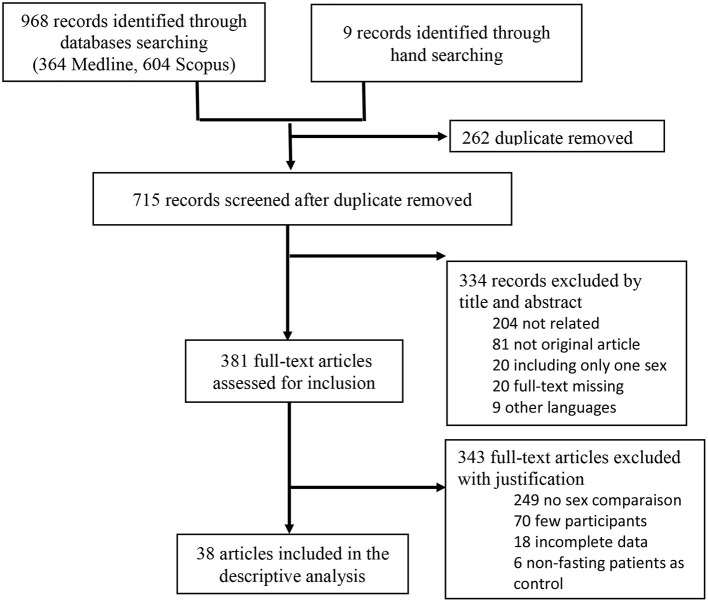
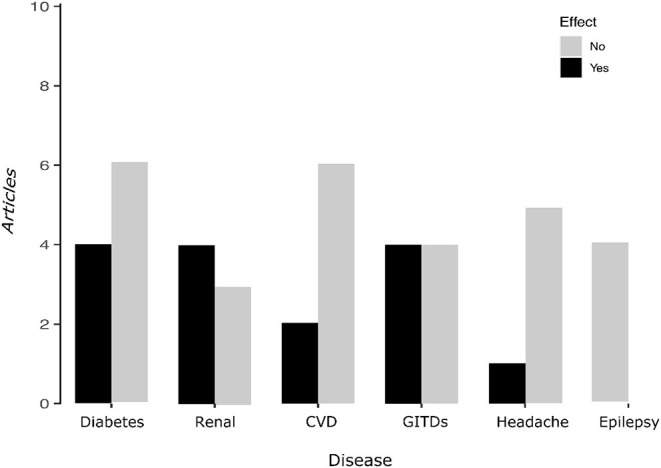
The articles included in this study reported data on six diseases: diabetes, renal, cardiovascular, gastrointestinal diseases, headaches, and epilepsy. A systematic search was performed on PubMed and Scopus for observational and clinical studies mentioning Ramadan, diabetes, renal, cardiovascular, gastrointestinal diseases, headaches, and epilepsy in both men and women. Data was extracted by two independent reviewers using a standardized data-collection form. From 381 original articles, 38 studies were selected, including 25,023 patients of which 44.4% were women. Sex-based differences were reported by 18 studies for several variables such as body mass index, blood glucose, the frequency of hypoglycemia, renal colic, mortality, thrombosis, and gastrointestinal diseases in patients fasting during Ramadan. Most of the differences between men and women were reported both in the baseline period before Ramadan and during Ramadan. Indeed, during the period outside Ramadan, the frequency of renal colic, cardiovascular, gastrointestinal diseases, were higher in men; while body mass index, Thrombosis, and headache were higher in women. In the remaining 21 studies, it was reported that the sex factor was not associated with the effect of Ramadan fasting in the frequency and other outcomes of these diseases.
Currently, small attention is paid to sex as a determinant factor in patients while fasting during Ramadan. There appeared to be differences in the frequency and incidence of diseases in men and women during Ramadan. Closer attention to sex differences regarding the frequency and the progression of the diseases during fasting may help to improve patient care, especially to benefit those patients willing to fast during Ramadan.
在斋月期间,许多糖尿病、肾脏疾病、心血管疾病、胃肠道疾病、头痛和癫痫患者即使违背医生的建议也选择禁食。这种间歇性禁食对健康和疾病的影响在男性和女性中可能有所不同。本研究的目的是确定性别作为一个因素对斋月期间选择禁食患者疾病结局的影响。
本研究纳入的文章报告了六种疾病的数据:糖尿病、肾脏疾病、心血管疾病、胃肠道疾病、头痛和癫痫。在PubMed和Scopus上进行了系统检索,以查找提及斋月、糖尿病、肾脏疾病、心血管疾病、胃肠道疾病、头痛和癫痫的男性和女性的观察性和临床研究。由两名独立评审员使用标准化数据收集表提取数据。从381篇原始文章中,选择了38项研究,包括25023名患者,其中44.4%为女性。18项研究报告了基于性别的差异,涉及几个变量,如体重指数、血糖、低血糖频率、肾绞痛、死亡率、血栓形成和斋月期间禁食患者的胃肠道疾病。男性和女性之间的大多数差异在斋月前的基线期和斋月期间均有报告。事实上,在斋月以外的时期,男性的肾绞痛、心血管疾病、胃肠道疾病发生率较高;而女性的体重指数、血栓形成和头痛发生率较高。在其余21项研究中,报告称性别因素与斋月禁食对这些疾病的频率和其他结局的影响无关。
目前,在斋月期间禁食的患者中,性别作为一个决定因素受到的关注较少。斋月期间男性和女性的疾病频率和发病率似乎存在差异。在禁食期间密切关注疾病频率和进展方面的性别差异可能有助于改善患者护理,特别是使那些愿意在斋月期间禁食的患者受益。