• 文献检索
  • 文档翻译
  • 深度研究
  • 学术资讯
  • Suppr Zotero 插件Zotero 插件
  • 邀请有礼
  • 套餐&价格
  • 历史记录
应用&插件
Suppr Zotero 插件Zotero 插件浏览器插件Mac 客户端Windows 客户端微信小程序
定价
高级版会员购买积分包购买API积分包
服务
文献检索文档翻译深度研究API 文档MCP 服务
关于我们
关于 Suppr公司介绍联系我们用户协议隐私条款
关注我们

Suppr 超能文献

核心技术专利:CN118964589B侵权必究
粤ICP备2023148730 号-1Suppr @ 2026

文献检索

告别复杂PubMed语法,用中文像聊天一样搜索,搜遍4000万医学文献。AI智能推荐,让科研检索更轻松。

立即免费搜索

文件翻译

保留排版,准确专业,支持PDF/Word/PPT等文件格式,支持 12+语言互译。

免费翻译文档

深度研究

AI帮你快速写综述,25分钟生成高质量综述,智能提取关键信息,辅助科研写作。

立即免费体验

使用机器学习算法对创伤性脑损伤后的死亡率进行动态预测。

Dynamic prediction of mortality after traumatic brain injury using a machine learning algorithm.

作者信息

Raj Rahul, Wennervirta Jenni M, Tjerkaski Jonathan, Luoto Teemu M, Posti Jussi P, Nelson David W, Takala Riikka, Bendel Stepani, Thelin Eric P, Luostarinen Teemu, Korja Miikka

机构信息

Department of Neurosurgery, Helsinki University Hospital and University of Helsinki, Helsinki, Finland.

Analytics and AI Development Services, HUS IT Management, Helsinki University Hospital, Helsinki, Finland.

出版信息

NPJ Digit Med. 2022 Jul 18;5(1):96. doi: 10.1038/s41746-022-00652-3.

DOI:10.1038/s41746-022-00652-3
PMID:35851612
原文链接:https://pmc.ncbi.nlm.nih.gov/articles/PMC9293936/
Abstract

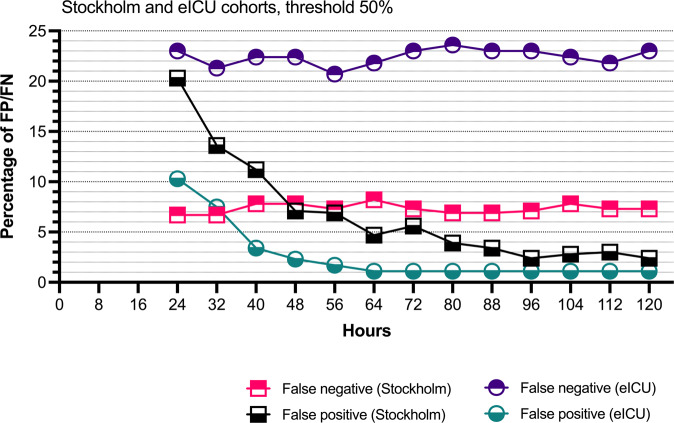
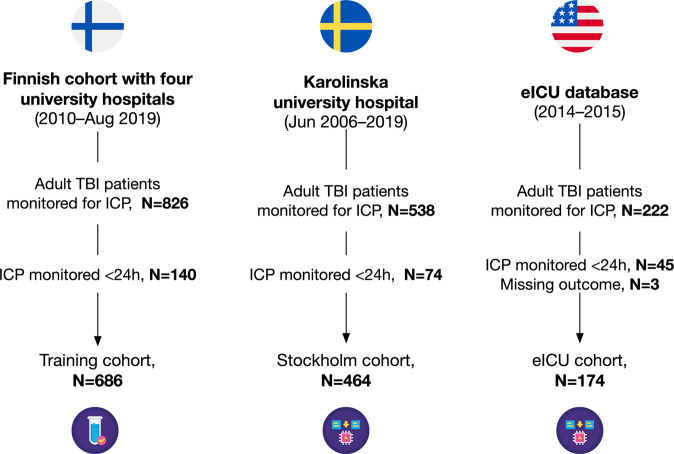
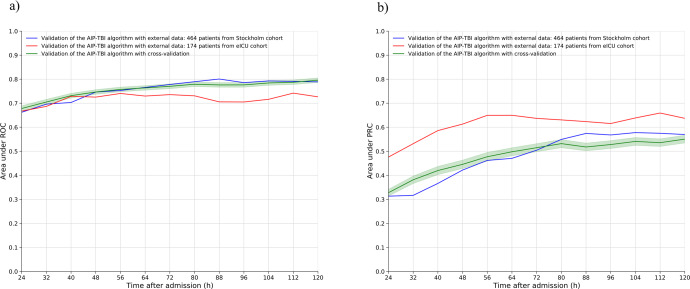
Intensive care for patients with traumatic brain injury (TBI) aims to optimize intracranial pressure (ICP) and cerebral perfusion pressure (CPP). The transformation of ICP and CPP time-series data into a dynamic prediction model could aid clinicians to make more data-driven treatment decisions. We retrained and externally validated a machine learning model to dynamically predict the risk of mortality in patients with TBI. Retraining was done in 686 patients with 62,000 h of data and validation was done in two international cohorts including 638 patients with 60,000 h of data. The area under the receiver operating characteristic curve increased with time to 0.79 and 0.73 and the precision recall curve increased with time to 0.57 and 0.64 in the Swedish and American validation cohorts, respectively. The rate of false positives decreased to ≤2.5%. The algorithm provides dynamic mortality predictions during intensive care that improved with increasing data and may have a role as a clinical decision support tool.

摘要

创伤性脑损伤(TBI)患者的重症监护旨在优化颅内压(ICP)和脑灌注压(CPP)。将ICP和CPP时间序列数据转换为动态预测模型有助于临床医生做出更多基于数据的治疗决策。我们重新训练并对外验证了一个机器学习模型,以动态预测TBI患者的死亡风险。在686例患者中利用62000小时的数据进行了重新训练,并在两个国际队列中进行了验证,这两个队列包括638例患者及60000小时的数据。在瑞典和美国的验证队列中,受试者工作特征曲线下面积随时间增加至0.79和0.73,精确召回率曲线随时间增加至0.57和0.64。假阳性率降至≤2.5%。该算法在重症监护期间提供动态死亡预测,预测结果随数据增加而改善,可能作为一种临床决策支持工具发挥作用。
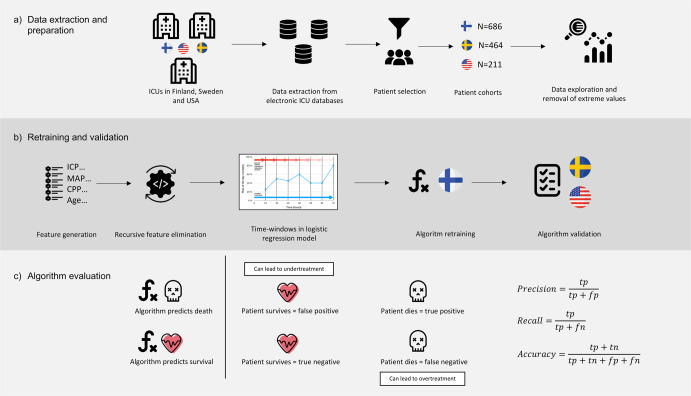
https://cdn.ncbi.nlm.nih.gov/pmc/blobs/d0bd/9293936/b8cc52fc5986/41746_2022_652_Fig5_HTML.jpg
https://cdn.ncbi.nlm.nih.gov/pmc/blobs/d0bd/9293936/ea7d95839b5a/41746_2022_652_Fig1_HTML.jpg
https://cdn.ncbi.nlm.nih.gov/pmc/blobs/d0bd/9293936/e26ca664dbe0/41746_2022_652_Fig2_HTML.jpg
https://cdn.ncbi.nlm.nih.gov/pmc/blobs/d0bd/9293936/0af7b4864dea/41746_2022_652_Fig3_HTML.jpg
https://cdn.ncbi.nlm.nih.gov/pmc/blobs/d0bd/9293936/1605fa259809/41746_2022_652_Fig4_HTML.jpg
https://cdn.ncbi.nlm.nih.gov/pmc/blobs/d0bd/9293936/b8cc52fc5986/41746_2022_652_Fig5_HTML.jpg
https://cdn.ncbi.nlm.nih.gov/pmc/blobs/d0bd/9293936/ea7d95839b5a/41746_2022_652_Fig1_HTML.jpg
https://cdn.ncbi.nlm.nih.gov/pmc/blobs/d0bd/9293936/e26ca664dbe0/41746_2022_652_Fig2_HTML.jpg
https://cdn.ncbi.nlm.nih.gov/pmc/blobs/d0bd/9293936/0af7b4864dea/41746_2022_652_Fig3_HTML.jpg
https://cdn.ncbi.nlm.nih.gov/pmc/blobs/d0bd/9293936/1605fa259809/41746_2022_652_Fig4_HTML.jpg
https://cdn.ncbi.nlm.nih.gov/pmc/blobs/d0bd/9293936/b8cc52fc5986/41746_2022_652_Fig5_HTML.jpg

相似文献

1
Dynamic prediction of mortality after traumatic brain injury using a machine learning algorithm.使用机器学习算法对创伤性脑损伤后的死亡率进行动态预测。
NPJ Digit Med. 2022 Jul 18;5(1):96. doi: 10.1038/s41746-022-00652-3.
2
Dynamic and explainable machine learning prediction of mortality in patients in the intensive care unit: a retrospective study of high-frequency data in electronic patient records.动态可解释机器学习预测 ICU 患者死亡率:电子患者记录中高频数据的回顾性研究。
Lancet Digit Health. 2020 Apr;2(4):e179-e191. doi: 10.1016/S2589-7500(20)30018-2. Epub 2020 Mar 12.
3
Novel methods to predict increased intracranial pressure during intensive care and long-term neurologic outcome after traumatic brain injury: development and validation in a multicenter dataset.新型方法预测重症监护期间颅内压升高和创伤性脑损伤后的长期神经预后:多中心数据集的开发和验证。
Crit Care Med. 2013 Feb;41(2):554-64. doi: 10.1097/CCM.0b013e3182742d0a.
4
Automated measurement of "pressure times time dose" of intracranial hypertension best predicts outcome after severe traumatic brain injury.颅内高压“压力乘以时间剂量”的自动测量最能预测重度创伤性脑损伤后的预后。
J Trauma. 2010 Jul;69(1):110-8. doi: 10.1097/TA.0b013e3181c99853.
5
Brain Temperature Influences Intracranial Pressure and Cerebral Perfusion Pressure After Traumatic Brain Injury: A CENTER-TBI Study.脑温对创伤性脑损伤后颅内压和脑灌注压的影响:CENTER-TBI 研究。
Neurocrit Care. 2021 Dec;35(3):651-661. doi: 10.1007/s12028-021-01294-1. Epub 2021 Jul 30.
6
Pressure autoregulation monitoring and cerebral perfusion pressure target recommendation in patients with severe traumatic brain injury based on minute-by-minute monitoring data.基于逐分钟监测数据的重型颅脑损伤患者压力自动调节监测及脑灌注压目标推荐
J Neurosurg. 2014 Jun;120(6):1451-7. doi: 10.3171/2014.3.JNS131500. Epub 2014 Apr 18.
7
Mortality and Outcome Comparison Between Brain Tissue Oxygen Combined with Intracranial Pressure/Cerebral Perfusion Pressure-Guided Therapy and Intracranial Pressure/Cerebral Perfusion Pressure-Guided Therapy in Traumatic Brain Injury: A Meta-Analysis.脑组织氧联合颅内压/脑灌注压导向治疗与颅内压/脑灌注压导向治疗在创伤性脑损伤中的死亡率及预后比较:一项荟萃分析
World Neurosurg. 2017 Apr;100:118-127. doi: 10.1016/j.wneu.2016.12.097. Epub 2017 Jan 3.
8
Brain tissue oxygen monitoring in traumatic brain injury and major trauma: outcome analysis of a brain tissue oxygen-directed therapy.创伤性脑损伤和严重创伤中的脑组织氧监测:脑组织氧导向治疗的结果分析
J Neurosurg. 2009 Oct;111(4):672-82. doi: 10.3171/2009.4.JNS081150.
9
Machine Learning to Predict In-Hospital Morbidity and Mortality after Traumatic Brain Injury.机器学习预测创伤性脑损伤后的住院期间发病率和死亡率。
J Neurotrauma. 2020 Jan 1;37(1):202-210. doi: 10.1089/neu.2018.6276. Epub 2019 Sep 18.
10
Hypertonic saline reduces cumulative and daily intracranial pressure burdens after severe traumatic brain injury.高渗盐水可降低重度创伤性脑损伤后的颅内压累积负担和每日负担。
J Neurosurg. 2015 Jan;122(1):202-10. doi: 10.3171/2014.10.JNS132545.

引用本文的文献

1
Mortality During In-Hospital Stay and the First 24 h After Decompressive Craniectomy in Severe Traumatic Brain Injury: A Multi-Center, Retrospective Propensity Score-Matched Study.严重创伤性脑损伤减压性颅骨切除术后住院期间及术后24小时内的死亡率:一项多中心、回顾性倾向评分匹配研究
J Clin Med. 2025 Aug 6;14(15):5540. doi: 10.3390/jcm14155540.
2
Data-driven decision making in patient management: a systematic review.患者管理中数据驱动的决策制定:一项系统综述
BMC Med Inform Decis Mak. 2025 Jul 1;25(1):239. doi: 10.1186/s12911-025-03072-x.
3
Predicting outcomes after moderate and severe traumatic brain injury using artificial intelligence: a systematic review.

本文引用的文献

1
Functional Outcomes Over the First Year After Moderate to Severe Traumatic Brain Injury in the Prospective, Longitudinal TRACK-TBI Study.在前瞻性、纵向 TRACK-TBI 研究中,中度至重度创伤性脑损伤后第一年的功能结局。
JAMA Neurol. 2021 Aug 1;78(8):982-992. doi: 10.1001/jamaneurol.2021.2043.
2
Intracranial pressure monitoring in patients with acute brain injury in the intensive care unit (SYNAPSE-ICU): an international, prospective observational cohort study.重症监护病房中急性脑损伤患者的颅内压监测(SYNAPSE-ICU):一项国际、前瞻性观察性队列研究。
Lancet Neurol. 2021 Jul;20(7):548-558. doi: 10.1016/S1474-4422(21)00138-1.
3
使用人工智能预测中度和重度创伤性脑损伤后的结果:一项系统综述。
NPJ Digit Med. 2025 Jun 18;8(1):373. doi: 10.1038/s41746-025-01714-y.
4
General lightweight framework for vision foundation model supporting multi-task and multi-center medical image analysis.支持多任务和多中心医学图像分析的视觉基础模型通用轻量级框架。
Nat Commun. 2025 Mar 1;16(1):2097. doi: 10.1038/s41467-025-57427-z.
5
Machine Learning Approaches to Prognostication in Traumatic Brain Injury.创伤性脑损伤预后的机器学习方法
Curr Neurol Neurosci Rep. 2025 Feb 19;25(1):19. doi: 10.1007/s11910-025-01405-x.
6
Multivariate Modelling and Prediction of High-Frequency Sensor-Based Cerebral Physiologic Signals: Narrative Review of Machine Learning Methodologies.基于高频传感器的脑生理信号的多变量建模与预测:机器学习方法的叙述性综述
Sensors (Basel). 2024 Dec 20;24(24):8148. doi: 10.3390/s24248148.
7
Clinical Significance of the Control CT Rotterdam Score Compared With the Admission CT Rotterdam Score in Patients With Isolated Severe Traumatic Brain Injury in the Intensive Care Unit.在重症监护病房中,孤立性重度创伤性脑损伤患者的对照CT Rotterdam评分与入院时CT Rotterdam评分相比的临床意义。
Cureus. 2024 Sep 20;16(9):e69792. doi: 10.7759/cureus.69792. eCollection 2024 Sep.
8
Artifact Management for Cerebral Near-Infrared Spectroscopy Signals: A Systematic Scoping Review.脑近红外光谱信号的伪影管理:一项系统综述。
Bioengineering (Basel). 2024 Sep 18;11(9):933. doi: 10.3390/bioengineering11090933.
9
Compare the GCS and the Rotterdam CT Score in Predicting the Mortality and Disability of Patients with Traumatic Brain Injury.比较格拉斯哥昏迷量表(GCS)和鹿特丹CT评分在预测创伤性脑损伤患者死亡率和残疾情况方面的作用。
Adv Biomed Res. 2024 Apr 27;13:35. doi: 10.4103/abr.abr_453_23. eCollection 2024.
10
Predictive Models of Long-Term Outcome in Patients with Moderate to Severe Traumatic Brain Injury are Biased Toward Mortality Prediction.中重度创伤性脑损伤患者长期预后的预测模型偏向于死亡率预测。
Neurocrit Care. 2025 Apr;42(2):573-586. doi: 10.1007/s12028-024-02082-3. Epub 2024 Aug 13.
Cognitive biases, environmental, patient and personal factors associated with critical care decision making: A scoping review.
与重症监护决策相关的认知偏差、环境、患者及个人因素:一项范围综述。
J Crit Care. 2021 Aug;64:144-153. doi: 10.1016/j.jcrc.2021.04.012. Epub 2021 Apr 20.
4
Impact of duration and magnitude of raised intracranial pressure on outcome after severe traumatic brain injury: A CENTER-TBI high-resolution group study.颅内压升高的持续时间和幅度对严重创伤性脑损伤后结局的影响:CENTER-TBI 高分辨率组研究。
PLoS One. 2020 Dec 14;15(12):e0243427. doi: 10.1371/journal.pone.0243427. eCollection 2020.
5
Machine learning-based dynamic mortality prediction after traumatic brain injury.基于机器学习的创伤性脑损伤后动态死亡率预测。
Sci Rep. 2019 Nov 27;9(1):17672. doi: 10.1038/s41598-019-53889-6.
6
Traumatic Brain Injury-Related Deaths by Race/Ethnicity, Sex, Intent, and Mechanism of Injury - United States, 2000-2017.创伤性脑损伤相关的种族/民族、性别、意图和损伤机制死亡率 - 美国,2000-2017 年。
MMWR Morb Mortal Wkly Rep. 2019 Nov 22;68(46):1050-1056. doi: 10.15585/mmwr.mm6846a2.
7
Key challenges for delivering clinical impact with artificial intelligence.人工智能实现临床影响的关键挑战。
BMC Med. 2019 Oct 29;17(1):195. doi: 10.1186/s12916-019-1426-2.
8
Prognostic performance of computerized tomography scoring systems in civilian penetrating traumatic brain injury: an observational study.计算机断层扫描评分系统在民用穿透性颅脑损伤中的预后性能:一项观察性研究。
Acta Neurochir (Wien). 2019 Dec;161(12):2467-2478. doi: 10.1007/s00701-019-04074-1. Epub 2019 Oct 28.
9
Case-mix, care pathways, and outcomes in patients with traumatic brain injury in CENTER-TBI: a European prospective, multicentre, longitudinal, cohort study.创伤性脑损伤患者的病例组合、护理路径和结局在 CENTER-TBI 中的研究:一项欧洲前瞻性、多中心、纵向、队列研究。
Lancet Neurol. 2019 Oct;18(10):923-934. doi: 10.1016/S1474-4422(19)30232-7.
10
Patient-specific ICP Epidemiologic Thresholds in Adult Traumatic Brain Injury: A CENTER-TBI Validation Study.成人创伤性脑损伤中基于患者个体的 ICP 流行病学阈值:CENTER-TBI 验证研究。
J Neurosurg Anesthesiol. 2021 Jan;33(1):28-38. doi: 10.1097/ANA.0000000000000616.