Department of Radiology, Beijing Chest Hospital, Capital Medical University, Beijing, 101149, China.
Department of Radiology, Beijing Tuberculosis and Thoracic Tumor Research Institute, Beijing, 101149, China.
Eur Radiol. 2023 Jan;33(1):391-400. doi: 10.1007/s00330-022-08997-9. Epub 2022 Jul 19.
Multidrug-resistant tuberculosis (MDR-TB) is a major challenge to global health security. Early identification of MDR-TB patients increases the likelihood of treatment success and interrupts transmission. We aimed to develop a predictive model for MDR to cavitary pulmonary TB using CT radiomics features.
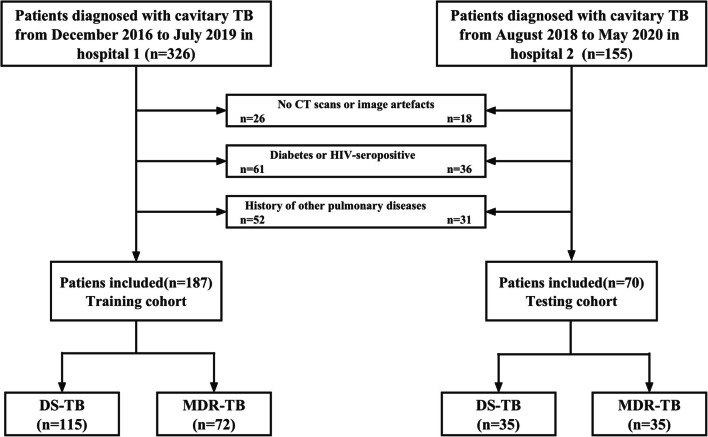
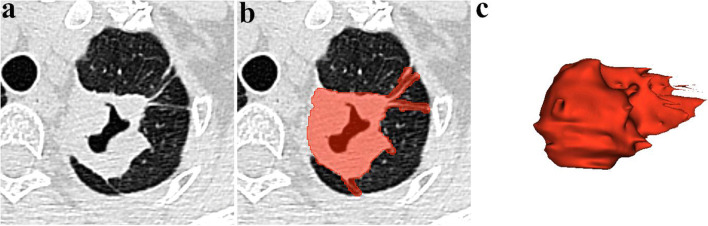
This retrospective study included 257 consecutive patients with proven active cavitary TB (training cohort: 187 patients from Beijing Chest Hospital; testing cohort: 70 patients from Infectious Disease Hospital of Heilongjiang Province). Radiomics features were extracted from the segmented cavitation. A radiomics model was constructed to predict MDR using a random forest classifier. Meaningful clinical characteristics and subjective CT findings comprised the clinical model. The radiomics and clinical models were combined to create a combined model. ROC curves were used to validate the capability of the models in the training and testing cohorts.
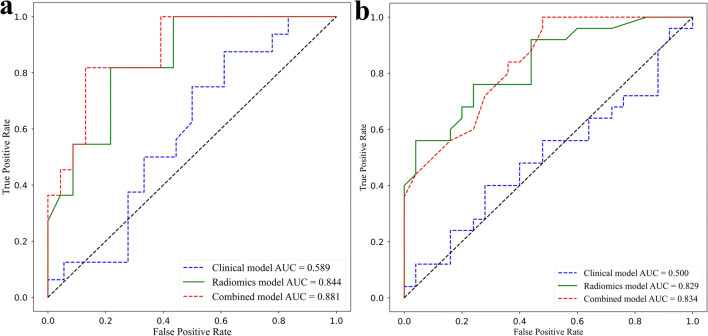
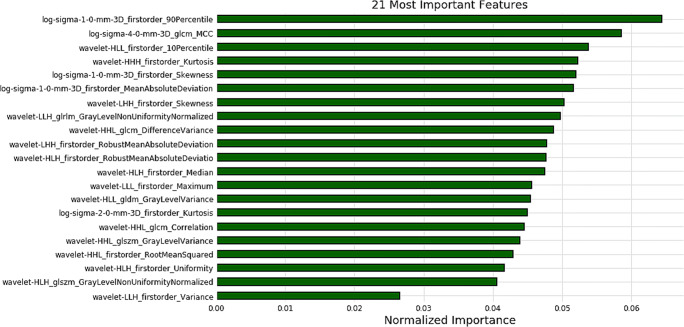
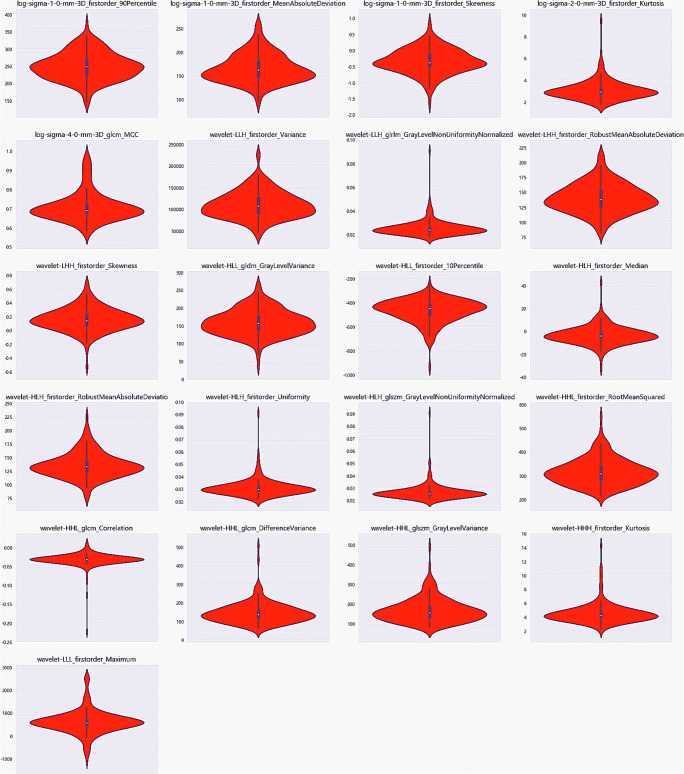
Twenty-one radiomics features were selected as optimal predictors to build the model for predicting MDR-TB. The AUCs of the radiomics model were significantly higher than those of the clinical model in either the training cohort (0.844 versus 0.589, p < 0.05) or the testing cohort (0.829 versus 0.500, p < 0.05). The AUCs of the radiomics model were slightly lower than those of the combined model in the training cohort (0.844 versus 0.881, p > 0.05) and testing cohort (0.829 versus 0.834, p > 0.05), but there was no significant difference.
The radiomics model has the potential to predict MDR in cavitary TB patients and thus has the potential to be a diagnostic tool.
• This is the first study to build and validate models that distinguish MDR-TB from DS-TB with clinical and radiomics features based on cavitation. • The radiomics model demonstrated good performance and might potentially aid in prior TB characterisation treatment. • This noninvasive and convenient technique can be used as a diagnosis tool into routine clinical practice.
耐多药结核病(MDR-TB)对全球卫生安全构成重大挑战。早期识别 MDR-TB 患者可提高治疗成功率并阻断传播。我们旨在使用 CT 放射组学特征为空洞性肺结核(PTB)患者建立 MDR 预测模型。
本回顾性研究纳入了 257 例经证实的活动性空洞性肺结核(训练队列:来自北京胸科医院的 187 例患者;测试队列:来自黑龙江省传染病医院的 70 例患者)。从分割的空洞中提取放射组学特征。使用随机森林分类器构建放射组学模型以预测 MDR。有意义的临床特征和主观 CT 发现构成了临床模型。将放射组学和临床模型相结合,创建了联合模型。ROC 曲线用于验证模型在训练和测试队列中的能力。
选择了 21 个放射组学特征作为预测 MDR-TB 的最佳预测因子来构建模型。在训练队列(0.844 与 0.589,p<0.05)和测试队列(0.829 与 0.500,p<0.05)中,放射组学模型的 AUC 均显著高于临床模型。在训练队列(0.844 与 0.881,p>0.05)和测试队列(0.829 与 0.834,p>0.05)中,放射组学模型的 AUC 略低于联合模型,但无显著差异。
放射组学模型具有预测空洞性肺结核患者 MDR 的潜力,因此具有作为诊断工具的潜力。
• 这是第一项使用基于空洞的临床和放射组学特征建立和验证区分 MDR-TB 和 DS-TB 模型的研究。• 放射组学模型表现出良好的性能,可能有助于结核病的前期特征治疗。• 这项非侵入性且方便的技术可作为常规临床实践中的诊断工具。