Edet Uwem Okon, Nwaokorie Francisca Obiageri, Mbim Elizabeth Nkagafel, Asanga Edet Effiong, Agbor Yeneochia Ogar, Okoroiwu Henshaw Uchechi, Edet Bassey Okon, Umoafia Nikita, Nkang Ani
Department of Biological Science (Microbiology Unit), Faculty of Natural and Applied Sciences, Arthur Jarvis University, Akpabuyo, Cross River State, Nigeria.
Department of Medical Laboratory Science, College of Medicine, University of Lagos, Lagos, Lagos State, Nigeria.
BMC Complement Med Ther. 2022 Jul 19;22(1):192. doi: 10.1186/s12906-022-03672-4.
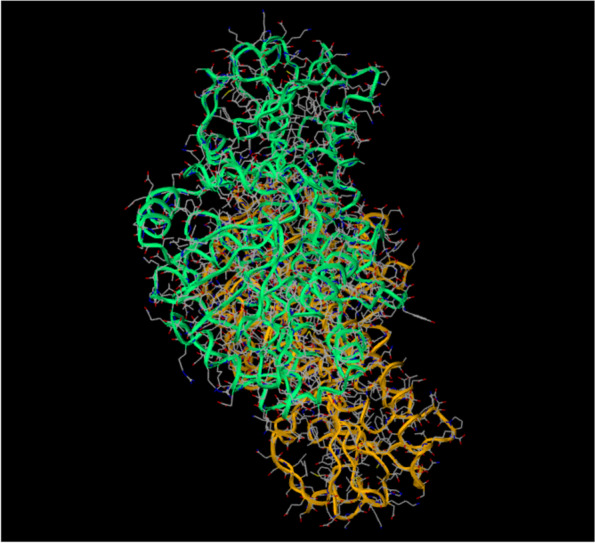
Staphylococcus aureus has prevailed against the majority of antibiotics currently in clinical use, making it a significant global public health problem. As a safer alternative, bioactive compounds have been explored. Annona muricata has been shown to possess antimicrobial activity. However, there are few reports on the molecular activity of A. muricata bioactive compounds against S. aureus. Thus, this study was aimed at evaluating the antimicrobial activity of its crude extract as well as investigating the potential of its bioactive compounds against the Cap5O capsular polysaccharides (CPS) of S. aureus via molecular docking.
Collection of plant leaves, preparation of extracts, anti-nutrient analysis, phytochemical screening via crude method and gas chromatography-mass spectrophotometer (GC-MS), isolation and characterization of S. aureus and the antimicrobial activity test were all done using standard protocols. Molecular docking was done using the MCULE online tool with emphasis on docking scores, toxicity, and other properties.
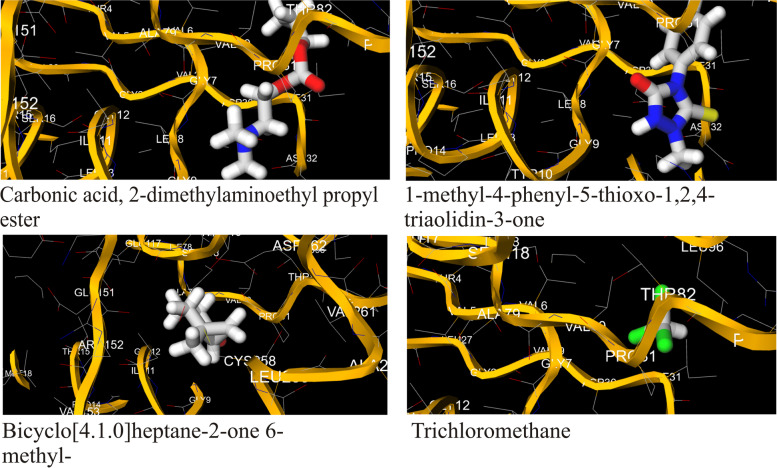
Crude screening of the extracts showed the presence of polyphenols, hydroxyanthraquinones, reducing compounds, flavonoids, saponins, glycosides, alkaloids, anthraquinones, phlobatannins and tannins in different concentrations. Anti-nutrient analysis showed the presence of allowable levels of evaluated anti-nutrients. GC-MS revealed a total of twenty-nine (29) bioactive compounds, out of which only 4 (13.80%) docked without toxicity and these were bicyclo[4.1.0]heptan-2-one 6-methyl, trichloromethane, carbonic acid 2-dimethylaminoethyl propyl ester, and 1-methyl-4-phenyl-5-thioxo-1,2,4-triazolidin-3-one on either the NAD-binding or C-terminal substrate binding domain of Cap5O.
Results obtained show that Cap5O could be a potential drug target for multi-drug resistant S. aureus, however, further studies aimed at evaluating these bioactive compounds individually and in combination are highly needed.
金黄色葡萄球菌已对目前临床使用的大多数抗生素产生耐药性,这使其成为一个重大的全球公共卫生问题。作为一种更安全的替代方案,人们已对生物活性化合物进行了探索。番荔枝已被证明具有抗菌活性。然而,关于番荔枝生物活性化合物对金黄色葡萄球菌的分子活性的报道很少。因此,本研究旨在评估其粗提物的抗菌活性,并通过分子对接研究其生物活性化合物对金黄色葡萄球菌Cap5O荚膜多糖(CPS)的作用潜力。
植物叶片的采集、提取物的制备、抗营养成分分析、通过粗提方法和气相色谱 - 质谱仪(GC - MS)进行的植物化学筛选、金黄色葡萄球菌的分离与鉴定以及抗菌活性测试均采用标准方案进行。使用MCULE在线工具进行分子对接,重点关注对接分数、毒性和其他特性。
提取物的粗筛显示存在不同浓度的多酚、羟基蒽醌、还原化合物、黄酮类、皂苷、糖苷、生物碱、蒽醌、鞣花单宁和单宁。抗营养成分分析表明所评估的抗营养成分含量在允许水平内。GC - MS共鉴定出29种生物活性化合物,其中只有4种(13.80%)对接时无毒性,它们分别是6 - 甲基双环[4.1.0]庚 - 2 - 酮、三氯甲烷、2 - 二甲基氨基乙基丙基碳酸酯和1 - 甲基 - 4 - 苯基 - 5 - 硫代 - 1,2,4 - 三唑烷 - 3 - 酮,它们对接在Cap5O的NAD结合或C末端底物结合结构域上。
所得结果表明Cap5O可能是耐多药金黄色葡萄球菌的潜在药物靶点,然而,迫切需要进一步研究单独和联合评估这些生物活性化合物。